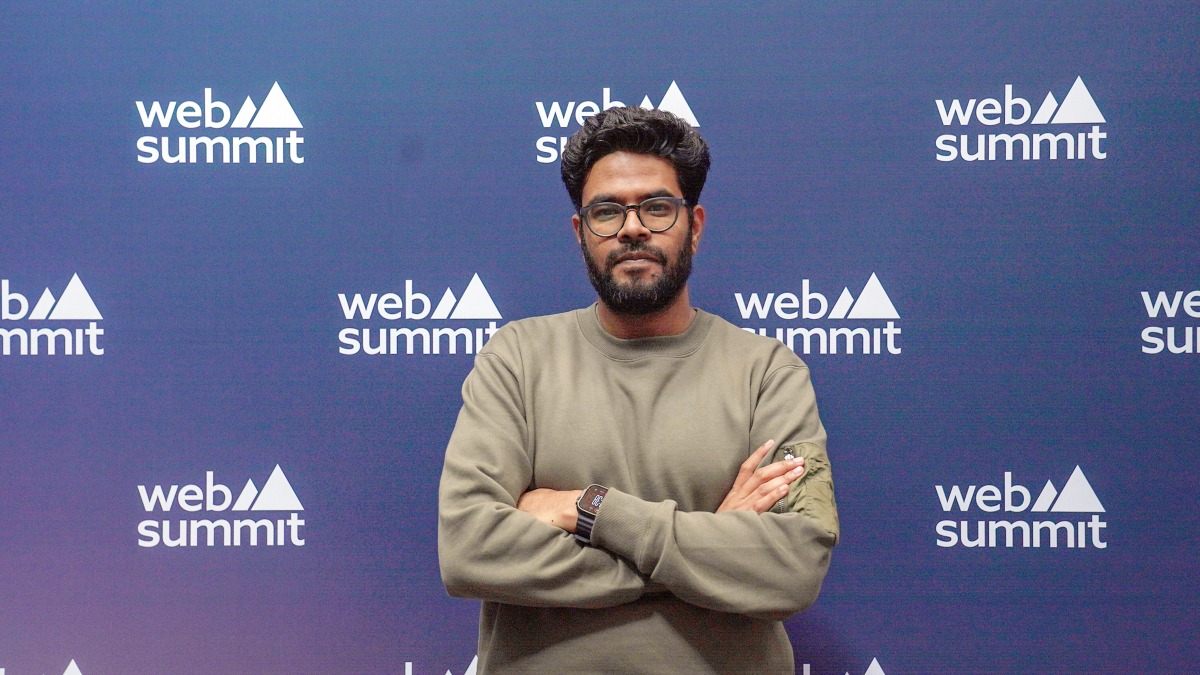
DOHA: The Middle East has the potential to become one of the world’s leading hubs for artificial intelligence (AI), driven by abundant energy resources, large-scale infrastructure investment, and a rapidly expanding digital economy, according to Amit Jain (pictured), CEO and co-founder of Luma AI.
Speaking on the sidelines of this year’s Web Summit in Doha, Jain said the region’s combination of government-backed AI strategies, regulatory momentum, and growing demand for advanced computing positions it to play a pivotal role in the next phase of global AI development.
“The way I think about the region is that it’s a single-language-speaking region, which is really valuable, and it’s a fast-growing economy”, he told The Peninsula.
“Whether you look at Saudi Arabia, Qatar, or the UAE, the number of new businesses forming is also really amazing.
Luma AI has raised $900m in Series C funding led by HUMAIN, a PIF company, with participation from AMD Ventures and existing investors Andreessen Horowitz, Amplify Partners and Matrix Partners, supporting the company’s next phase of growth.
Jain also highlighted the Middle East’s structural advantages for AI infrastructure, particularly in energy and land availability.
He explained that abundant solar resources and large tracts of land make the region well-suited for data centres, which are essential for powering large-scale AI workloads.
If current trends continue, he suggested the region could become one of the world’s largest producers of AI computing output in the future.
Generative video and visual AI are poised to become the next major frontier of artificial intelligence, with the Middle East holding strong potential to emerge as a global hub for large-scale AI infrastructure, the official said
Jain said Luma AI is already working with some of the world’s largest companies, positioning itself as a full-stack AI laboratory that develops foundational models, end-user products, and the distribution layers required for enterprise adoption.
Headquartered in Palo Alto, California, Luma AI’s technology is being widely deployed across media, entertainment, and advertising, Jain noted.
The company’s generative video and image models are used by major film studios as well as smaller production houses that collectively produce much of the footage seen in movies and television.
Advertising agencies are also leveraging Luma’s tools to generate high volumes of visual content required for modern marketing campaigns.
Beyond creative industries, Luma AI is increasingly embedded within corporate environments, supporting marketing functions as well as internal education and training programmes.
Jain said the company’s models and AI agents enable organisations to scale visual content creation in ways that were previously impractical due to cost and time constraints.
Commenting on Web Summit Qatar, which he attended for the second time, Jain described the event as a strong business-focused platform that brings together founders, investors, and decision-makers from across the world.
While not designed as a highly technical or academic forum, he said the summit plays an important role in fostering connections, supporting fundraising efforts, and accelerating commercial collaboration in the AI ecosystem.
“It is surprising not just how many people attend, but the quality of founders and investors who are here,” Jain said, adding that such gatherings are valuable for shaping the commercial direction of emerging technologies like AI.