DOHA: The US dollar’s continued appreciation against the British pound is making residential property in London increasingly attractive for Qataris, with younger buyers particularly looking for areas of urban regeneration, where prices are likely to rise fastest in the coming years.
Because the Qatari Riyal is pegged to the dollar, investors from the region have benefitted from the US currency’s 11 percent rise against the pound over 2015. At the beginning of this year, Goldman Sach reiterated a call for the dollar to rise 20 percent in the next three years.
“If you’re a buyer from a Middle Eastern country, say Qatar, this is a great opportunity, because the exchange rates make it a really good time to buy,” said Adam Chalice, head of UK residential development at property services company Jones Lang LaSalle.
“At the same time, the fundamentals of the London property market remain strong, due to a recovering economy, the fact that London is still thriving as a top financial centre, and the relative low supply of new projects in central areas.”
London remains a popular destination for Middle East buyers, accounting for 32 percent of the $14.1bn they spent on overseas property in 2014, according to property consultants CBRE. Although many are cash buyers, current rock-bottom interest rates and the willingness for Middle East banks to provide mortgages through their branches in London have also been drivers of buying activity.
Prime London property remained an attractive proposition for investors in 2015. Traditionally popular areas for Qatari buyers, such as Knightsbridge and Regent’s Park, have seen strong growth in capital values in recent years, but many developers believe that other central areas, which are experiencing urban regeneration, will see greater demand and steeper price rises in the coming years.
The River Thames was in the past a barrier for values in central London with the areas south of the river being markedly different from their neighbours north of the river.
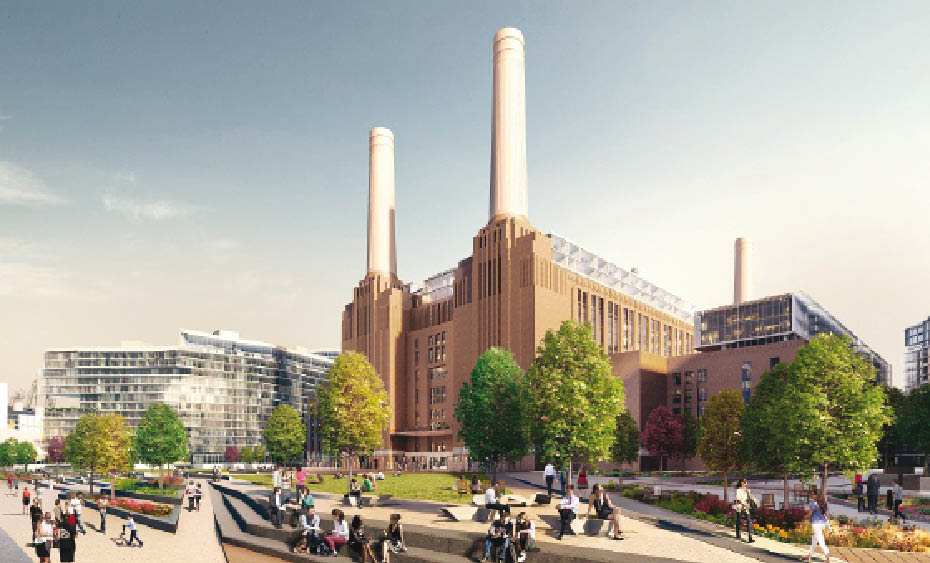
Battersea Power Station is an example of a development in an increasingly popular area on the south bank of the River Thames, only 10 minutes’ drive from upmarket Knightsbridge, and a mere walk to Chelsea.
“Because Battersea Power Station itself is world-famous, it was always going to be of global interest to buyers, but there is more to it than just the building,” said Rob Tincknell, Chief Executive Officer of Battersea Power Station Development Company, developer of the iconic new urban quarter centred around one of the world’s most recognisable buildings.
“Many people are now realising that there is exceptional value to be found in areas which are being regenerated, particularly in areas like Battersea where there is also a strong focus on creating a genuine community with that sense of neighbourhood.”
In a recent report entitled “Moving Out”, Jones Lang LaSalle’s director of residential research, Neil Chegwidden, said such “outer core” locations were seeing more sales and development activity, and prices were therefore rising at a faster rate.
“Prices in the most expensive parts of London have come under pressure, while those further afield continue to rise,” Chegwidden said. “We believe that the outer core story still has some time to run and that the broader central London market will continue to be active and strong despite the general election and taxation concerns.”
Housing has become a central political issue in Britain, with the government introducing a capital gains tax on foreign-domiciled buyers in 2013. However, the new tax has not dented appetite among foreign investors in the last year, and analysts believe that the shortage of space in central London will keep land and property prices trending upwards.
The Peninsula