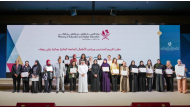
Doha, Qatar: Qatar Museums (QM) on Thursday celebrated the International White Cane Day under the theme "A Story of Achievement: Beyond the Limits of Sight."
The event highlighted the experiences and accomplishments of individuals with visual impairments, emphasized the importance of raising public awareness regarding their capabilities, and underscored the need to create more accessible cultural and educational environments to support their active participation in society.
The event coincided with the global observance of International White Cane Day, held annually on October 15. The white cane is a vital tool for the independence of those with visual impairments; it serves not only as an aid for mobility but also as a key instrument that enables individuals to access various facilities and services with confidence and safety.
During the celebration, Director of the National Museum of Qatar, HE Sheikh Abdulaziz bin Hamad Al-Thani honored several participants in recognition of their efforts and contributions toward raising social awareness about the needs of people with disabilities, particularly those who are blind or visually impaired. The Qatar Cultural Center for the Blind, which operates under the Ministry of Culture, also participated in the event.
The Center showcased its programs and its cultural and awareness-raising role, contributing to a greater understanding of the rights of individuals with visual impairments. It further sought to support their integration and active participation in society, underscoring the Center's mission to foster social awareness regarding the importance of empowering blind individuals to lead independent and dignified lives.
The participation also highlighted the vital role of the white cane as a universal symbol of independence, promoted a culture of respect for the rights of the blind and appreciation for their capabilities, and built bridges of communication with various segments of society through awareness programs and events that champion the values of inclusion and equality.
In this context, Chairman of Qatar Cultural Center for the Blind, Faisal Al Kohji told Qatar News Agency (QNA) that hosting such events, and the attention given to them by Qatari cultural institutions, stems from their significant role in shedding light on the key challenges faced by individuals with visual impairments. These initiatives help address how to interact with this group, while also cultivating broader social awareness regarding how to engage with them, as well as with persons with disabilities in general.
He explained that QM's hosting of this event at the National Museum of Qatar underscores the practical role such organizations play in enhancing the quality of services provided to individuals with visual impairments. Ensuring the participation of this group in cultural life is a commitment enshrined in both local legislation and international conventions ratified by the State of Qatar.
These efforts aim to achieve equality and ensure that people with disabilities, and specifically those with visual impairments, can fully benefit from the services offered by cultural institutions.
Regarding the key accommodations provided by the National Museum of Qatar for visitors with visual impairments, Dr. Joumana Obeid, a program specialist at the museum, told QNA that the museum is committed to inclusivity, offering comprehensive facilities for all visitors, including those with disabilities, such as visual impairments.
She noted that these accommodations begin the moment a visitor arrives at the museum's parking facility and continue until their departure. This includes the organization of specialized tours, during which visitors can explore the museum's various exhibits with the help of dedicated assistive tools.
She further noted that the museum's reception team is fully trained in interacting with and appropriately guiding individuals with disabilities. The goal is to ensure that their visit is as smooth and accessible as possible, supported by specialized, well-suited resources that enable them to navigate the museum and take full advantage of its offerings.