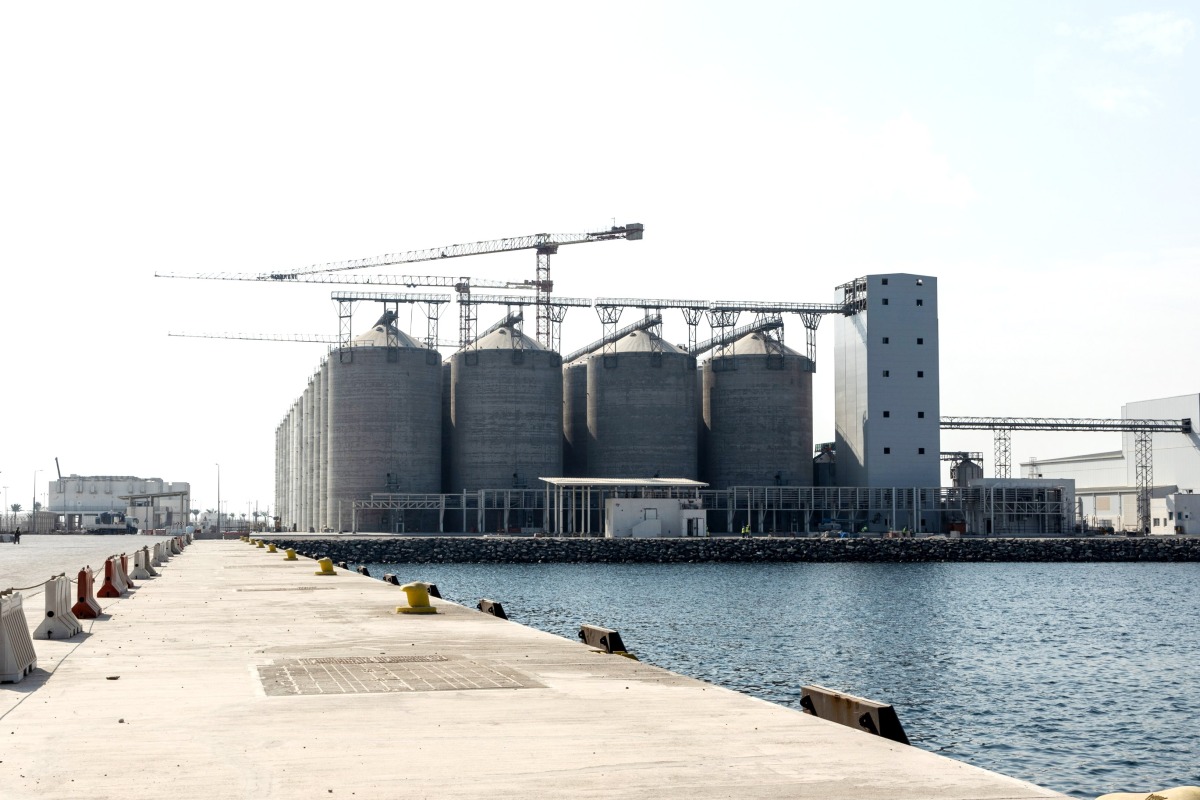
Strategic storage infrastructure at Hamad Port
Doha, Qatar: Qatar is strengthening its food security through the development of strategic storage infrastructure, enhanced domestic production and diversification of food supply sources, as part of efforts to ensure the sustainable availability of essential commodities and improve preparedness for potential disruptions in global supply chains.
As part of these efforts, strategic grain storage facilities operated by Hassad Food in Al Wukair have a stated combined capacity of around 315,000 tonnes, providing an important reserve of wheat and fodder grains to support the local market.
The facilities comprise 25 underground grain storage units, including 10 dedicated to wheat and 15 to barley. Speaking to Al Rayyan TV recently, Senior Executive of Project Support at the Strategic Grain Storage Facilities, Taha Sameeh Abu Al-Jebain said the wheat storage units have a capacity of 125,000 tonnes, while the barley facilities can accommodate approximately 190,000 tonnes.
He explained that the facilities constitute an important part of Qatar’s strategic grain storage infrastructure, helping maintain reserves of essential commodities and ensure a regular supply to the local market. Abu Al-Jebain said storage levels are monitored daily and accurately, allowing for timely intervention whenever necessary.
This monitoring mechanism helps maintain market stability, particularly during emergencies and unexpected developments that could affect food supplies.
He added that the facilities provide flexibility in responding to changing market requirements and potential supply challenges, strengthening the country’s preparedness and helping ensure the continuity of grain supplies.
Food Security Facilities and Warehouses Project at Hamad Port, one of Qatar’s most significant essential food security projects, has now reached 98% completion.
The Project covers an area exceeding 530,000 square meters (53 hectares) and provides a total storage capacity of 300,000 metric tons, noting that the project includes the construction of 51 storage silos, along with specialized facilities for the processing, manufacturing, and storage of three key food commodities: rice, sugar, and edible oils. It also incorporates advanced facilities for oil refining and rice processing, designed in accordance with the highest operational standards.
The development of strategic storage capacity is one component of Qatar’s broader National Food Security Strategy 2030, which includes 17 initiatives distributed across three main pillars: local production and local markets; strategic reserves and early warning systems; and international trade and investment.
The first pillar focuses on increasing domestic production of vegetables, fresh red meat, particularly sheep and goats, and fresh fish, while maintaining self-sufficiency in fresh dairy and poultry products.
It seeks to strengthen local production through modern agricultural technologies and sustainable practices, reduce dependence on external food supplies and ensure the sustainable availability of food through domestic production.
The second pillar focuses on strengthening the resilience of the national food system through improving and expanding strategic reserves of food commodities. It also includes establishing and managing strategic reserves of agricultural inputs to ensure the continuity of domestic agricultural production during emergencies.
Another key component is the development of centralised early warning systems to monitor potential risks, improve response mechanisms and support timely decision-making.
The third pillar focuses on strengthening Qatar’s international trade capabilities, diversifying import sources and supporting the competitiveness of domestic production to expand the country’s access to international markets.
It also aims to expand the storage capabilities of Hamad Port facilities, positioning the port as a regional hub for food trade and processing through commercial partnerships and strategic investments.
These initiatives are intended to ensure the safe and sustainable availability of food, reduce risks associated with dependence on limited supply sources and strengthen Qatar’s ability to respond to fluctuations in international markets.
Together, the three pillars provide an integrated framework for sustainable food security by boosting domestic production, expanding strategic reserves, improving crisis preparedness and diversifying international supply channels.
Within this national framework, the strategic grain storage facilities operated by Hassad Food contribute to maintaining essential grain reserves, complementing wider efforts to strengthen Qatar’s food system and ensure the long-term stability of supplies.