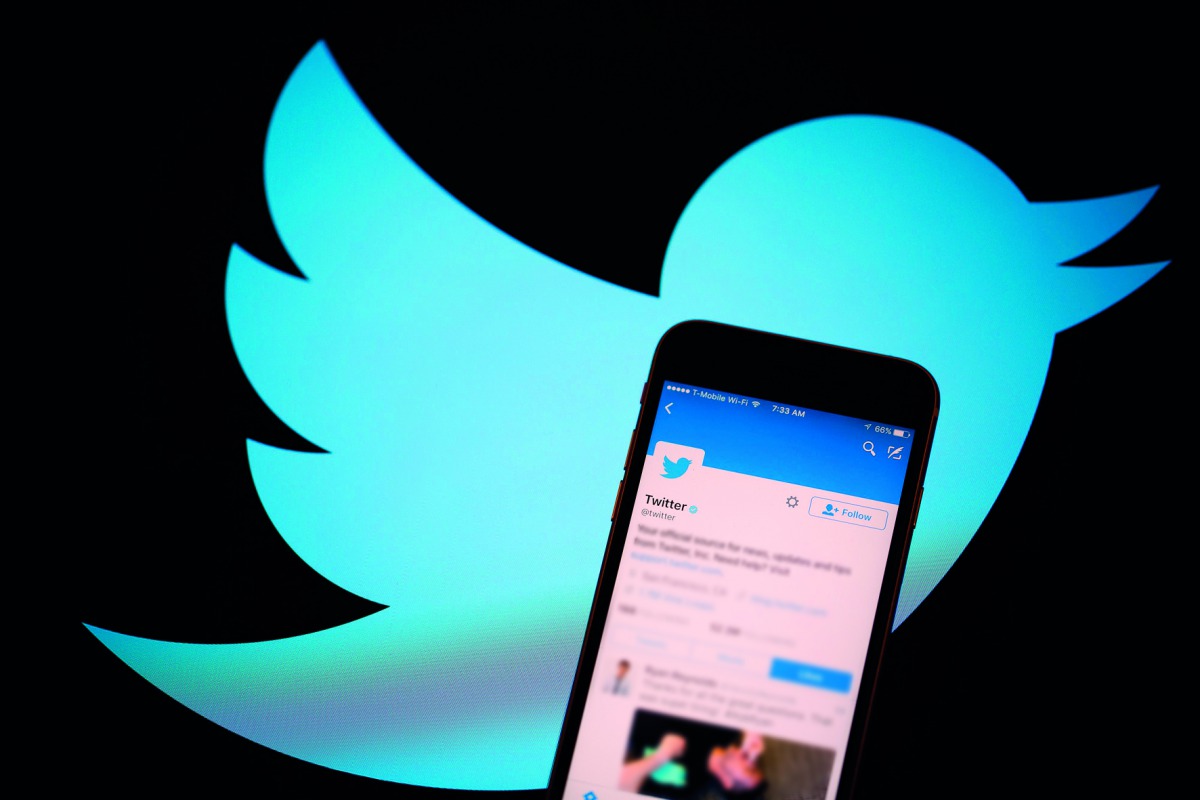
The Twitter Inc. logo is seen behind an Apple Inc. iPhone 6s displaying the company’s mobile application.
San Francisco: The exterior of Twitter’s San Francisco headquarters bore an eerie message: “Ban Russian Bots.” Someone— the company doesn’t know who— projected the demand onto the side of its building.
Bots, or automated software programs, can be programmed to periodically send out messages on the internet. Now Twitter is scrambling to explain how bots controlled by Russian meddlers may have been used to impact the 2016 president election.
Twitter was designed to be friendly to bots. They can help advertisers quickly spread their messages and respond to customer service complaints. Research from the University of Southern California and Indiana University shows that 9 to 15 percent of active Twitter accounts are bots. Many innocuously tweet headlines, the weather or Netflix releases.
After the election, there was little discussion inside the company about whether the platform may have been misused, according to people familiar with the matter who asked not to be identified because it is private. But the ubiquity and usefulness of bots did come up.
At one point, there were talks about whether Twitter should put a marking on bot accounts, so that users would know they were automated, one of the people said.
Yet most of the conversation after the election focused on whether Trump’s tweets violated Twitter’s policies, the person said. The company said it has made a plethora of recent changes, including creating automated processes to detect suspicious logins and stop bad content at its source.
Twitter executives have been in frequent contact with Congressional committees and investigators to try to answer their questions before hearings on November 1, according to a person familiar with the matter. The company is addressing the issue from multiple angles, the person said, including asking engineers to examine spam use on the platform and asking its business teams to delve into advertising purchases by RT, the Russian TV network.
Independent researchers are starting to peel back the layers of political interference. There were about 400,000 bots posting political messages during the 2016 US presidential election on Twitter, according to a research paper by Emilio Ferrara, an assistant professor at the University of Southern California.
He told Bloomberg that he has discovered that the same group of 1,600 bots tweeting extremist right-wing posts in the US elections also posted anti-Macron sentiment during the French elections and extremist right-wing content during the German elections this year.
Cybersecurity firm FireEye has previously said that it uncovered thousands of fake accounts linked to Russia that posted anti-Clinton messages. Its examination revealed that on Election Day, one group of Twitter bots sent out the hashtag #WarAgainstDemocrats more than 1,700 times.Teaching Twitter’s algorithms to find malicious tweeters is challenging.
Russian meddlers in particular are complementing their networks of bots with human laborers who are paid to Tweet coordinated messages at the same time. It can be difficult for Twitter’s algorithms to detect the difference, according to a person familiar with the matter.
And cracking down on bots puts Twitter in a vulnerable position with Wall Street. Investors have penalized the company for failing to get more users. The more that Twitter cracks down on fake accounts and bots, the lower the monthly active user base, the metric most closely watched by Wall Street.
Sometimes, activists who are drawing attention to the plague of bots on Twitter become the victim of their attacks.
Despite all the recent attention, the exact dimensions of Twitter’s bot community remains opaque.
Academics have asked Twitter to collaborate on research, to no avail, Ferrara, the USC professor, said.