By Satish Kanady
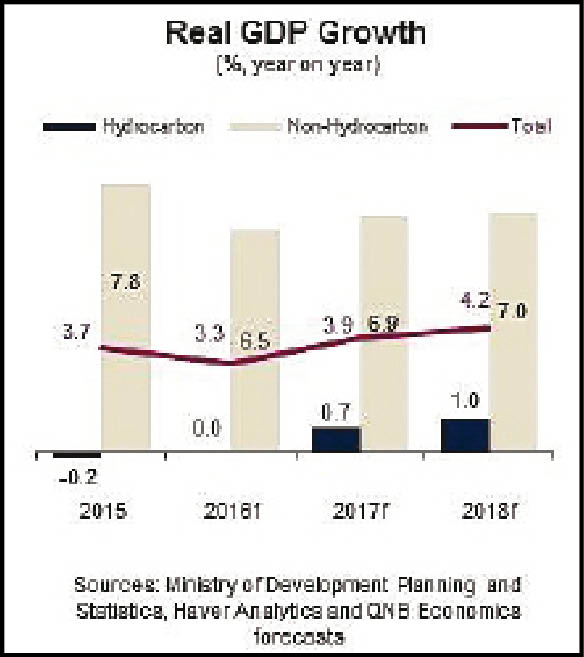
DOHA: The non-hydrocarbon sector in Qatar pushed its share of GDP to a sizeable 63.8 percent in 2015, up from 48.9 percent in 2014. Consistent with the trends observed over the last four years, the non-hydrocarbon sector continued to be the engine of growth, while hydrocarbon production has remained broadly stable. The ramp up in investment spending, which is expected to peak towards the end of the decade, will continue to drive growth in the non-hydrocarbon sector going forward, QNB’s latest ‘economic commentary’ noted yesterday.
Year-on-year growth in non-hydrocarbon GDP reached 7.8 percent in 2015. The building and construction sector was the direct beneficiary of this programme, contributing an estimated 2.2 percentage points (pps) to non-hydrocarbon GDP growth. The rapid population growth from the influx of expatriate workers generated strong demand for services such as finance, insurance and real estate; trade, restaurants and hotels; and government services. Indeed, services were the largest contributor to non-hydrocarbon GDP growth, adding an estimated 5.0 pps.
Manufacturing was also one of the main growth sectors with a contribution of 0.7 pps, reflecting Qatar’s movement up the hydrocarbon value chain towards refined petroleum products and petrochemicals.
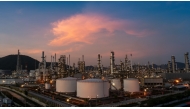
At the same time, Qatar’s hydrocarbon production fell slightly by 0.2 percent in 2015 compared to 2014. The decline mainly reflected lower crude production as natural gas output remained flat due to the moratorium on new gas projects at the North Field. The overall robust growth performance was achieved against a background of low oil prices, which declined sharply from an average of $99.5/barrel in 2014 to $53.6/b in 2015. The decline was mainly due to large additional supply from the US as well as Opec. Even though demand growth hit a five-year high in 2015, this was still exceeded by the new supply. As a result, the oil market was over-supplied by around 1.8m barrels per day in 2015. And the price of oil was more than 50 percent lower than its level prior to mid-2014.
According to QNB analysts, Qatar’s real GDP is expected to grow by 3.3 percent in 2016, 3.9 percent in 2017 and 4.2 percent in 2018. The economy grew by 3.7 percent in 2015 compared to 2014. Consistent with the trends observed over the last four years, the non-hydrocarbon sector continued to be the engine of growth, while hydrocarbon production has remained broadly stable.
The oil price shock has not resulted in sharp declines in public spending, which would have hurt growth, particularly in the non-hydrocarbon sector. Instead, the government is absorbing this shock on its fiscal balance. As a result of lower hydrocarbon revenue and continued capital spending, the fiscal balance should turn into a deficit of 5.4 percent of GDP in 2016 from a surplus of 3.7 percent in 2015. However, the significant savings made during the last oil boom and low public debt ratios have allowed the government to access international capital markets to finance the projected deficit with ease through debt issuance. Qatar secured a $5.5bn syndicated loan in January 2016 and then sold $9bn of bonds in May — the largest ever bond issuance from a Middle East government.
The ramp up in investment spending should continue to drive growth in the non-hydrocarbon sector. Additional gas and condensates production from Barzan, a $10.3bn gas production project to meet the rising domestic demand, is expected to lift hydrocarbon growth, notwithstanding the projected decline in crude oil production.The Peninsula