Doha, Qatar: At a time when regional competition to attract capital and global companies is accelerating, the State of Qatar is continuing to develop its institutional investment framework through Dar Al Sharikat, which represents a shift toward a more integrated model for business establishment by unifying company registration and licensing procedures across several of the country's leading economic zones, thereby enhancing the efficiency and attractiveness of the investment environment.
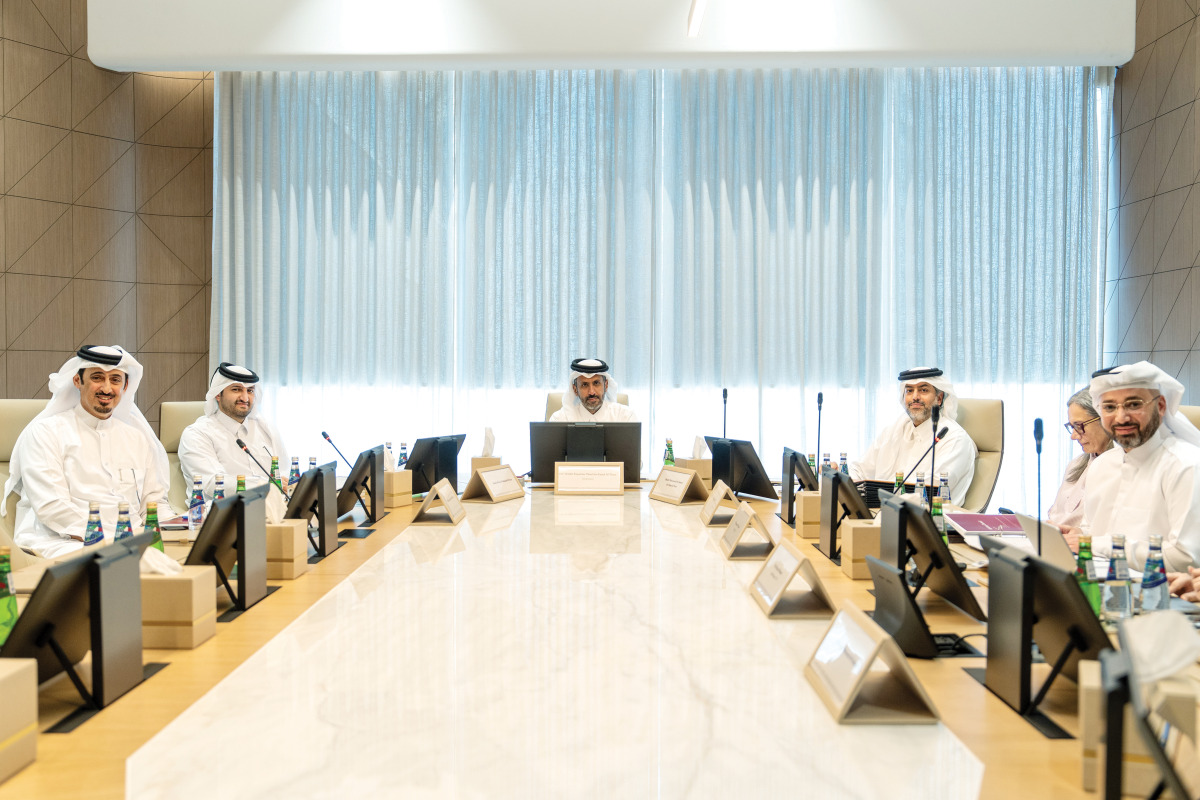
Dar Al Sharikat, which was inaugurated a few days ago by HE Minister of Commerce and Industry and Chairman of the Advisory Board of Dar Al Sharikat Sheikh Faisal bin Thani bin Faisal Al-Thani aims to simplify procedures and save investors and entrepreneurs time and effort, thereby improving the efficiency of doing business and enhancing the competitiveness of the country's investment environment, in line with the objectives of Qatar National Vision 2030.
Dar Al Sharikat is responsible for registering companies, licensing their activities and maintaining the public registers of the Qatar Financial Centre, Qatar Free Zones Authority, Qatar Science & Technology Park and Media City Qatar. It also provides tax and immigration services to registered companies and verifies their compliance with labor standards and data protection requirements.
Bringing these functions under a single umbrella provides investors with a more integrated gateway for establishing their businesses and managing related procedures, while reducing the need to navigate multiple processes across different entities. This helps improve the investor experience from the company establishment stage through to the commencement of operations.
The establishment of Dar Al Sharikat forms part of the State's efforts to develop the business environment, enhance the services provided to the financial and business sectors, and strengthen the Qatari market's ability to attract capital and high-quality investments, while simultaneously increasing the private sector's contribution to economic activity.
Officials and economic experts told Qatar News Agency (QNA) that they expected the initiative to enhance Qatar's competitiveness, create a more efficient environment for attracting capital to the domestic market, and provide greater scope for the private sector to grow and expand.
In this context, Acting General Manager of Qatar Chamber Ali Saeed Bu Sharbak Al Mansouri welcomed the launch of Dar Al Sharikat, describing it as an important step in the development of Qatar's business environment that reflects the State's commitment to simplifying procedures, facilitating business establishment and operations, and enhancing the country's attractiveness to local and foreign investment.
Al Mansouri said that unifying company registration and licensing procedures across economic zones under a single umbrella would help save investors time and effort, improve procedural efficiency, and enhance the investor experience from the establishment of a company through to the commencement of its operations. He noted that this would support the competitiveness of Qatar's business environment and strengthen the country's position as an attractive investment destination.
He added that the private sector was positive on initiatives aimed at reducing and unifying procedures and accelerating the completion of transactions. He noted that ease of business establishment, clarity of procedures and rapid access to services were important factors in stimulating investment and encouraging entrepreneurs and companies to expand and launch new projects.
Al Mansouri pointed out that Dar Al Sharikat's responsibility for registering companies, licensing their activities and maintaining the registers of several economic zones and entities, providing services related to taxation, immigration, labor requirements and data protection, strengthens the concept of a one-stop shop for investors and provides a more integrated and seamless environment for doing business.
He affirmed that the initiative was aligned with the State's efforts to increase the private sector's contribution to the national economy, stimulate investment and diversify economic activities, in line with the objectives of Qatar National Vision 2030.
Al Mansouri added that developing the legislative and procedural environment and facilitating the conduct of business were essential to supporting private-sector growth and strengthening its competitiveness. He expressed hope that Dar Al Sharikat would help accelerate the establishment of businesses and attract more high-quality investments to the Qatari market.
Concluding his remarks, Al Mansouri affirmed that Qatar Chamber welcomed all initiatives that contribute to improving the business environment and addressing challenges facing the private sector. He stressed the Chamber's readiness to cooperate with the Ministry of Commerce and Industry, Dar Al Sharikat and the relevant entities, as well as to convey the views and proposals of the business community in a manner that contributes to developing the services provided to investors and companies.
For his part, Professor of Economics and Public Policy at the Doha Institute for Graduate Studies Dr. Hamid ElTgani Ali told QNA that the launch of Dar Al-Sharikat represented an important shift from merely offering investment incentives toward developing the institutional environment in which investors operate. He explained that investors consider not only taxes or the cost of land, but also the speed of establishing a company, the clarity of laws, the stability of procedures and the ease of dealing with government entities.
Dr. Ali said that consolidating registration, licensing and services related to taxation, immigration and data protection within a single window would reduce transaction costs, time and uncertainty, all of which directly influence investment decisions. He added that, above all, the initiative's success would ultimately be measured by its ability to reduce the time and cost involved in establishing and operating companies.
He noted that regional competition was no longer based solely on tax exemptions and financial incentives, but had increasingly become a competition over institutional quality, ease of doing business and the speed of procedures. He added that, as Gulf countries compete to attract global companies, capital and talent, having a unified entity linking the Qatar Financial Centre, Qatar Free Zones, Qatar Science & Technology Park and Media City Qatar would strengthen Qatar's competitiveness. It would also signal to international investors that Qatar was seeking to provide a more integrated and transparent investment ecosystem rather than one characterized by multiple entities and procedures.
Dr. Ali said the developmental significance of Dar Al Sharikat extended beyond increasing the number of registered companies. If successful in attracting long-term investment, it could play a vital role in supporting economic diversification away from dependence on the energy sector, expanding the role of the private sector, facilitating the transfer of technology and knowledge, creating high-productivity jobs, boosting exports and strengthening integration into global value chains. All of this, he noted, was ultimately consistent with the objectives of Qatar National Vision 2030.
Concluding his remarks, Dr. Ali said the true measure of success was not merely the volume of foreign investment inflows, but the quality of that investment, the value it added to the Qatari economy, and its ability to localize knowledge and technology and create sustainable opportunities.
Along the same lines, economic expert Dr. Abdulaziz Al Hammadi said the launch of Dar Al Sharikat sent encouraging signals to investors that Qatar offered an advanced environment and favorable conditions for investment.
Dr. Al Hammadi highlighted that the distinguishing feature of the Dar Al Sharikat concept was its ability to save time and effort by unifying the entity through which the various stages of an investor's project are processed. He noted that saving time and effort was a fundamental factor in investment decisions, as investors naturally gravitated toward locations where conducting business was easier and faster.
He pointed out that obstacles were generally part of doing business and could arise at any time. He proposed that employees and personnel responsible for registration and licensing, providing tax services, and verifying companies' compliance with official labor standards undergo intensive, high-level training to ensure that the objectives for which Dar Al Sharikat was established were achieved as effectively as possible.
Dr. Al Hammadi praised the work of the Ministry of Commerce and Industry, noting that its continuous efforts to develop the investment climate and provide a favorable investment environment were clearly evident. He described the Dar Al Sharikat initiative as the latest of these efforts, adding that it could open the way for local projects and encourage emerging Qatari investors to participate in the country's investment market.