DOHA: Qatar foresees a solid growth in the non oil & gas economy, but anticipates that the expansion will moderate as project activity plateaus, population growth tapers and the government looks to improve the efficiency of public spending and to find savings on that spending.
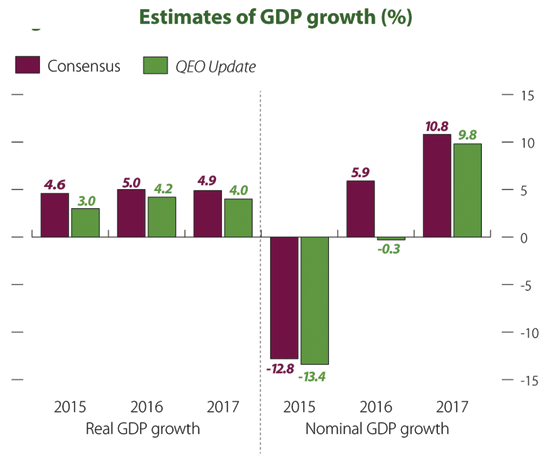
The country’s updated ‘Qatar Economic Outlook 2015-2017’ forecast Qatar’s real GDP will grow at 3.7 percent in 2015.
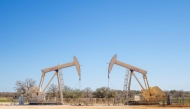
The dip from 2014, when real GDP growth was 4.1 percent, is largely the result of a contraction in the hydrocarbon sector, due to falling oil production and shutdowns for operations and maintenance.
Fewer interruptions to supply are expected in 2016, and Barzan production will come on stream, lifting overall GDP growth to 4.3 percent. While the non-oil and gas sector will continue to post solid expansion, its growth will begin to drift lower, taking GDP growth in 2017 to 3.9 percent, the Ministry of Development Planning and Statistics (MDPS) document noted.
Minister of Development Planning and Statistics H E Dr Saleh Al Nabit, said: “Capital spending programmes will continue to support demand, but as project activity intensifies, its rate of growth will naturally slow, and with it the overall rate of expansion of the non-oil and gas economy”.
While the population is continuing to grow, he expects that the expansion will slow over the outlook period.
With global commodity and manufactured goods prices weakening, US dollar strength continuing and growth in the non-oil and gas economy softening, the Update sees little inflation on the horizon. It anticipates that annual average consumer price inflation of 1.5 percent in 2015 will hold steady through 2016. An uptick might occur in 2017, but this will depend more on a recovery of demand in the global economy than on domestic economic conditions.
A small fiscal surplus is projected in 2015, but modest deficits may be seen in 2016 and 2017. Dr Saleh emphasised that, “means to rationalise spending are being accelerated and that new sources of revenue to support the budget are being considered”.
The Minister also explained that while Qatar has not witnessed a budget deficit for 15 years, the state has ample means to finance it and that adjustments are now being considered that would build on Qatar’s solid financial position to help more firmly anchor its long-term fiscal sustainability.
According to the ministry document, the country’s current account balance payment is expected to remain in surplus in 2015, but modest deficits seem likely in 2016 and 2017.
The key factor is Qatar’s dependence on hydrocarbon exports and the lower prices currently expected.
Import demand might see some reduction as projects’ capital-equipment needs are scaled down, but it should stay supported by demand for materials and by consumption demand of a larger population. With the retreat in the current account surplus, capital outflows will also be pared back.
On the risk side of the outlook, the ministry document noted the risk stem mainly from oil prices, which have dropped dramatically over the year. Their prognosis remains highly uncertain. If oil prices rise more quickly than the ministry forecast, nominal income growth, as well as fiscal and external balances, will see better outcomes. But if they fall short of projections, income growth will be restrained, fiscal balances could deteriorate more sharply and larger external-payment deficits might occur.
The Peninsula