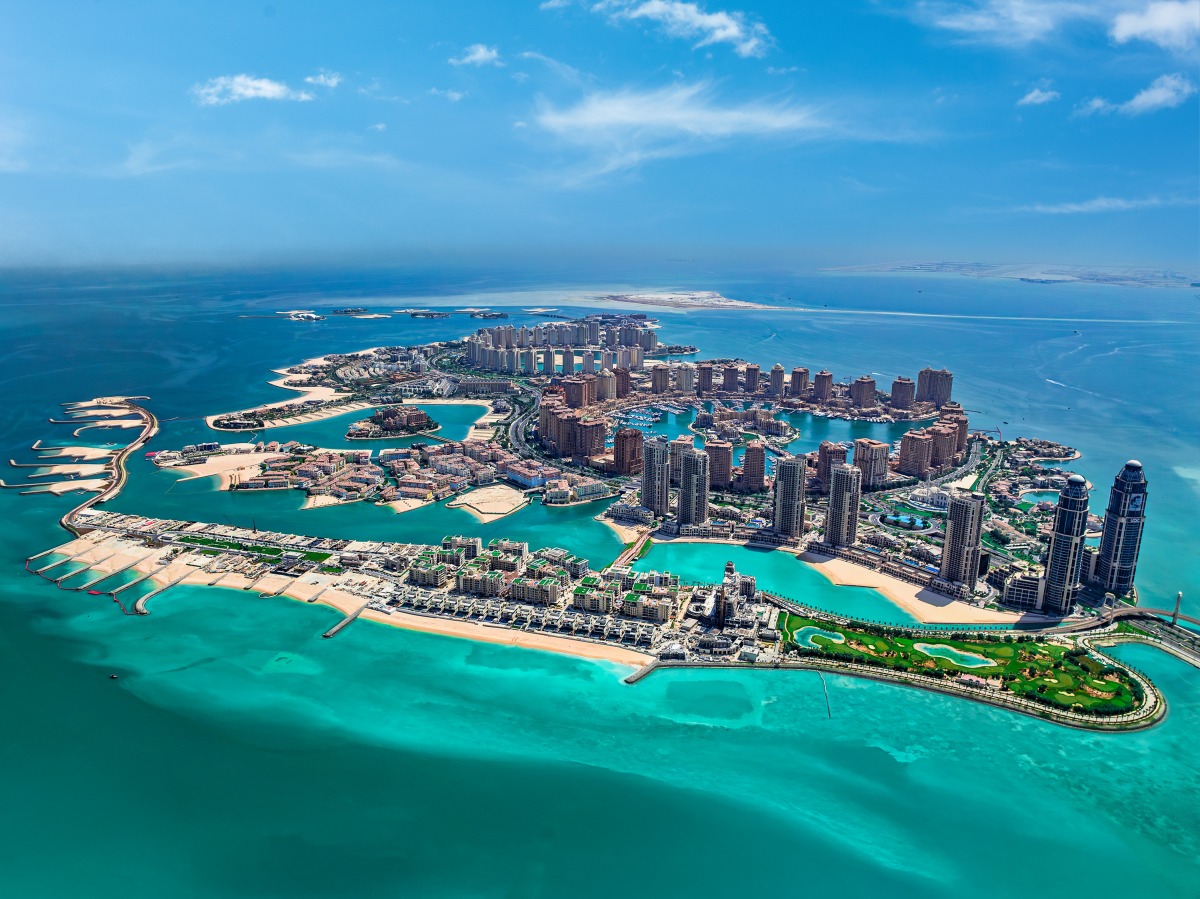
As the master developer behind The Pearl and Gewan Islands, United Development Company (UDC) is shaping one of Qatar’s most distinctive urban destinations—where premium living, environmental responsibility, and community engagement are fully integrated.
Across these flagship developments, UDC is advancing a comprehensive operational excellence strategy, underpinned by a strong sustainability agenda. This approach brings together measurable climate action, biodiversity protection, efficient operations, and active community participation, ensuring that ESG principles are embedded not only in planning, but in the day-to-day experience of residents, visitors, and businesses.
Recent approvals and initiatives across The Pearl and Gewan Islands reflect UDC’s continued commitment to ESG leadership, transforming these destinations into living examples of sustainable, resilient, and future-ready communities.
CO2 reduction and climate action
Building on the 2021 emissions baseline, the company has decreased Scope 1 and 2 CO2 emissions by more than 19% through energy efficiency enhancements, fuel switching, and onsite renewable initiatives. LED retrofits across all UDC activities and facilities, building management system optimization that reduced HVAC energy use by 5%, and grid energy procurement of 630,000 KWh. UDC's strategy calls for a 12% decrease in operational emissions by 2026, with continuous measurement and transparent disclosure to support it.
Awards and recognition
Recent accolades include Gold Award for "Outstanding Marina" and Silver Award for "Sustainability" at the Abu Dhabi Maritime Awards 2025, four of six prestigious international accolades in the fields of environment and sustainability at the Green World Awards 2025 by The Green Organization, five gold awards at the Green Apple Awards, first in Environmental Improvement for Innovation and Pollution & Emission Reduction, and second in Sustainable Development for Energy Management.
Urban and island heat effect solutions
UDC's Crystal Walk on Gewan Island is a watershed moment in sustainable urban design, creating the world's largest outdoor air-conditioned mall while supporting major ESG principles and UN Sustainable Development Goals. The 7,360-square-meter development, which includes a 1,000-meter crystal pathway with over 10 tonnes of crystals, provides a high-quality public realm that satisfies UNSDG 11: Inclusive, Safe, Resilient, and Sustainable Cities by providing inclusive, comfortable, and activated urban spaces even in adverse weather conditions. The Crystal Walk's integrated district cooling system and climate-responsive architecture greatly cut energy consumption and greenhouse gas emissions. This UNSDG contributes directly by reducing the environmental impact of large-scale retail developments and incorporating climate considerations into urban design.
Biodiversity mapping and nature-based solutions
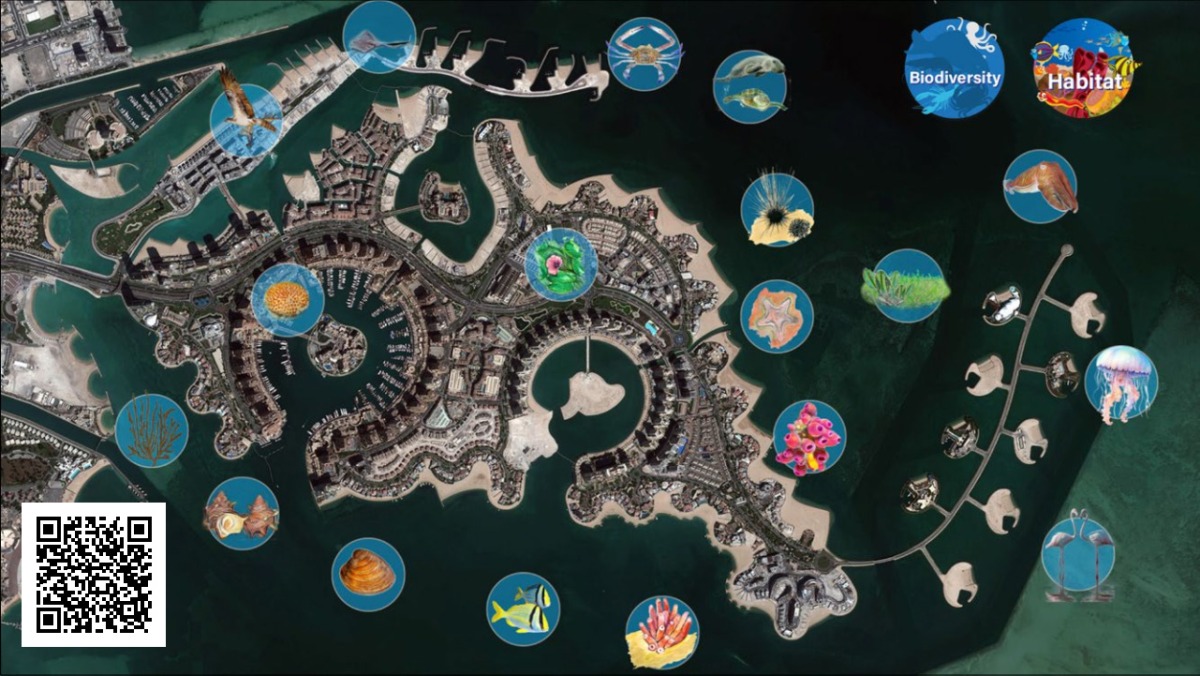
CNN Travel has described United Development Company's flagship project, The Pearl Island, as a model of sustainable urban development and creative biodiversity preservation, illustrating UDC's systematic incorporation of ESG concepts into large-scale urban planning. The CNN article focuses on how The Pearl combines modern, mixed-use living with environmental responsibility, highlighting innovative infrastructure such as district cooling powered by treated sewage effluent, comprehensive recycling and waste management systems, and ongoing community environmental initiatives such as beach cleanups and awareness campaigns. These efforts demonstrate how UDC's planning decreases environmental impact while creating vibrant, walkable community that match with UNSDG 11: Inclusive, Safe, Resilient, and Sustainable Cities, improving liveability and accessibility within a high-quality urban ecosystem.
Tree planting initiatives
UDC's engagement with The Green Organization has resulted in the planting of 1,137 trees from the inception of the project until the end of Year 2025 as part of their global trillion-tree effort. This collaboration has also raised UDC's international environmental reputation, earning it many Green World Awards and inclusion in the World Green Book for leadership in sustainable practices. Such recognition demonstrates UDC's dedication to climate action, emissions reduction, and creative environmental management across its real estate portfolio. Looking ahead, UDC's projected planting strategy intends to grow yearly tree planting at a consistent rate of 288 new trees per year from 2026 to 2030, bringing the total number of newly planted trees since 2022 to 2,757 by 2030. UDC's extended tree-planting estimate (2022-2030) shows a continuous rise in total trees planted and CO₂ sequestration capacity, with an early ramp-up in 2022-2023, a substantial scale-up in 2024, and a steady yearly planting rate of 288 trees from 2026 onwards. By 2030, this pattern will result in a steady, linear rise in trees and carbon absorption, with over 2,800 trees and around 70 t/yr of capacity. This long-term planting method improves shade, biodiversity, and environmental comfort on The Pearl and Gewan Islands.
EV infrastructure expansion
To accelerate transport electrification, the company is expanding EV charging across its properties. The new Gewan Parking extension will include 19 chargers, featuring combined capacity of 160 kWh to support fast and destination charging. Additional chargers are planned across Gewan sites to serve employees, visitors and fleet vehicles that will help reduce scope 3 emissions and enabling a cleaner mobility ecosystem.
Operational excellence as a strategic enabler
Operational excellence is crucial to the company's strategic decisions and underlies its goal and vision. Integrating sustainability into basic operations such as asset management, procurement, maintenance, and safety allows the organization to save money, reduce risk, and provide higher-quality services. Key strategies include predictive maintenance with IoT sensors, centralized energy management dashboards, ISO-compliant management systems, and KPI-driven performance assessments that link ESG indicators to leadership goals and bonuses.
ESG disclosure and transparency
UDC publishes annual ESG disclosures that are aligned with GRI guidelines. The company is now embarking on a new phase of its sustainability and climate-related reporting journey, which will include a structured transition from Global Reporting Initiative (GRI) Standards to the International Sustainability Standards Board (ISSB) framework, which includes IFRS S1 General Requirements for Disclosure of Sustainability-related Financial Information and IFRS S2 Climate-related Disclosures. This adjustment represents UDC's commitment to improve decision-useful, financially relevant sustainability disclosures and aligning them with investor, regulator, and capital market expectations. These disclosures contain audited performance information on emissions, energy, water, waste, health and safety, and governance. By making data transparent, the company boosts investor confidence and facilitates peer comparison.
Community engagement and youth activation
Community activation is focused on youth education, skills development and inclusive participation during Qatar Sustainability Week which is more than a corporate activity but also an act of giving back to the community their participation in taking care of the environment. It embodies UDC's expanding ESG strategy, in which environmental awareness, social responsibility, and quality of life are integrated into everyday urban living. The initiative, which aligns with Qatar's National Vision 2030 and the United Nations Sustainable Development Goals (SDGs), brings together The Pearl and Gewan islands residents, strategic partners, public-sector agencies, and community organizations to deliver measurable sustainability outcomes through collective action.
How ESG translates to measurable impact
The integrated approach delivers measurable outcomes includes reduced CO2 emissions, restored coastal habitats, expanded low-carbon transport, enhanced operational resilience, and empowered communities. These outcomes are tracked through the biodiversity map, emissions reporting, project monitoring and stakeholder feedback loops that leads to ensuring continuous improvement.