By Satish Kanady
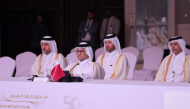
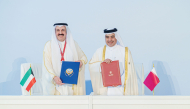
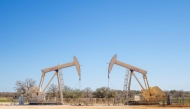
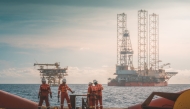
DOHA: The annual meeting of Arab Ministers of Finance held in Bahrain has stressed on the importance of attracting foreign direct investment (FDI) in non-oil sector to support a broad-based economic growth of the region. A document released by the IMF, based on the outcome of the April meeting of the Arab Ministers, noted the oil and gas sector has been the largest beneficiary of FDI in most oil-exporting Arab countries.
“In Oman, for instance, around 50 percent of FDI is invested in the oil sector. As manufacturing and service export bases remain limited in many of these countries, specialization and ntrances in a specific segment of global production chain could also benefit from FDI while improving export quality and sophistication, and accelerating technology and knowledge transfers, specifically in the form of FDI,” the IMF document said.
Improving the climate for foreign investment in non-oil industry may involve lowering entry requirements, creating investment promotion intermediaries, and streamlining tax structures. For instance, some countries impose a requirement of a majority domestic ownership that is a significant deterrent to FDI and should be eliminated or at least limited to strategic sectors.
The document noted oil-exporting Arab countries are at the early stage of their economic diversification. The oil-exporting Arab countries, though most already high income economies, are less manufacturing-diversified than the average country at the same per-capita income level.
Their high income mostly represents resource endowments, not structural transformation that has shifted the economy to a higher level of per-capita income. According to the document released by IMF, some oil-exporting Arab economies have experienced a certain degree of diversification in the last decades, but it has been uneven. Bahrain has diversified by developing banking and financial services—Particularly Islamic banking—and increased non-oil exports and non-oil output. The UAE has built, for example, a commercial ship repair sector. In most cases, however, economic diversification has moved at a slow pace.
Access to finance is an important condition for private sector growth. The oil-exporting Arab countries have a relative low percentage of firms with credit lines or loans from financial institutions, and only a small portion of bank lending goes to SMEs. For instance, while credit growth is strong in these countries, bank lending to private sector only accounts for 10-30percent of non-oil GDP in Algeria, Iraq, and Yemen. Further efforts to reform financial system, reduce directed lending, and develop domestic security markets will be important to support the financing of the private sector.
A business environment conducive to private sector growth is necessary for economic diversification. While the business climate in GCC countries remains relatively favorable, other oil-exporting Arab countries (Algeria, Iraq, Libya, and Yemen) rank low in the World Bank’s doing business indicators.
Reducing regulatory barriers to competition would also benefit economic diversification by raising productivity.
Competition laws should be strengthened to open up markets to private enterprises.
For instance, in Kuwait, a review of the competition policy law and its implementation and of policies related to barriers to entry could help increase competition.
The current environment of lower oil prices adds urgency to long-standing efforts to diversify oil-exporting Arab economies. Oil prices have dropped dramatically since mid-2014. Going forward, oil prices are expected to remain low, increasing only modestly over the medium term.
Therefore, oil exporters need to adjust their policies to preserve macroeconomic stability.
The Peninsula