The data notes that prime retail assets continue to outperform the wider market.
DOHA: Qatar's retail sector in the country remained stable during the third quarter of 2025, underpinned by resilient consumer spending and continued growth in tourism, according to market insights from Cushman & Wakefield.
While overall activity was steady, performance varied notably across retail formats, reflecting an ongoing shift in consumer preferences toward destination malls and lifestyle-led developments.
Cushman & Wakefield’s Q3 2025 data indicate that retail activity remains primarily driven by domestic demand, with additional support from a 2.2 percent year-over-year increase in tourist arrivals compared to the same period in 2024.
Speaking to The Peninsula, experts remarked that this uplift in visitor numbers has helped sustain footfall and sales across prime retail locations.
“Qatar’s retail sector is demonstrating strong resilience, particularly in prime and experiential destinations that align with evolving consumer expectations,” said Rahman, a retail owner in Qatar.
“Shoppers are increasingly drawn to high-quality environments that combine retail, dining, and leisure, which is clearly reflected in rental performance and occupancy levels.”
The data notes that prime retail assets continue to outperform the wider market. Rents for prime line stores now exceed QR320 per sq m per month, with smaller units achieving even higher rates, supported by strong occupancy and consistently high
footfall.
In contrast, secondary retail formats, such as older community malls, typically command lower rents in the range of QR180 to 230 per sq m per month.
On the other hand, new retail supply entering the market has been largely focused on open-air and lifestyle-oriented destinations, which are achieving rents of approximately QR150 to 200 per sq m per month.
Upcoming schemes, including The Avenues in Al Waab and Bahara Town in Abu Hamour, are expected to launch in 2026, with quoted rents ranging from QR180 to QR220 per sq m per month.
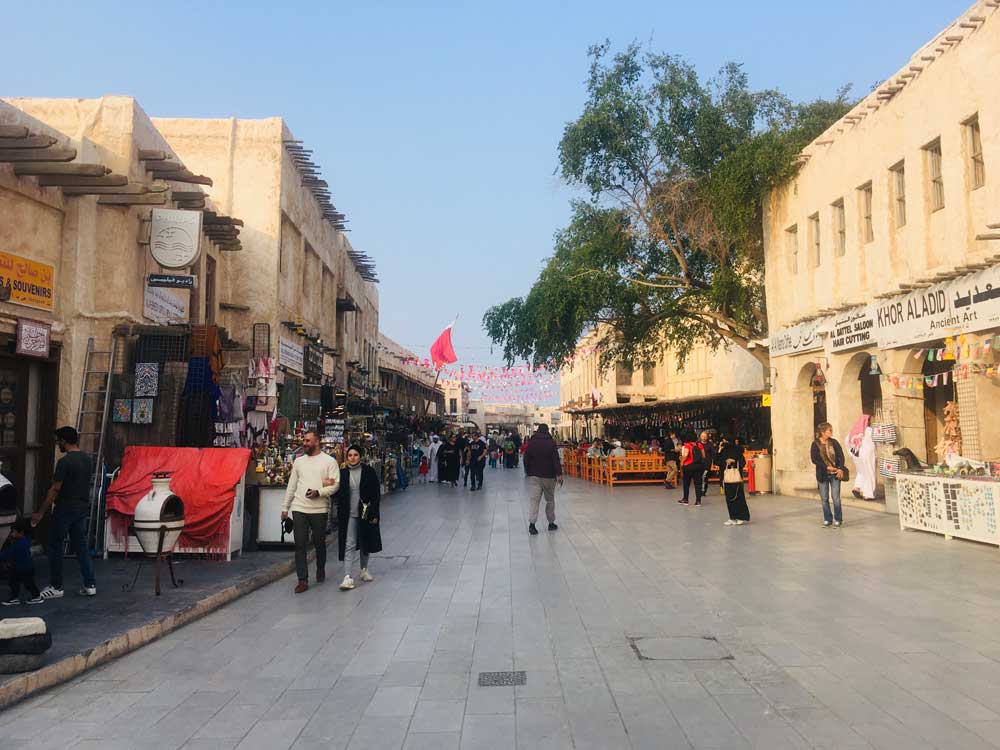
Over the past year, climate-controlled, open-air and pedestrianised retail and F&B destinations have emerged as clear winners, attracting strong tenant demand and achieving higher rents than legacy projects.
According to Cushman & Wakefield, this trend highlights the growing importance of advanced cooling technologies in delivering commercially successful retail environments in Qatar’s climate.
Industry leaders also noted that the FIFA Arab Cup 2025 provided a further boost to the retail sector. Elevated tourist arrivals and event-driven spending was witnessed to drive increased footfall across malls, dining hubs, and entertainment venues.
“The Arab Cup has been a significant short-term catalyst for retail performance,” Rahman said.
He further added, “Retailers, particularly in food and beverage, sports merchandise and experiential concepts, are well positioned to benefit from higher sales volumes, while landlords can capitalise through pop-up activations and extended trading hours.”
As the final quarter comes to an end, researchers expect a healthy outlook for Qatar’s retail sector, supported by rising tourism levels and the continued dominance of prime retail and lifestyle-driven real estate destinations.