
By Satish Kanady
DOHA: The International Monetary Fund (IMF), in its latest round of discussions with the GCC’s finance ministers and central bank governors in Doha, has stressed the need to revive their strategies for reform of domestic taxation system.
Tax reforms can help put in place modern and efficient tax systems that will increase revenue collections from the non-oil economy while also enabling the streamlining or elimination of the inefficient fees and duties currently in place. As well as raising revenues in line with, the countries need to address current fiscal pressures. These reforms will also begin to put in place the tax system that will be needed to ensure government service provision when hydrocarbon resources are depleted, a policy document released by the Fund the other day as a follow up to the annual meeting of ministers of finance and central bank governors held in Doha last month, said.
Raising more from domestic taxes and relying less on oil revenues will enhance the GCC governments’ accountability to the population given the more direct link that will be established between revenues and service provision.
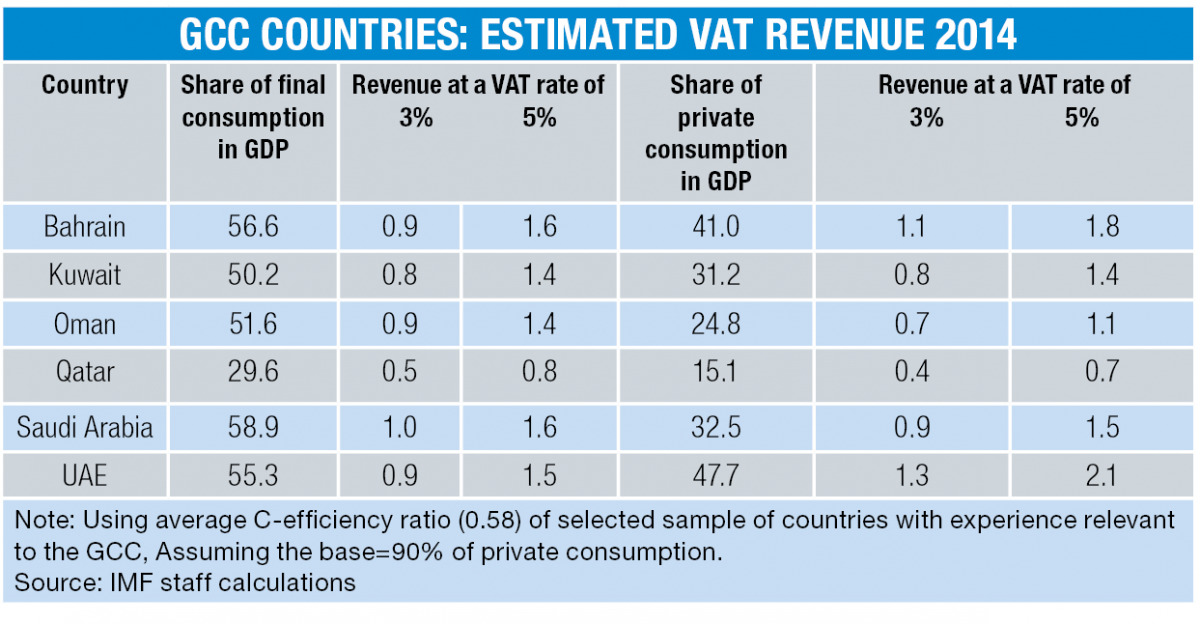
The Fund suggested GCC countries could choose a combination of modern tax options to meet their revenue needs. These include: a low rate broad-based VAT together with selected excises, a tax on profits of incorporated and unincorporated enterprises, and a recurrent property tax. A combination of these taxes can ensure efficient and progressive tax systems in the region. Taxes should start at low rates with limited exemptions. Such a system will be easier to administer and will have little or no efficiency costs to the economy.
Tax reforms will take time to implement as the institutional capacity needs to be developed. Efforts will require communication strategies at the national and regional levels to explain why taxation is needed and important with the aim to overcome ongoing scepticism about the usefulness of establishing modern taxation systems in oil-rich countries.
With regard to the VAT, the Fund noted it is important that the GCC countries announce the broad principles of the VAT framework they have agreed. Individual countries should then move forward with designing their own VAT law. International experience suggests it will take 18-24 months to introduce a VAT once agreement has been reached. Rather, individual countries should move ahead with their own reforms and implementation strategies when ready, and this may provide a demonstration effect to other countries.
The choice of the VAT threshold is crucial for the successful introduction of VAT. The simple rule of thumb is that the largest 10 percent of tax payers account for about 90 percent of total tax payments. The Fund advised the region to limit exemptions to the extent possible to basic social services and hard to tax outputs such as financial services. Experience shows that support for granting exemptions begins to wane only after a few years of VAT implementation. From the outset, countries have a tendency to grant exemptions across different sectors on grounds of efficiency, equity, or difficulty in identifying the taxable base. These exemptions generally lead to increasingly adverse effects.
The Peninsula