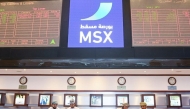
Dubai: Egypt’s stock index surged 3.1 percent in heavy trade yesterday as the Egyptian pound depreciated against the US dollar, prompting more buying by foreign funds, while Gulf bourses diverged.
The index in Qatar, which was closed for a public holiday on Sunday, rose 0.5 percent but finished well below its intra-day high. Qatari Investors Group was the top performer, jumping 9.9 percent.
On Thursday, Qatar published a 2017 state budget that projected a deficit of QR28.3bn ($7.8bn), much smaller than the originally projected 2016 deficit, and total spending of QR198.4bn, down from 202.5bn.
Twenty-seven of the 30 most liquid Egyptian shares rose, taking the index to a fresh eight-year high, with Telecom Egypt and Global Telecom Holding each jumping to their 10 percent daily limits.
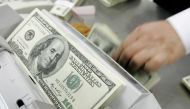
The Egyptian pound was being bought for 19 pounds per dollar against around 18.8 earlier in the day on the back of higher demand for the greenback amid a shortage at banks, bankers said.
Foreign investors were net buyers of Egyptian stocks by a modest margin, bourse data showed. Overall, many investors consider currency weakness a positive for the stock market in the short term because it makes prices more attractive for foreign investors, and may drive local funds into stocks as a hedge against inflation.
“The dollar rate is keeping up the appetite” for stocks among foreign funds, said Wafik Dawood, portfolio manager at Compass Capital.
Also boosting sentiment was news that Banque Misr had signed a memorandum of understanding with Industrial and Commercial Bank of China for a $500m loan aimed at increasing dollar liquidity and financing joint Egyptian-Chinese projects.
Allen Sandeep, director of research at Cairo’s Naeem Brokerage, said the International Monetary Fund’s three-year, $12bn bailout programme for Egypt, finalised in early November, was continuing to buoy the stock market.
“Historically, any time an emerging market won an IMF bailout, stock markets soared - one case study could be India’s bailout in 1991, because structural change on both the monetary and fiscal level will eventually be prosperous for the economy.”
Although that is slightly contractionary, it is less so than the 2016 budget, and the government plans to increase capital spending next year.
It did not announce any major new austerity measures; the budget’s conservative oil price assumption of $45 a barrel suggests the government has plenty of room to meet its targets next year. In Saudi Arabia, the index was dragged 0.9 percent lower by a 3.7 percent drop in the largest listed stock, Saudi Basic Industries, after the company announced a lower cash dividend for the second half of this year compared to a year earlier.
The negative sentiment spilled into some other blue chips, with National Commercial Bank declining 1.4 percent.
But builder Abdullah Al Khodari was the top performer, surging 9.3 percent in unusually heavy trade. The company, which has many projects with the government, may benefit from increased work in the coming year if the kingdom’s 2017 budget includes an increase in construction expenditure, as many analysts expect.
Saudi Cable Co, which rose 2.5 percent on Sunday after saying its Turkish subsidiary had won a $50m order, climbed a further 3.3 percent.
Dubai’s main index lost 0.6 percent to 3,532 points in a second consecutive day of thin trade, retreating further from technical resistance on the August peak of 3,624 points, which it tested and failed to break decisively last week. Emaar Properties lost 0.9 percent.
Blue chips were weak in Abu Dhabi, where the index slipped 0.4 percent; telecommunications operator Etisalat lost 1.6 percent.