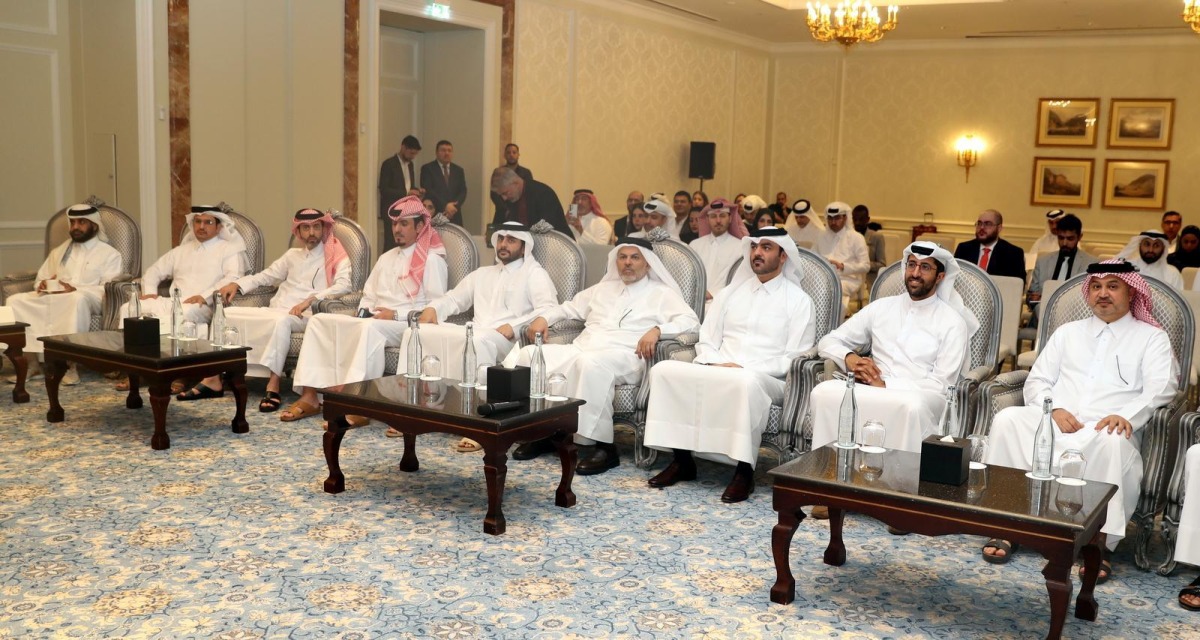
MoT Undersecretary H E Mohammed Abdullah Al-Maadeed and other officials during the workshop.
Doha, Qatar: A Ministry of Transport (MoT) workshop focused on presenting the results and key recommendations of the project; ‘Study of the Competitive Position of Hamad Port’ has concluded, in attendance of MoT Undersecretary H E Mohammed Abdullah Al-Maadeed.
The workshop was attended by several bodies concerned, partners, and the project team from the MoT.
Opening the event, Al-Maadeed said that Qatar has over the past few years progressed significantly in terms of developing its transportation infrastructure and invested heavily in establishing modern ports, airports and free and logistics zones, in addition to world-class road network; something that positioned the country among advanced economies when it comes to infrastructure readiness.
With such an advanced level of readiness, he said, we bear a strategic responsibility, which is maximising the ROI and transforming them into a tangible, sustainable economic impact. And here comes the importance of developing our logistics industry as the major strategic pathway to translating that readiness to sustainable competitiveness, enhance the country’s position in global supply chain, and achieve real value added to support our national economy in the long term, he said.
With that, Hamad Port emerges as the heart of the logistics industry in Qatar and the place where the national infrastructure ecosystem is fully operative, he said. When Hamad Port operates in full capacity, he explained, this doesn’t mean the operation of a single facility, but unlocking a whole network of roads, and free and logistics zones, and supply chains.
Enhancing Hamad Port’s competitiveness, he added, isn’t an operational option, but strategic priority that enables the national infrastructure to fully support the economic growth and achieve the aspired impact.
The workshop included a presentation on Hamad Port’s competitive position regionally and globally.
It also presented key results, recommendations, and port competitiveness enhancement initiatives within the study, and implementation mechanisms.
Additionally, the study touched upon cargo traffic growth obstacles, including procedural and cost-related challenges. It also presented practical recommendations and proposed measures to mitigate these barriers and enhance the port’s overall competitiveness.
According to the study, the recommendations covered the following points and their execution through 24 initiatives: reducing costs, enhancing the port’s operational efficiency, introducing regulatory amendments to streamline the licensing structure across logistics industry’s activities, empowering the private sector, improving infrastructure, attracting investments and making them easy to carry out, and effective commercial communication.