Al Rawi Initiative to inspire love for Arabic language
Doha, Qatar: Carnegie Mellon University in Qatar (CMU-Q) is placing a renewed emphasis on the study of Arabic language and culture. Through a myriad of curricular, co-curricular and research activities, the campus is providing opportunities to enrich the understanding of Arabic and cultural context for students.
As a Qatar Foundation partner university, CMU-Q delivers the same top-ranked, English-language curriculum as the campus in Pittsburgh. The select degree programs of artificial intelligence, biological sciences, business administration, computer science and information systems all align with Qatar’s national priorities, and the majority of CMU-Q graduates stay in Qatar to contribute to the knowledge economy.
The dean of CMU-Q, Michael Trick also recognizes that cultural awareness and proficiency in the Arabic language are important skills for graduates to become effective leaders in Qatar and the region.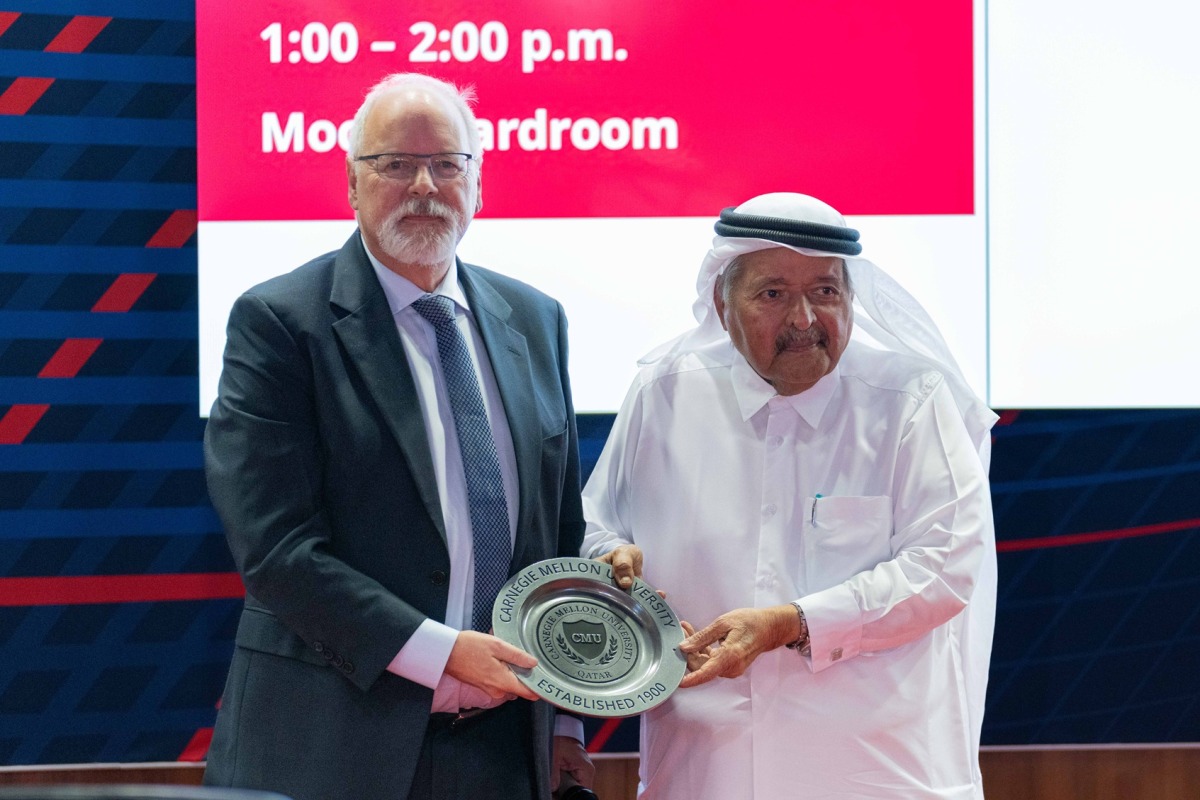 Dean of CMU-Q, Michael Trick with His Excellency Sheikh Faisal bin Qassim Al Thani
"We want to provide our students with the background history, cultural understanding, and linguistic competency to contribute in a professional setting in Qatar,” said Trick.
A Foundation in Arabic Studies
A core component of the focus on Arabic is the minor in Arabic Studies. CMU-Q has offered Arabic language courses since 2009, and in 2016 a minor was officially announced for both the Qatar and Pittsburgh campuses.
Designed to build language proficiency and a deep understanding of Arabic culture and history, the minor provides a clear path for students at all skill levels. Students can begin with elementary and intermediate courses before declaring the minor, which requires advanced-level proficiency for completion.
The curriculum also offers flexible options. Native and near-native speakers can work with advisors to accelerate their studies, and all students are encouraged to supplement their coursework through study abroad.
In the summer of 2026, CMU-Q will also be launching an intensive six-week Arabic course that will combine language and cultural studies.
Al Rawi Initiative to inspire love of Arabic literature
This semester, CMU-Q launched the Al Rawi Initiative, a speaker series and reading challenge for the entire Education City community. Organized by Ezzohra Moufid, lecturer of Arabic studies, Al Rawi will host local authors and encourage community members to explore Arabic literature.
"We hope Al Rawi will become a vibrant space for our community to engage with authors and discuss literary works," said Moufid. "The Arabic language is deeply connected to our heritage and identity, and Arabic literature is a wonderful way to celebrate the language and spur important and thought-provoking conversations within our community.”
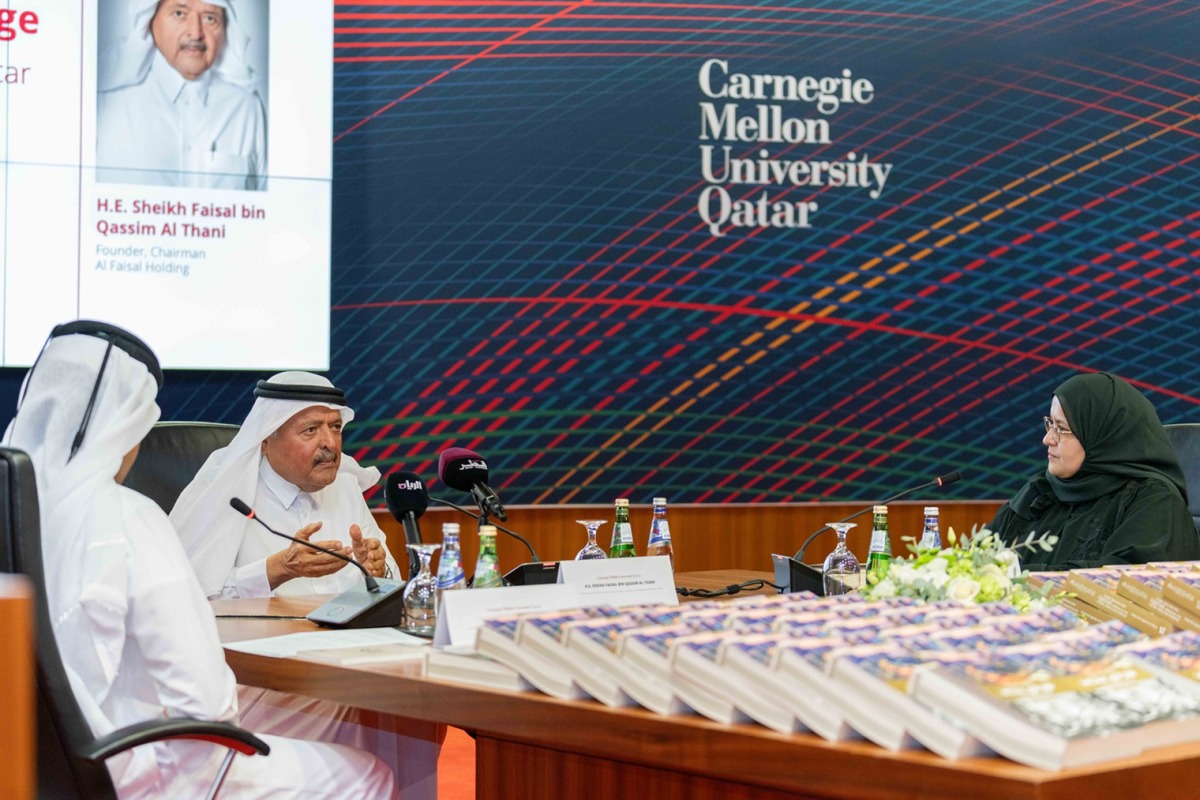
The inaugural Al Rawi event featured His Excellency Sheikh Faisal bin Qassim Al Thani, who discussed his acclaimed work, "The Qatar We Lived In," a personal reflection on Qatar’s history, people and progress.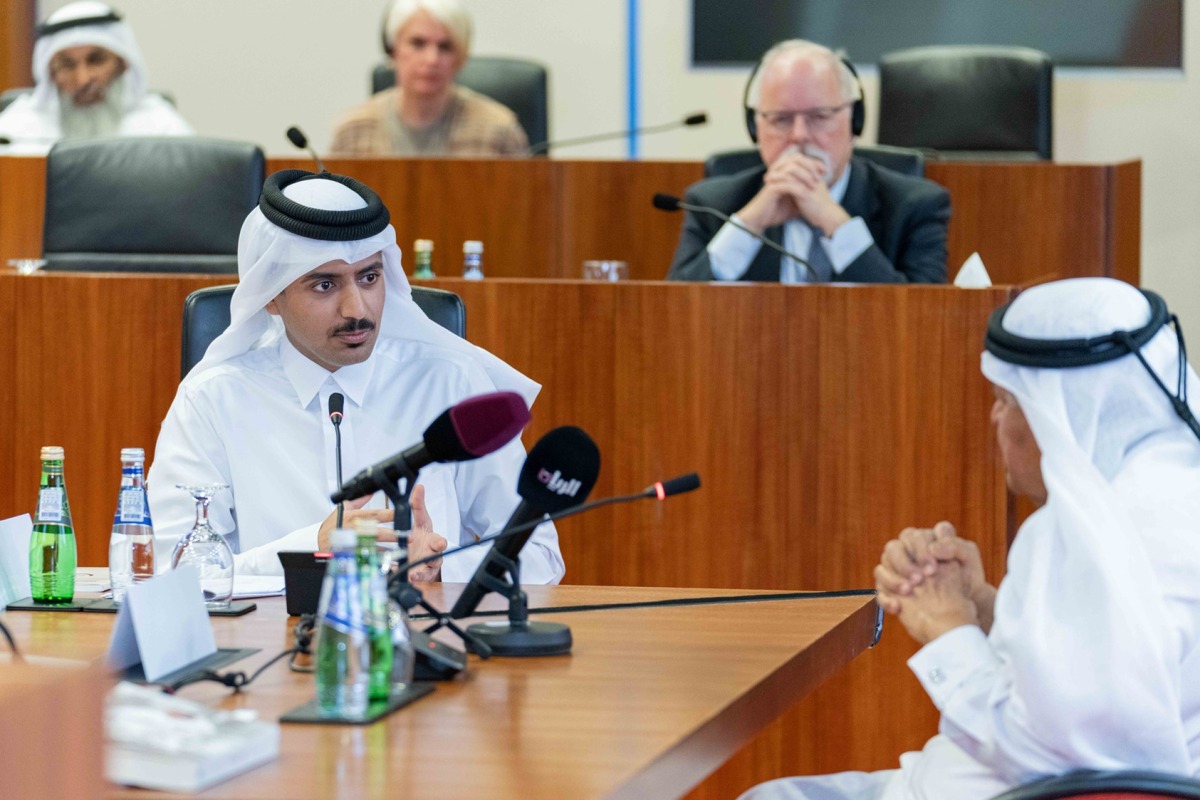 During his talk, Sheikh Faisal shared profound insights regarding Qatar's extraordinary transformation. The discussion centered on the nation's history, cultural identity, and the essential role of leadership in societal progress.
Pioneering research in Arabic AI
Complementing the cultural emphasis on Arabic is CMU-Q’s research strength in Arabic Natural Language Processing (NLP). Faculty at CMU-Q have conducted research into AI and the Arabic language for nearly 20 years, and are experts in the complexities of this field.
Associate teaching professor of information systems and a leading expert in Arabic NLP, Houda Bouamor noted that most AI models are trained on formal, literary Arabic, leaving them unable to understand the region's many spoken dialects.
"Even with hundreds of millions of speakers, Arabic is considered a low-resource language in the AI world," Bouamor said. "For everyday dialects — like those spoken here in Qatar — the gap is even bigger. This means many tools don’t fully understand how we communicate in real life.”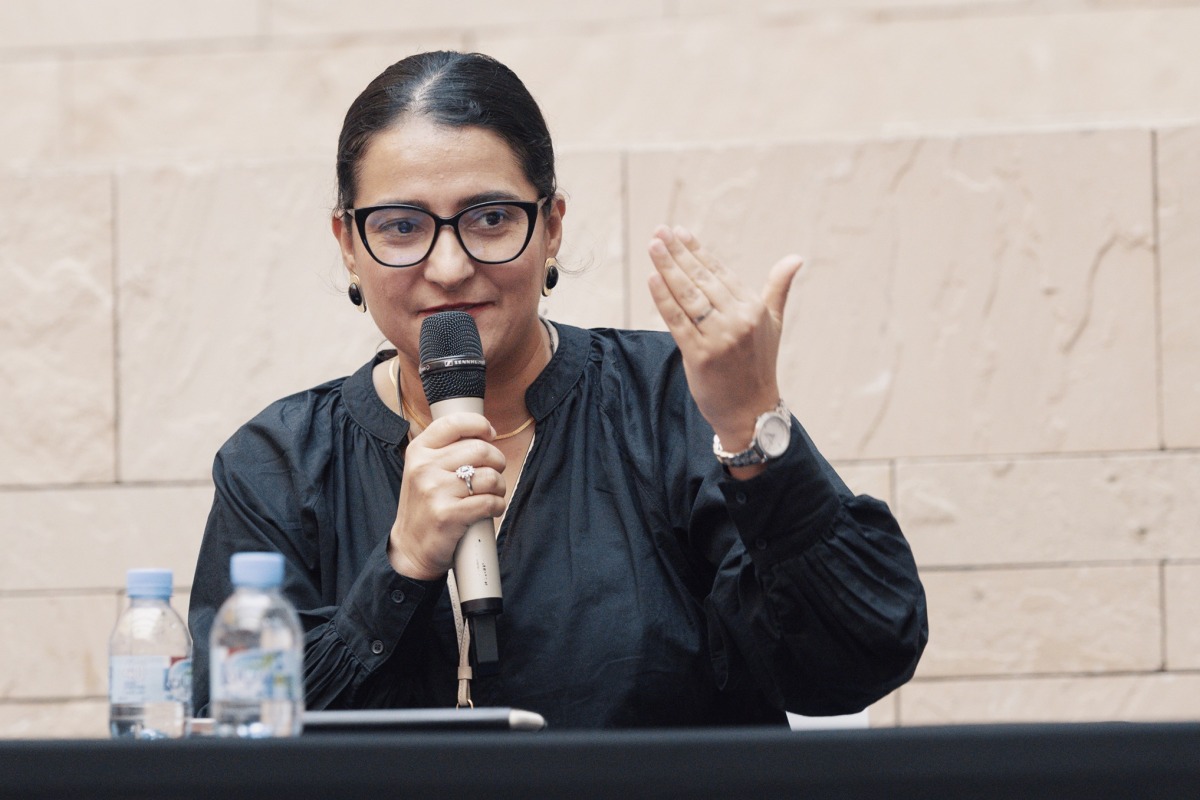 Associate teaching professor of information systems and a leading expert in Arabic NLP, Houda Bouamor
CMU-Q researchers are actively working to close this gap. Projects have included creating an interactive Qatari Linguistic Map to trace the social and geographic variations of the local dialect, improving language learning in the K-12 classroom, and developing new AI models for the automated scoring of Arabic language writing proficiency.
A legacy of excellence in Arabic debate
The majority of the student population is composed of native Arabic speakers, and CMU-Q has a long history of success in Arabic-language debate.
Most recently, a new team reached the final round of the Third Asian Arabic Debating Championship in Muscat, Oman. The team placed second in a field of 40 teams from 16 Asian countries.
Arabic debate at CMU-Q is mentor-driven, with experienced students recruiting new team members and training them in building arguments, delivering strong presentations, and engaging in meaningful dialogue.
Mohamed Elzeni is a computer science senior and the leader of the team that competed in Oman.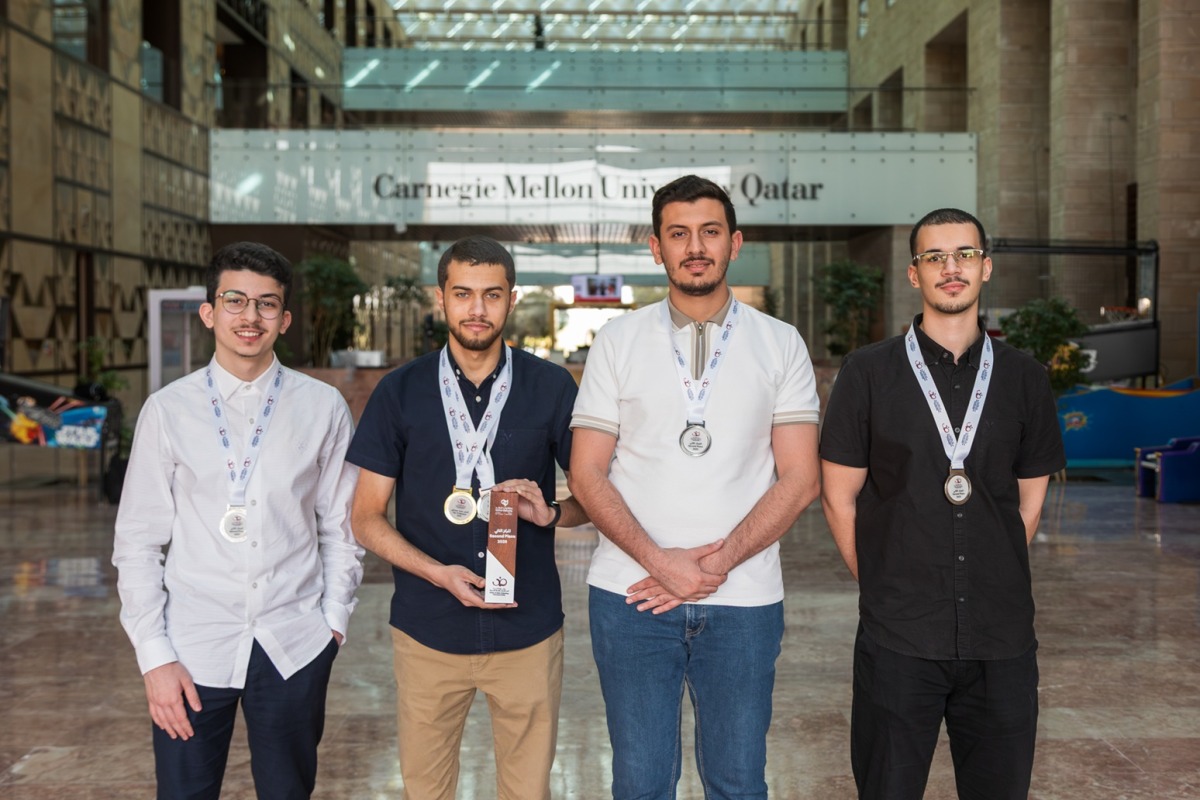 "Language shapes your identity, shapes your culture, shapes what you talk about in general," he said. "When we have these discussions in Arabic, we discuss a lot of things that are specific to our culture and identity and we learn a lot about it."