Damascus: With the arrival of the holy month of Ramadan, Syria's old neighborhoods regain their distinctive glow and charm.
Fasting during Ramadan is not limited to worship; it extends into a broader social and cultural experience embodied in the iftar table. In Syria, particularly in the capital, Damascus, a range of traditional foods and drinks has become inseparable from the culinary identity of the month. No iftar or suhoor table is complete without maarouk, na'em, and heritage beverages that quench the thirst of those observing the fast.
Maarouk reigns supreme among Syria's Ramadan pastries. A sweet bread infused with the aromas of mahlab, anise and molasses, it is known for its golden hue and soft, fluffy texture.
For decades, making and selling maarouk has been woven into Syrian memory. Long queues form outside bakeries before sunset to buy it fresh and warm, while vendors can be found in every neighborhood and alley.
Fillings vary from date paste and raisins to coconut and chocolate, though the classic sesame- and nigella-topped maarouk remains a family favorite for its balanced taste and affordable price.
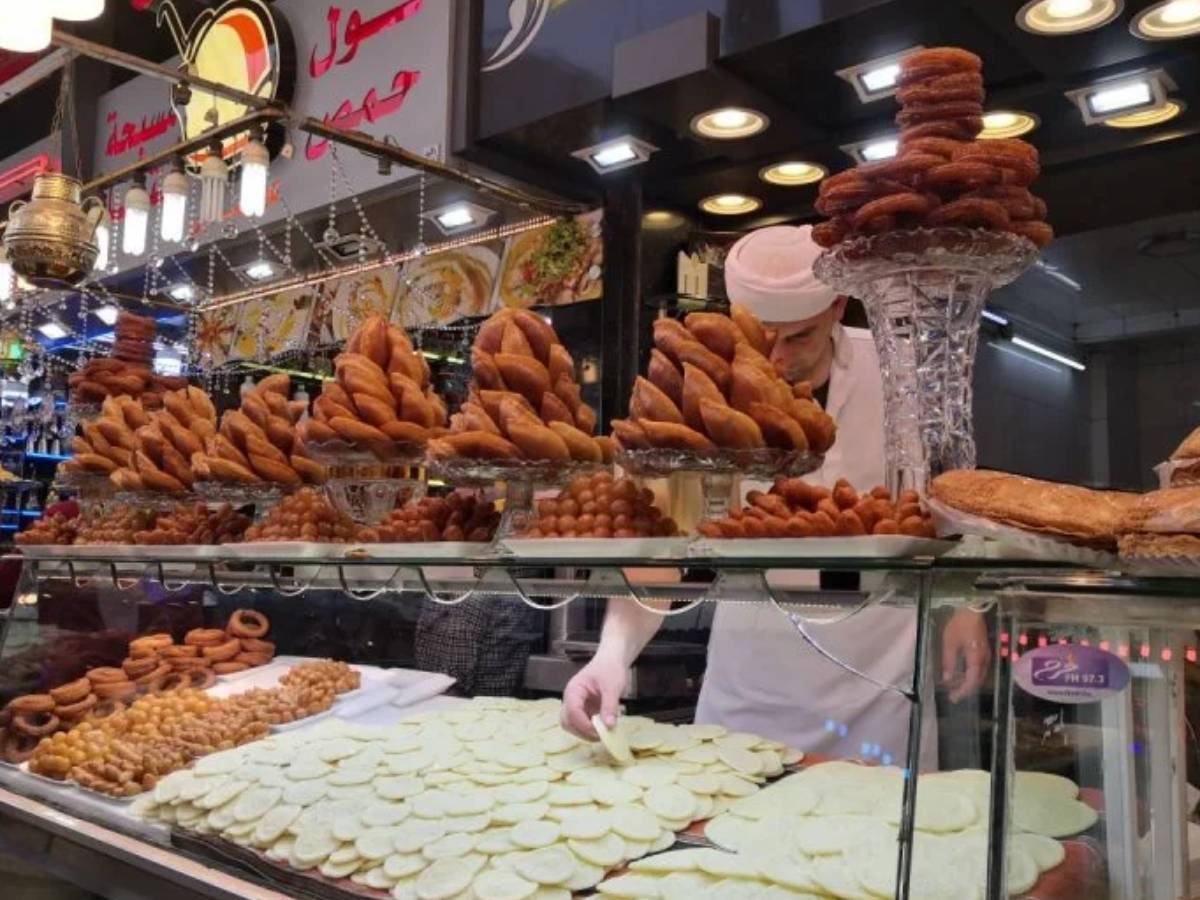
Alongside maarouk, other pastries also take center stage. During Ramadan in Damascus, it is impossible not to hear street vendors calling out, advertising the crispy flatbread sold exclusively during this month in the capital.
Na'em consists of ultra-thin sheets of dough fried until crisp, then drizzled with grape or date molasses. It is a hallmark of Damascene Ramadan heritage, sold on the streets and from roaming carts. Considered a light dessert, it is purchased daily by many Damascenes to add a nostalgic touch to their evening gatherings.
Another enduring favorite is tamari ka'ak, a popular treat made of very thin layers of dough carefully stretched and filled with banana, tahini and sugar. Vendors often offer additional fillings such as cream, walnuts, nuts, and sesame, depending on customers' preferences.
Tamari is prized for its energy-rich ingredients and delicious flavor. While available year-round in Damascus and Aleppo, demand rises significantly during Ramadan, when it takes on a special seasonal appeal, combining simple ingredients with skilled hand preparation.
As these pastries provide warmth and indulgence, Ramadan beverages offer refreshment. Chief among them is tamarind juice, prepared using traditional methods. Dried tamarind pods are soaked in cold water for several hours, then boiled and hand-pressed to extract a concentrated essence.
The liquid is strained through fine cloth, sweetened and infused with Damascene rosewater before being chilled. Its tangy flavor helps restore energy and balance after a long day of fasting. Tamarind remains a staple Ramadan drink across Syria.
Licorice ('araqsoos) is another popular beverage. Its preparation begins by mixing crushed licorice roots with water and a small amount of baking soda, then leaving the mixture under the sun to ferment, oxidize and dry, a process that gives it its deep color and natural sweetness. The fermented powder is placed in a cloth pouch, and cold water slowly drips through it.
The drink is famously served with a thick foam created by pouring it from a height, offering a distinctive sweet taste with a hint of bitterness.
Though also enjoyed as a summer refreshment, licorice retains its strong association with Ramadan traditions.
Another refined favorite is jallab, known in Syria as a concentrated mulberry syrup. Ripe black or dark red mulberries harvested from the orchards of Eastern and Western Ghouta are pressed and strained, then simmered with sugar over low heat until thickened into a syrup that can be stored.
During Ramadan, it is diluted with iced water and sold in markets or prepared at home. With its deep crimson color and rich flavor, often served over ice, jallab is a highlight of Ramadan evenings.
These foods and beverages represent more than nourishment; they are living traditions that reflect people's attachment to their culture and their ability to preserve it as a shared memory tied to a religious and social occasion that fosters warmth and harmony.
In Syria, Ramadan table remains a vivid testament to the depth of enduring Arab heritage.