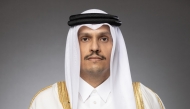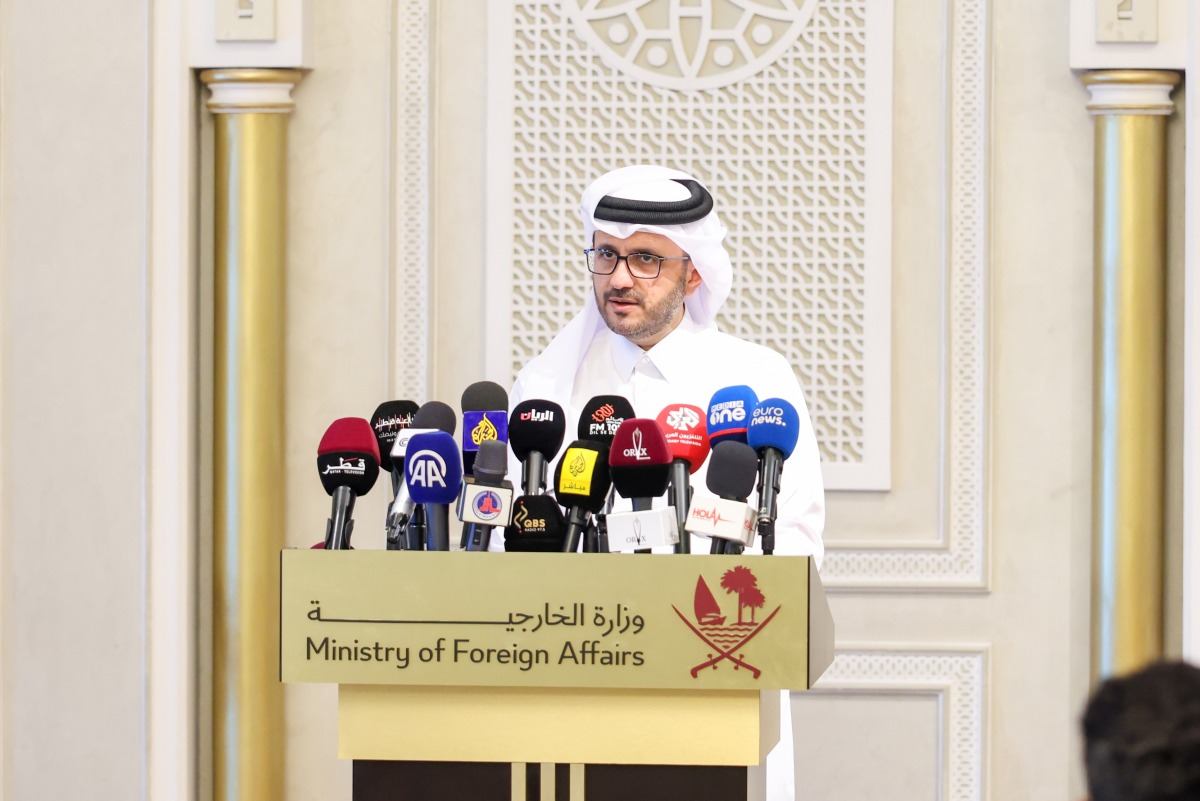
Doha, Qatar: Advisor to the Prime Minister and Official Spokesperson for the Ministry of Foreign Affairs Dr. Majed bin Mohammed Al Ansari has said that Qatar fully supports mediation efforts undertaken by Pakistan to end US-Iran war.
“Qatar continues its ongoing communication with various parties, including the United States of America, to follow developments amid the current tensions and to support efforts aimed at reaching a peaceful solution to end the crisis,” Al Ansari said in a weekly media briefing yesterday.
He noted that Qatar is in continous coordination and communication with the Pakistani side. “There is direct coordination with Pakistan, which is making significant efforts to engage with the parties involved in the crisis.”
He added, “It is too early to speak of the failure of the ongoing negotiations, particularly as the international community supports these efforts and hopes for their success.”
Regarding the ceasefire between the United States and Iran, Dr. Al Ansari noted that Qatar has repeatedly called for an end to the war due to its negative impact on the global economy and the oil and gas sectors. He called for a return to the negotiating table and the pursuit of peaceful solutions to end the crisis.
He further emphasized that if no agreement is reached, Qatar supports extending the ceasefire until a solution is found, given the futility of returning to escalation and its negative consequences for the global economy and the security of populations in the region.
To a question, he said that Gulf states, including Qatar, are in near-daily contact with various parties, given that the crisis directly impacts the security and stability of the region.
On the Strait of Hormuz, he said that any closure of the strait would transform the crisis from a regional issue into a global one, due to its connection to the energy sector, supply chains, export and re-export operations, and its wide-ranging impact on daily life worldwide. “The impact of closing the strait would be felt even at the household level and in essential services in countries thousands of kilometers away.”
He further said that Qatar remains in contact with all international parties and reaffirms its commitment to its partners worldwide—whether those relying on energy sources and Qatari energy products, particularly liquefied natural gas, or its broader economic partners.
“Qatar has consistently proven itself to be a reliable partner in this field and continues to engage with its partners to reach solutions to this issue, which is a priority for its national security as well as for the interests of Qatar and its global partners.”
Responding to another question about Pakistan-Saudi defence pact, Al Ansari said that relations between the Gulf countries and Pakistan are historic and strategically important, rooted in brotherhood and long-standing cooperation, with strong coordination at various levels.
He explained that partnerships among countries in the region are continuous and enduring, representing a natural extension rather than a new development. “Developing Qatar’s defense partnerships remains an ongoing priority under all circumstances, as part of a policy of diversifying and expanding international relations, without being tied to any specific situation requiring a special relationship with a particular party. The relations with Pakistan are broad and diverse within the framework of bilateral partnerships.”
He also reaffirmed Qatar’s continued support for the Syrian people, noting that Qatar was among the first countries to support the path toward stability in Syria, and that bilateral relations are witnessing development across political and economic fields.
He also highlighted Qatar’s efforts to strengthen its national security and defense capabilities, praising in this context the role of the Qatari Armed Forces in protecting the country during attacks prior to the ceasefire.
To a question, he noted that it is too early to make assumptions about the future of the ceasefire, as this depends on the parties involved.
On Lebanon, Dr. Al Ansari reaffirmed Qatar’s firm position in supporting the unity and sovereignty of the Lebanese Republic, condemning violations and attacks that have resulted in casualties and large-scale displacement. He welcomed the ceasefire as an initial step toward de-escalation.