Photo from Divan Centre social media
Berlin: Estrel Berlin became a meeting place for Arabic and German literature, scholarship and culture as Der Divan – The Arabic Cultural House held its fourth Arab Book Fair from 16 to 18 October.
Bringing together more than 110 publishers from the Arab world and Germany, the fair offered visitors the opportunity to discover new publications, meet authors and explore a wide range of literary and scholarly perspectives.
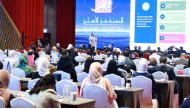
The fair is designed to be more than a showcase for books and publishers. Its accompanying programme creates a space where literature, translation, research and cultural memory can enter into conversation. This year’s events included panel discussions, literary meetings and specialist sessions on Arabic literature, the publishing industry, historical manuscripts and the role of cultural institutions in international dialogue.
An opening dedicated to cultural dialogue
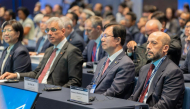
The opening ceremony on Friday, 16 October, highlighted the fair’s role as a platform for exchange between the Arab world and Germany. Speakers included H.E. Abdullah bin Ibrahim Al-Hamar, Ambassador of the State of Qatar to Germany and Chair of Der Divan’s Advisory Board; Jassim Al-Buainain, Director of the Doha International Book Fair and Head of the Libraries Department at Qatar’s Ministry of Culture; Bachar Chebaro, Secretary-General of the Arab Publishers Association; Dr Annika Reich, writer, essayist and initiator of the international literary project “Weiter Schreiben”; and Christina Beinhoff, Head of the Culture and Communication Division at Germany’s Federal Foreign Office.
Their contributions underscored that book fairs extend beyond the commercial exchange of publications. They can bring literary voices into view, convey cultural experience and deepen understanding between societies through encounters with their texts and ways of thinking. With more than 110 participating publishers, the fair presented a broad range of Arabic-language and related publications, from literature and poetry to academic works, art books and children’s books.
Translation, publishing and the future of the book
Arabic–German literary translation was a central theme. In a discussion entitled “Arabic–German Translation: The Present, Challenges and Future Prospects,” Dr Thorsten Arendt, Samir Grees, Larissa Bender and Dalal Nasrallah explored the possibilities and challenges of bringing literary works between the two language communities. Mustafa Al-Slaiman moderated the session, with simultaneous interpretation by Linda Haddad.
The discussion approached translation as more than the transfer of words from one language to another: it opens new spaces for reading, conveys cultural contexts and enables literary works to reach audiences beyond their original readership. The international role of book fairs was also examined in a panel featuring Bachar Chebaro, Jassim Al-Buainain and Claudia Kaiser of the Frankfurt Book Fair, moderated by Mustafa Al-Slaiman. Participants discussed the visibility of literature, cooperation among publishers and the potential of book fairs to foster lasting relationships between cultural spheres.
Arabic manuscripts: a living narrative tradition
The programme also marked the concluding event in the series “Treasures of Knowledge – Arabic Manuscripts in Dialogue,” organised in cooperation with the Berlin State Library. Under the title “Creative Storytellers in Arabic Manuscripts,” Prof. Dr Claudia Ott and Dr Johannes Stephan joined moderator Christoph Rauch to explore the literary voices, storytelling traditions and worlds of knowledge preserved in Arabic manuscripts.
The session presented manuscripts not only as historical documents but also as carriers of literary imagination and cultural memory. It demonstrated how engagement with inherited texts can open new perspectives on the history of Arabic literature and enrich the dialogue between historical research and contemporary cultural work.
Qatar’s maritime heritage and cultural memory
Qatar’s cultural heritage also had a prominent place in the programme. In the discussion “The Sea in Qatar’s Cultural Memory: Stories, Art and Identity,” Mohammed Al-Sayegh and Omar Bousaqer, moderated by Rashid Hilal, considered the maritime heritage of Qatar and its significance for the country’s cultural identity.
The conversation explored the stories, artistic expressions and traditions associated with the sea, showing how maritime life has shaped collective memory across generations and continues to live on through storytelling, art and cultural practice. It offered a perspective on Qatar’s history that reaches beyond political and economic narratives to highlight the cultural experiences that have helped shape society.
Cultural institutions as bridges between societies
A further panel, “Cultural Institutions: Bridges for Dialogue and Understanding Between Societies,” considered how institutions can create spaces for encounter through their programmes, collections, publications and international partnerships. Participants included Dr Mohammed Boudi, Dr Safa Alalawi, Ibrahim Al-Buhashim Al-Sayyid, Director-General of Qatar Books House (Dar al-Kutub al-Qatariyya), Said Al-Saqlawi and Prof. Dr Achim Bonte. Mustafa Al-Slaiman moderated.
The discussion emphasised that cultural exchange depends not only on individual events but also on sustained cooperation among institutions that preserve, interpret and make knowledge accessible to the public.
Arabic poetry, digital literature and meetings with authors
Arabic poetry was explored in “On the Shores of Arabic Poetry: The Melody of Rhyme in the Arabic Language.” Poet Abdulrahman Al-Dulaimi, Dr Rashed Al-Najem, Hamedy Almutairi and Dr Ishaq Al-Khanjari, in a session moderated by poet Fares Matar, considered the expressive power of Arabic, the sound and form of poetry, and the place of poetic traditions in cultural memory.
Contemporary literary production was the focus of “Digital Literature and Contemporary Publishing: Between Cultural Identities,” featuring Shamma Shaheen Al-Kuwari, an award-winning Qatari writer and novelist; Dr Amur Al Aisari, Associate Professor at Sultan Qaboos University’s College of Education and representative of the Omani Society for Writers and Authors; and writer, translator and Islamic studies scholar Stefan Weidner. The discussion addressed how digital media are changing literary creation and distribution, and the opportunities and tensions this creates for authors, publishers and readers.
The fair also offered opportunities for direct encounters and book signings. Participating authors included Dr Amir Hamad, Nader Haj Omar, Mousa Alzaeem, Dr Dalal Makari-Pausch, Said Abakar Ahmed, Dr Mohammed Jouda and Dr Najat Abed Alsamad. Visitors were able to speak with writers about their work and the experiences, research and creative processes behind their books.
The Riwaq Prize: recognising scholarship across languages
A major moment of the fair was the presentation of the inaugural Riwaq Prize for Science and Culture, a joint initiative of Der Divan – The Arabic Cultural House and the German Orient Institute Beirut. The ceremony included remarks by Clemens Hach, Deputy Head of the Middle East and North Africa Division at Germany’s Federal Foreign Office.
The prize recognises outstanding scholarly monographs on Arab cultures and societies, particularly works that advance their fields through original research, innovative approaches and critical perspectives. In its first edition, dedicated to the humanities, three books were honoured in Arabic, German and English. The winners were Dr Raed Al-Samhouri for Ibn Taymiyya al-Tarikhi wa-l-Mustaʿad; Prof. Dr Yvonne Albers for Beirut und die Zeitschrift Mawaqif. Eine arabische Intellektuellengeschichte 1968–1994; and Nora K. Schmid for The Ascetic Qur’an and its Kharijite Readers. The prize’s total value is €3,000, divided equally among the three language categories.
A shared space for literature, knowledge and understanding
Across three days, the fourth Arab Book Fair brought together publications and discussions spanning historical heritage, literary expression, scholarly inquiry and contemporary developments. The diversity of authors, researchers, publishers and cultural institutions demonstrated the value of exchange in which different perspectives do not merely coexist but engage with one another.
Through the fair, Der Divan – The Arabic Cultural House continues its work to make literature and knowledge from the Arab world accessible to a broad audience and to strengthen exchange between Arab and German cultural and academic communities. The book remains more than a vehicle for information: it is a place where memories are preserved, questions are renewed and bridges between societies are built.