File picture used for representation.
DOHA: The Qatar-EU trade lane has been projected as one of the busiest routes, both in terms of air and sea freight lanes, in the Emerging Market.
The EU-Qatar air freight lane is forecast to grow by 39.4 percent, while Qatar-EU sea freight air lane is projected to expand by a whopping 121.7 percent.
The annual Emerging Markets Logistics Index, released by global logistics leader Agility described Qatar as the “surprise GCC Index darling this year”, with its score improving by 0.24 points to 6.02, ranking it No. 11. Qatar made significant gains in Compatibility as economic diversification progressed and non-tariff barriers were judged to be less of a burden, while Connectivity improved thanks to better liner shipping connections.
The index that evaluates the performance of 50 emerging markets globally, found Qatar improving its overall index ranking by one spot to (No.11). Qatar jumped two spots to No.8 in the infrastructure/transport category and maintained its grip on No. 2 for business conditions. Qatar leapt past Chile to rank as the No. 2 emerging market for countries with less than $300bn annual GDP. Malaysia remained the leader for smaller emerging markets.
The five fastest-growing trade lanes in 2017 are EU-Ukraine (+40.9 percent), EU-Qatar (+39.4 percent), EU-Angola (+38.3 percent), US-Ecuador (+33.3 percent) and US-Russia (+30.8 percent). Emerging markets sea freight exports are much more diverse compared to imports, which are overwhelmingly comprised of agricultural goods. The five trade lanes forecast the fastest growth in 2017 are Qatar-EU (+121.7 percent), Nigeria-EU (+78.9 percent), Egypt-US (+75.0 percent), Ukraine-US (+70.9 percent) and Morocco-US (+58.1 percent).
Qatar stood second in the Compatibility sub-index, which is effectively a measure of market accessibility and the ease of doing business. Qatar, which halved the gap last year, has caught up even more as economic diversification progresses and non-tariff barriers diminish. The Agility report noted that Qatar’s improvement should be treated cautiously as the data has not yet got a chance to combine several factors. It added that the country is well-equipped to endure the blockade.
“Firstly, the country can rely on highly developed air and sea infrastructure. Hamad International Airport in Doha is the second-largest air cargo hub in the region, after Dubai International, and handled 1.7m tonnes of goods in 2016.
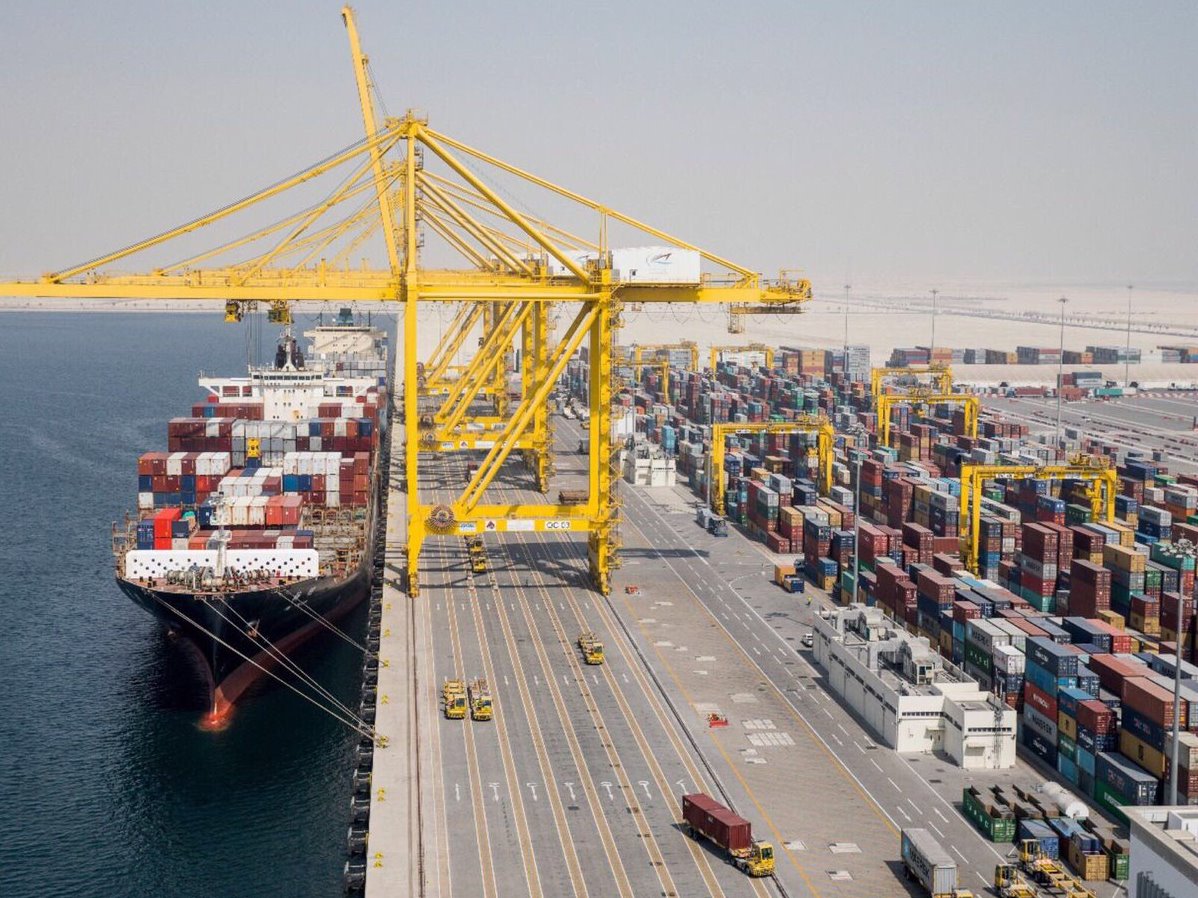
Hamad Port became fully operational in December 2016 and has an annual capacity of 2m TEUs, 1.7m tonnes of general cargo, 1m tonnes of grain and 500,000 vehicles. If necessary, Qatar can also revive operations at Doha Port, which Hamad has replaced.”
Oman was rapidly identified as the main alternative to the UAE for container transshipment, with the country’s Sohar Port set to benefit from an increase in volumes.
In the wake of the crisis, Qatari logistics group Milaha Maritime & Logistics announced the launch of a regular direct service from Sohar to Hamad, whilst Maersk Line commenced feeder services from Salalah on June 19. Other container lines soon followed.
As for air freight connections, cargo shipments only face lengthened flight times if they are connecting to or from southern Europe, North Africa or the Horn of Africa. Routes to northern Europe and North America generally pass over Turkey and Iran, and are thus unaffected, as are flights from Asia.