DOHA: Qatar’s overseas acquisitions accounted for 45 percent of Middle Eastern outbound Mergers and Acquisitions (M&A) activity during the first nine months of 2014. The acquisitions by UAE and Saudi Arabian companies accounted for 25 percent and 22 percent, respectively, a top market expert noted yesterday.
Commenting on Thomson Reuters’ quarterly investment banking analysis for the Middle East region released yesterday Nadim Najjar, Managing Director, Middle East & North Africa, Thomson Reuters said: “Despite the quarterly downturn, M&A during the first nine months of 2014 increased 2 percent from the same period last year to $29.9bn. Domestic and inter-Middle Eastern M&A declined 44 percent to $8.3bn during the first nine months. Inbound M&A also declined, falling 7 percent to $5bn. Outbound M&A drove activity, up 67 percent from this time last year to reach $10.7bn, the highest first nine month total since 2011”.
In respect to the M&A activity, the value of announced M&A transactions with any Middle Eastern involvement reached $11.8bn during the third quarter of 2014, an 18 percent decline from the value registered during the previous quarter.
During the first nine months of 2014, Middle Eastern investment banking fees fell 60 percent less than the value recorded during the previous quarter, according to estimates from Thomson Reuters/Freeman.
Najjar said: “Middle Eastern equity and equity-related issuance during the first nine months of 2014 totalled $5.1bn, a 43 percent increase in activity from the same period in 2013.”
Middle Eastern debt issuance reached $6.3bn during the third quarter of 2014, down 68 percent from the record-breaking second quarter total of $19.7bn. Boosted by the strong second quarter, bonds issued so far during 2014 increased 5 percent from the same period last year, to $32.8bn.
Despite the quarterly downturn, fees earned so far during 2014 saw a slight uptick from last year, from $631.7m during the first nine months of 2013 to $633.1m, marking the best first nine months for Middle Eastern fees since 2008.
Equity capital markets (ECM) underwriting fees totalled $134.5m, up 183 percent from the same period last year ($47.5m), and marking the best first nine month total for ECM fees in the Middle East since 2009. ECM fees accounted for 21 percent of the fee pool. Fees from completed M&A transactions totalled $143.9m, down 14 percent from the same period in 2013 and accounting for 23 percent of this year’s overall Middle Eastern fee pool. Fees from debt capital markets underwriting declined 20 percent year-on-year to $95.3m, while syndicated lending fees fell 13 percent to 259.4m.
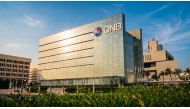
HSBC earned the most investment banking fees in the Middle East during the first nine months of 2014, a total of $38.3m for a 6.1 percent share of the total fee pool. Lazard topped the Middle Eastern completed M&A fee league table, while Qatar National Bank (QNB) was first in the ECM underwriting fee rankings. HSBC and Mizuho Financial Group took the top spots in the Middle Eastern DCM and loans fee rankings, respectively.
Commenting on the ECM activity during the first nine months of 2014, Najjar pointed out that eight initial public offerings raised $3.2bn and accounted for 62 percent of activity in the region. Follow-on and convertible offerings accounted for 18 percent and 19 percent, respectively.
“Dubai’s Emaar Properties announced plans to list its shopping malls & retail subsidiary at the end of September. The $1.6bn Emaar Malls Group IPO is the largest Middle Eastern IPO since Saudi Arabian Mining Co (Ma’aden) raised $2.5bn from its debut on the Saudi stock exchange in 2008. Qatar National Bank took first place in the Q3, 2014 Middle Eastern ECM ranking,” he added.
Speaking about debt capital markets, Najjar pointed out that the investment grade corporate debt totalled $29.1bn and accounted for 89 percent of the first nine month total. The United Arab Emirates was the most active nation accounting for 45 percent of activity, followed by Saudi Arabia with 34 percent. International Islamic debt issuance increased 48 percent year-on-year to reach $29.9bn.
The Peninsula