By Mohammad Shoeb
DOHA: The demand for electricity and water this year is expected to grow by up to 8 percent compared to last year, said a top official of Qatar Electricity and Water Company (QEWC), the main producer of utilities in Qatar.
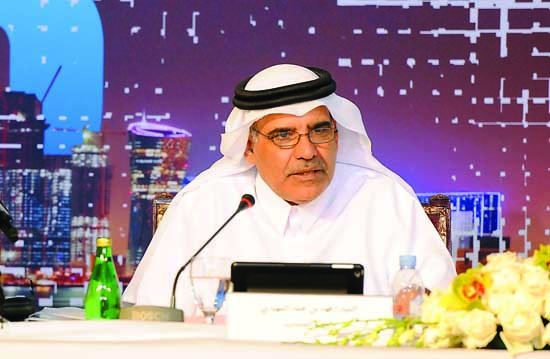
“The peak demand of electricity in 2015 was about 7,000 megawatt (MW) of electricity and 330 million gallons per day (MIGD), which is expected to grow by 6-8 percent,” Fahad bin Hamad Al Mohannadi, Managing Director of QEWC said. “The water demand in Qatar is growing higher as more and more houses, industrial facilities and commercial establishments are being interconnected across the country.”
He said that country is yet to witness the all time peak demand of utilities in the run-up to the 2020 Fifa games preparations, and QEWC is much ahead enhancing the installed capacity which is always maintaining big surplus than the actual peak demand.
With the completion of ongoing projects, including the Umm Al Houl plant, the estimated installed capacity is expected to exceed about 11,000 MW of electricity and 490 MIGD of water by the end of 2018.
Replying to a question about the possible impact of the government’s Tarsheed campaign towards rationalising the consumption of utilities, on QEWC’s profitability, Al Mohannadi added that it’s a healthy activity , and as long term partner of Kahramaa, the utility distributor, his company is also part of it.
“We are not affected by how much we produce, rather we are affected by how much we make available. Because tariff is set on two factors. One is the availability and the second is production which compensate only for fuel consumption, while other factors of production and costs remain constant.”
He also said that QEWC is not affected by the recent hike in prices of utility services as the government provide subsidies and the utility producers do not get influenced by what customers pay. In 2015 the company earned about QR2.82bn from selling power and water, which was 3.76 percent higher compared to QR2.72bn worth of utilities sold during the previous year. In addition QEWC earned QR166m by leasing its assets.
Since its establishment in 1990, QEWC has played a main role in Qatar’s economic growth by meeting the growing demand for electricity and water in the country. Over the past 25 years it has enhanced its power and water production capacity by expanding and developing existing stations. And QEWC has become the second biggest company in the Middle East and North African region in terms of power generation and water desalination. Currently QEWC produces about 8,750 MW of electricity and 363 MIGD of water through nearly a dozen plants, including those established with its local partners, located across the country.
The Peninsula