The exhibition “Civilizations, Personalities, Discoveries” and an international conference at the Palais des Nations marked a further step in introducing the Islamic Civilization Center and the legacy of the great scholars of Mawarannahr to the international community.
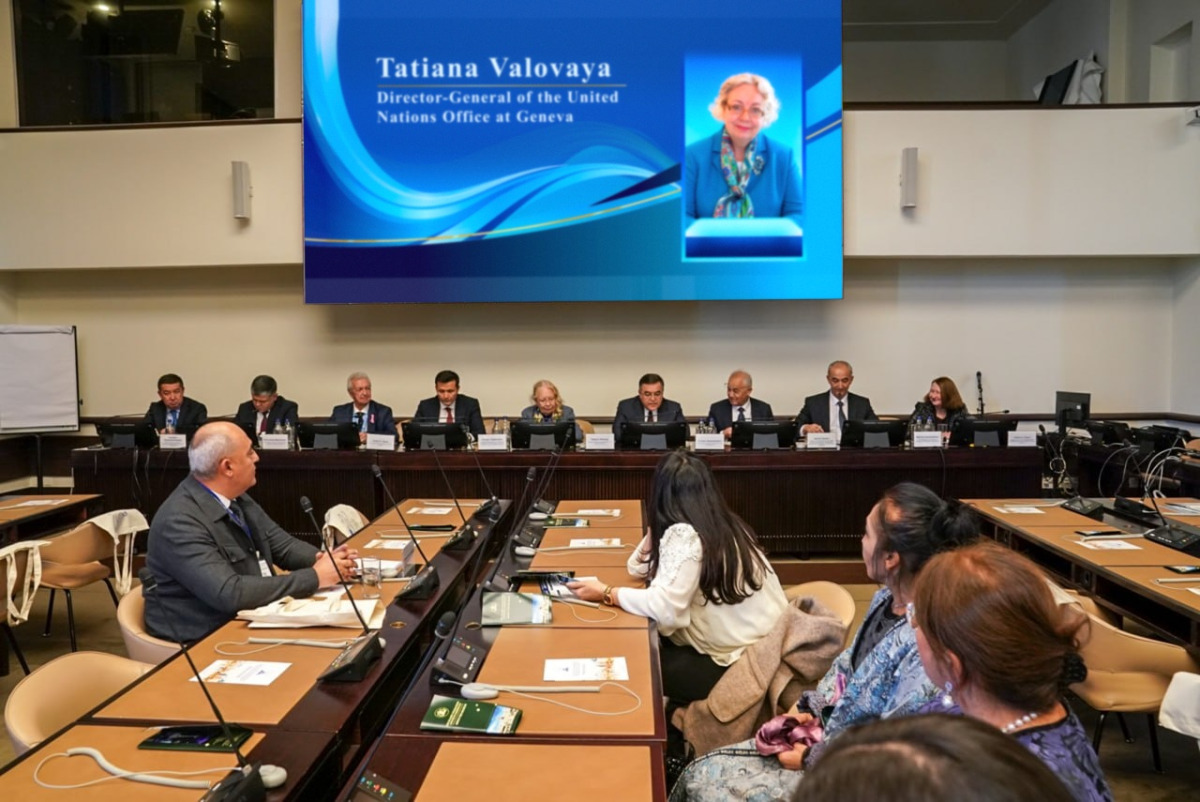
Geneva: The Islamic Civilization Center in Uzbekistan presented Central Asia’s scientific and spiritual heritage, along with contemporary initiatives aimed at its study, preservation and promotion, at the United Nations Office at Geneva. The Palais des Nations hosted the exhibition “Civilizations, Personalities, Discoveries” and an international academic conference that brought together diplomats, representatives of international organizations, scholars and cultural figures.
The conference, entitled “Islamic Civilization: The Great Spiritual and Scientific Heritage of Mawarannahr and the Horizons of Enlightenment,” focused on the contributions of the scholarly traditions of Bukhara, Samarkand and Termez to world civilization and their relevance to contemporary society.
The event continued the international dialogue initiated on 7 October at UNESCO Headquarters in Paris. Both events were held as part of efforts to implement the initiative put forward by President of Uzbekistan Shavkat Mirziyoyev on 23 September 2025, during the 80th session of the United Nations General Assembly, calling for the comprehensive study and broad international promotion of the intellectual and spiritual legacy of Imam al-Bukhari, Imam al-Tirmidhi and Imam al-Maturidi.
The programme began with the exhibition “Civilizations, Personalities, Discoveries,” featuring books, scholarly and illustrated publications, miniature paintings, and materials highlighting the lives and discoveries of Central Asia’s outstanding thinkers. The exhibition showcased the richness of the region’s scientific and artistic traditions, as well as the transmission of knowledge across generations.
Opening remarks were delivered by Tatiana Valovaya, Director-General of the United Nations Office at Geneva, and Eldiyor Toshmatov, Permanent Representative of the Republic of Uzbekistan to the United Nations Office and other international organizations in Geneva.
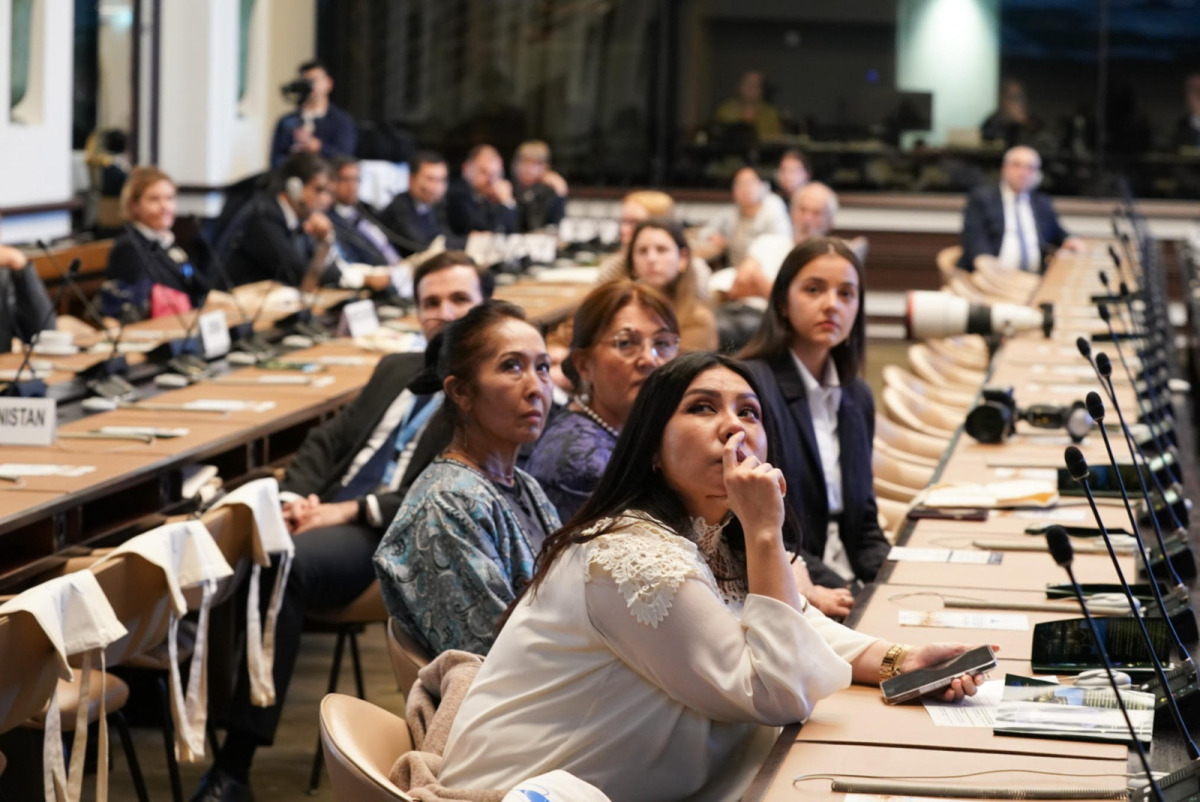
Tatiana Valovaya emphasized the conference’s importance in strengthening dialogue among civilizations and mutual trust, praising the Center’s educational mission and the prospects for cooperation with the Library of the United Nations Office at Geneva.
“The Islamic Civilization Center in Uzbekistan made a tremendous impression on me. It is a place of inspiration, where an exceptionally rich historical heritage is presented through modern technologies. It is truly a center for the twenty-first century, appealing to people of all generations, especially young people and children.
The exhibition is remarkable, and the books on display are truly unique. We have agreed to establish cooperation between our library and the Center. I believe this will be a very interesting and rewarding partnership,” Tatiana Valovaya noted.
Akmal Saidov, Director of the National Human Rights Center of the Republic of Uzbekistan and a member of the Legislative Chamber of the Oliy Majlis, also addressed the opening session of the conference.
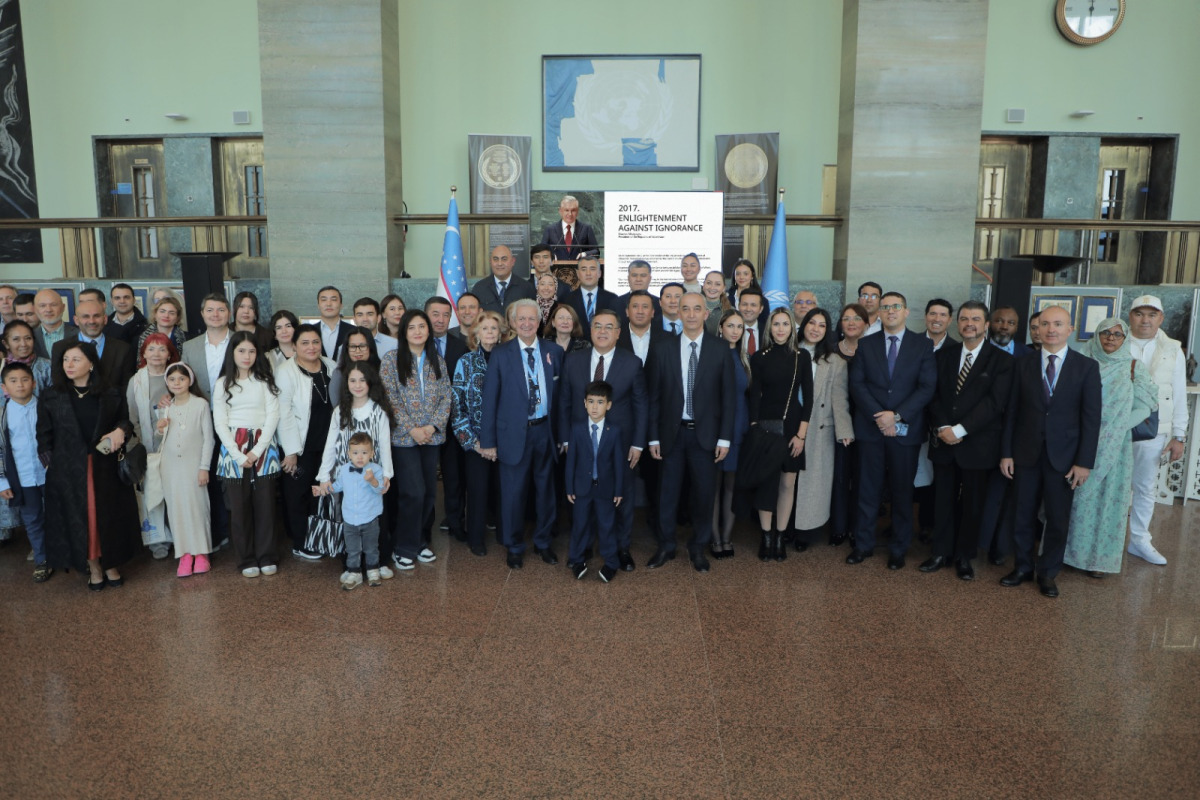
The keynote address was delivered by Dr. Firdavs Abdukhalikov, Director of the Islamic Civilization Center in Uzbekistan and Chairman of the Board of the World Society for the Study, Preservation and Popularization of the Cultural Legacy of Uzbekistan (WOSCU). He outlined the Center’s international mission, bringing together museum activities, academic research and educational initiatives, and highlighted opportunities for further cooperation.
“The initiative announced by President of the Republic of Uzbekistan Shavkat Mirziyoyev from the United Nations rostrum in 2025 is now being translated into tangible results. Following the presentation at UNESCO in Paris, the legacy of our great ancestors was showcased at the Palais des Nations in Geneva, generating considerable interest among the international community.
We have reached an agreement with the leadership of the United Nations Office at Geneva on providing access to the United Nations Library and Archives. This will open up new opportunities to study previously unknown materials relating to the history of Central Asia and Uzbekistan in particular,” emphasized Firdavs Abdukhalikov, Director of the Islamic Civilization Center in Uzbekistan.
Particular attention was devoted to the legacy of Imam al-Bukhari, Imam al-Tirmidhi and Imam al-Maturidi, whose intellectual contributions are closely associated with the scholarly traditions of Bukhara, Termez and Samarkand. Discussions focused on the authenticity and reliability of knowledge, the responsibility involved in its transmission, and the relationship between faith and reason.
Robert Blum, President of the Diplomatic Circle of Geneva, reflected on the history of Samarkand as a meeting place of cultures and religions, emphasizing the unifying power of the pursuit of knowledge.
“Uzbekistan is a country with a rich history and a unique cultural heritage. In Samarkand, people of different religions came together in their pursuit of knowledge. People may refer to God by different names, but this should not prevent them from understanding one another. That is precisely why today’s conference is so important,” Robert Blum noted.
Kathleen Goebel, Director of Cultur-Cooperation International in Berlin and a member of WOSCU, delivered a special presentation in which she placed particular emphasis on the need for collective efforts to strengthen peace.
“In a world marked by fear and terror, where human lives are being lost, strengthening peace requires joint efforts by governments, public institutions and international organizations. I believe that President Shavkat Mirziyoyev’s initiative represents a practical step towards peace and harmony,” Kathleen Goebel stated.
The contemporary relevance of Central Asia’s great thinkers was also highlighted by Craig Taylor, United Nations Liaison for Latter-day Saint Charities.
“I have studied the legacy of Imam al-Maturidi and al-Biruni and reflected on why their ideas remain relevant today. I believe it is vitally important for each of us, regardless of our religious affiliation, to strive to be a peacemaker and contribute to strengthening peace in our diverse society,” Craig Taylor emphasized.
The academic segment of the conference was opened by its moderator, Bahrom Abduhalimov, Vice-President of the Academy of Sciences of the Republic of Uzbekistan, who addressed the discoveries of Central Asian scholars, their contributions to world science and the international mission of the Center.
Davronbek Makhsudov, First Deputy Chairman of the Committee on Religious Affairs of the Republic of Uzbekistan, continued the discussion with a focus on enlightenment and tolerance.
Komiljon Shermukhamedov, Director of the International Scientific Research Center of Imam al-Maturidi, explored the importance of reason, moderation and moral responsibility in the scholar’s intellectual legacy.
Otabek Muhammadiev, Deputy Director of the International Scientific Research Center of Imam al-Bukhari, examined the methods of source verification employed by Imam al-Bukhari and Imam al-Tirmidhi.
The programme also featured three short films: one devoted to Uzbekistan and the heritage of Islamic civilization, another presenting the Islamic Civilization Center as a new-generation museum, and a third exploring the legacy of Imam al-Bukhari, Imam al-Tirmidhi and Imam al-Maturidi. The films demonstrated contemporary approaches to studying and promoting the region’s historical and intellectual heritage.
All books displayed at the exhibition “Civilizations, Personalities, Discoveries” were donated by the Islamic Civilization Center in Uzbekistan to the Library of the United Nations Office at Geneva.
The conference concluded with discussions on prospects for joint academic, cultural and educational projects. Following the official programme, a reception featuring traditional Uzbek cuisine was held at the Palais des Nations, providing a further opportunity for dialogue among diplomats, representatives of international organizations, scholars and cultural figures.
The conference was organized by the Islamic Civilization Center in Uzbekistan, the Ministry of Foreign Affairs of the Republic of Uzbekistan, the Permanent Mission of the Republic of Uzbekistan to the United Nations Office and other international organizations in Geneva, the Committee on Religious Affairs of the Republic of Uzbekistan, the International Scientific Research Centers of Imam al-Bukhari, Imam al-Tirmidhi and Imam al-Maturidi, the International Islamic Academy of Uzbekistan, the Uzbekistan Art and Culture Development Foundation (ACDF), the Muslim Board of Uzbekistan, and the World Society for the Study, Preservation and Popularization of the Cultural Legacy of Uzbekistan (WOSCU).