![]()
The medical team with their patients after recovery.
DOHA: Trauma is the most common cause of death and disability among Qatar’s young adult population and Qatar has one of the highest traffic death rates in the region, said Dr Hassan Al Thani, Senior Consultant at Hamad General Hospital’s (HGH) Trauma Centre.
Dr Al Thani advised young drivers against speeding and driving without a licence, to wear safety belts and obey traffic rules as trauma are preventable.
“They needed a miracle to recover,” is how the team from Hamad General Hospital’s HGH described the conditions of three patients who were injured in road accidents and treated at HGH.
In acknowledgement of World Day of Remembrance for Road Traffic Victims, which is observed on the third Sunday of November each year, the Trauma Centre team invited three former patients to speak with staff about their experience.
Nel Balquin, a Filipino personal trainer and bodybuilder who spent eight months recovering at HGH after sustaining multiple injuries when he was struck by a vehicle while crossing the road, said doctors at the Trauma Centre saved his life.
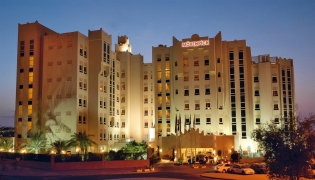
“I was walking by Ramada Hotel. I was crossing the street to reach my workplace when I was hit by a car. I woke up to see myself lying in the hospital with an open abdomen. I had a fracture in the pelvis and required about 20 surgeries,” said Balquin.
Traffic injuries cause one out of every eight deaths (12.5 percent) in Qatar and are the leading killer, causing more deaths than cancer or cardiovascular diseases. According to road traffic injury statistics released by HGH’s Injury Prevention Programme (HIPP) earlier this year, pedestrians are Qatar’s most vulnerable road users with one in three road deaths being pedestrians.
Trauma Centres are uniquely designed and staffed to handle critically injured patients whose needs go beyond what a standard Emergency Department is equipped to treat. Traumatic injury is a disease process unto itself and requires specialised and experienced multidisciplinary treatment. Using a systems approach, the centre reaches out through HIPP to prevent injures first and coordinate the complex care that the multiply injured patient needs second.
Khalifa Al Shahwani, a 17-year-old young Qatari who was injured in a road accident, arrived at the Trauma Centre with contusions in his lungs, fractures to the pelvis, nose, mouth and bleeding in his liver. Describing his own condition as critical, Al Shahwani said HMC doctors saved his life.
Khalid Al Kuwari, also a Qatari national who was injured in a road accident, arrived at the centre with a pelvis fracture, ankle fractures and complex facial fractures. He spent 20 days in hospital, recovering from his numerous injuries and also underwent physiotherapy sessions at HGH as an outpatient.
Treating the three patients required the expertise of an entire medical team led by Dr Al Thani with Trauma Consultants Dr Ahmad Zarour, Dr Rifat Latifi, Dr. Hisham Abdelrahman, Dr Ruben Peralta and Dr Ashok Parchani and Dr Abdullah Al Nuemi, Head of Urology.
The Peninsula