DOHA: Global tax trends may impact Qatar’s tax framework. While low corporate tax rates will probably remain, value-added tax (VAT) seems likely to be introduced within the next few years. And international developments also seem likely to influence the future direction for tax in the Gulf state, says EY.
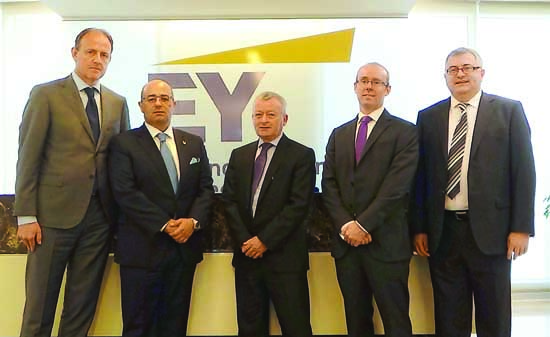
EY, the London-based multinational audit firm and advisory services provider, yesterday hosted a seminar on changes to the tax and regulatory environment in Qatar, highlighting that taxation is likely to become a more prominent business concern across the Middle East.
Finbarr Sexton, Mena Indirect Tax Leader, at EY, said: “Traditionally, tax has been a fairly low-key consideration for investors in the Middle East. Corporate tax rates are low, if tax is imposed at all. Expatriate labour is subject to neither tax nor social security and investors have paid limited regard to establishing efficient tax structures. If taxes have resulted, the rates have been low and have not had a large impact. Compared to other parts of the world, the Middle East has been a tax paradise. However it now seems clear that there will be some developments that make tax a more topical agenda in the Middle East.”
Some of the larger tax challenges investors may face in the Middle East derive not from local developments but the way that tax is evolving internationally. In the 1990s, the Organisation for Economic Cooperation and Development (OECD) initiated a project on harmful tax competition. Ultimately, the OECD has recognised that there is nothing inherently wrong if a country decides to adopt a low-tax framework. However, the 15 recommendations that the OECD made in its Base Erosion and Profit Shifting (BEPS) reports last year are expected to change the taxation landscape.
Marcel Kerkvliet, International Tax Partner at EY Qatar, said: “The Qatar Ministry of Finance is expected to adopt at least some of the OECD recommendations directly. This will affect future information reporting in Qatar, if not the way that taxable income is determined. However, even if none of the BEPS recommendations are adopted, other countries are likely to expect their investors to be more accountable for the amount of profits they are reporting in Qatar.”
Paul Karamanoukian, Tax Partner at EY Qatar, said: “For multinationals, tax is no longer a game of just complying with regulations set by each local tax administration; investors need a global focus. If a subsidiary reports a high level of net profit in Qatar, for example, the local tax authorities would likely not raise any concerns. But once country-by-country reporting occurs in other jurisdictions, a tax official in another country might look at that profit level and ask whether that means that the group member in his country is underpaying tax as a result.”
The underlying principles of international tax are not changing. Taxable profits should still follow the place where key functions, assets and risks are located. What is changing is the attention that tax administrations globally will place on the question of whether the key functions, assets and risks are really located in the places that taxpayers say they are. This should not change the burden of tax. However, it could increase compliance costs and tax risks significantly.
“The OECD has no influence over individual governments, so we will see a lot of different responses. What investors should be looking for is opportunities. With the likely changes on the horizon, now would be a good time to review corporate structures for tax efficiency, to see whether tax treaties are being utilized effectively and the supply chain will work well if VAT is introduced. A 5 percent rate may not sound like a lot, but if it ends up as an additional cost on purchases because a VAT structure is inefficient, it’s going to hurt much more than a 10 percent tax on net income,” said Finbarr.
“The developments will also pose challenges to tax administration. Tax authorities may need further resources and training to deal with ever more complex taxation rules and a growing taxpayer population,” said Finbarr.
The Peninsula