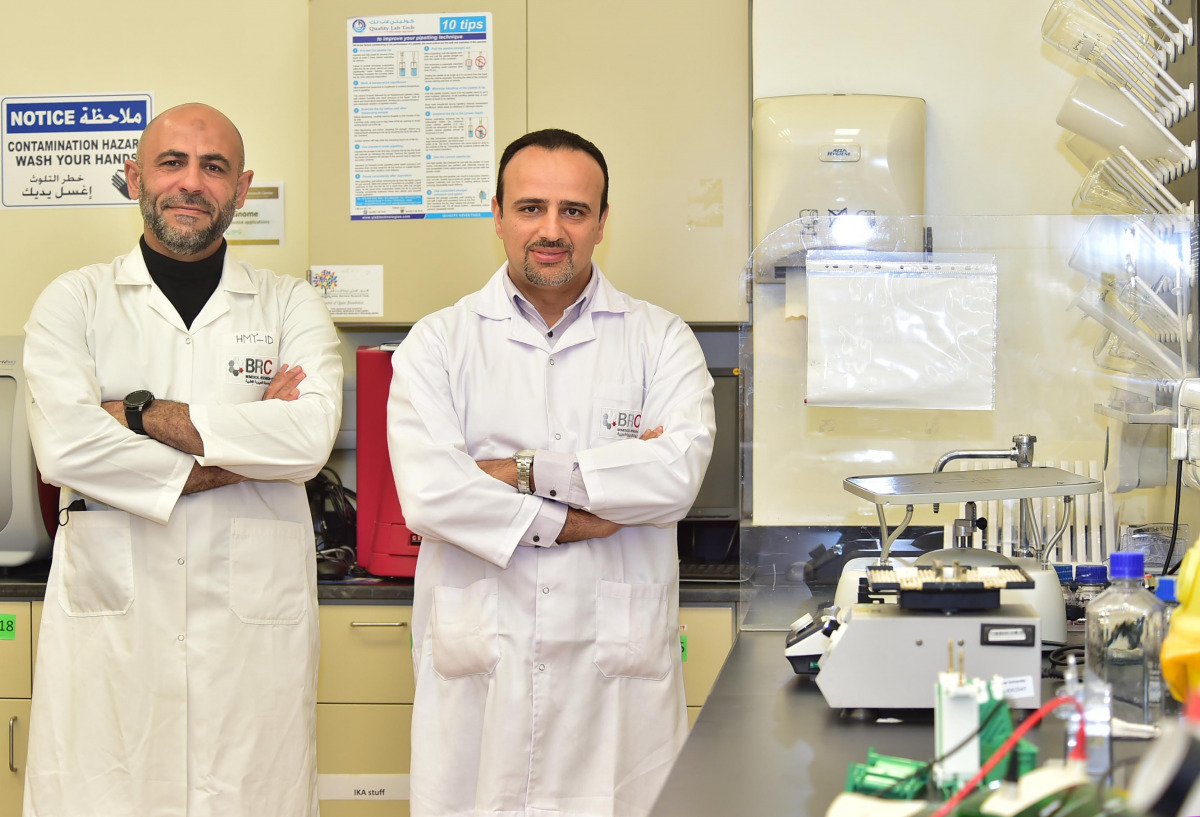
Dr. Mohamed Elrayess and a researcher from the Biomedical Research Center at Qatar University.
Doha: Dr. Mohamed Elrayess, Research Associate Professor, Biomedical Research Center - Qatar University (QU) conducted a study to help critically ill COVID-19 patients: new predictive biomarkers of length of stay at the ICU for better management and risk reduction.
The Severe Acute Respiratory Syndrome Coronavirus 2 (SARS-CoV-2), causing the coronavirus disease 2019 (COVID-19) pandemic, has endangered the lives of millions around the globe. Around twenty percent of COVID-19 patients become critically ill as they exhibit respiratory distress that requires immediate oxygen supply, including invasive mechanical ventilation in severe cases.
Out of the critically ill patients, 30% die. During the peak time, intensivists are required to predict the duration of invasive mechanical ventilation for a better utilisation of ICU resources using a number of laboratory values and patient features, also known as Apache score, which considers both acute and chronic disease. However, the accuracy of early clinical prediction of duration of invasive mechanical ventilation remains limited, especially in patients who require longer stay and more care.
Therefore, one of the most challenging aspects of COVID-19 pandemic is managing the critically-ill patients at ICU, especially during disease peak due to limited capacity and resources. Early detection of the metabolic changes in critically ill COVID-19 patients under invasive mechanical ventilation (IMV) at the intensive care unit (ICU) could help in their disease management and recovery.
These patients constitute the real strain on the health system and are liable to some of the worst possible outcomes of the disease, which renders early prediction of their evolution at ICU of tremendous clinical value.
In this regard, it has become very important to identify COVID-19 patients who are likely to recover faster and predict their recovery duration for better management of resources at ICU.
Dr. Mohamed Elrayess and a research team from the Biomedical Research Center at Qatar University (Dr. Asmaa Al-Thani, Dr. Hadi Yassine, Dr. Fatiha Benslimane and Maria Smatti), Hamad Medical Corporation (Dr. Ali Ait Hssain) and Hamad Bin Khalifa University (Sara Taleb, Dr. Ilhame Diboun and Prof. Omar Albagha), have investigated novel predictive biomarkers of length of stay at the intensive care unit (ICU) for better management of ICU resources and risk reduction of COVID-19 outcomes.
The emerging novel data has identified alterations in specific clinical features between ICU admission and one week at ICU. In addition, the data has also suggested that certain metabolic changes during the first week of admission can be utilised to predict COVID-19 ICU outcomes.
Previous reports comparing the metabolic profiling of COVID-19 infected samples and matching healthy controls have revealed specific metabolic signature of disease severity. However, most of these studies collected metabolites after patients have acquired the severe disease symptoms. Therefore, the utilization of these models for severity prediction remains limited.
In this study, researchers have investigated whether COVID-19 can trigger specific metabolic changes detectable in the sera of patients under mechanical intubation as soon as they are admitted to ICU in order to use them as tools to differentiate those who are likely to recover from those who would sustain an extended stay at ICU. Therefore, targeted metabolic profiling has been conducted of the sera of critically ill COVID-19 patients in ICU at two time points.