By Satish Kanady
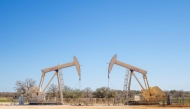
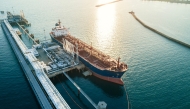
DOHA: Qatar exported a total of 595,000 barrels per day (bpd) of crude oil and 522,000 bpd of refined petroleum products last year. In 2014, Qatar sent all of its crude oil refined product exports to Asian countries, Qatar country report released by the US Energy Information Administration (EIA) noted citing Opec estimates.
According to the EIA, most of Qatar’s refined products, an estimated 60 percent, went to Japan.
Qatar, the world’s second-largest exporter of natural gas, exported nearly 4.3 Tcf (trillion cubic feet) in 2014. The country was again the world’s largest LNG exporter in 2014, accounting for 32 percent of global natural gas exports. Most of Qatar’s exports go to markets in Asia in the form of LNG, while the country sends a small amount of natural gas via the Dolphin Pipeline to the UAE and Oman.
Historically, most of Qatar’s LNG exports were part of long-term, oil-indexed contracts, but over the past few eyars the country began to shift to more short-term contracts and spot-market sales. In 2012, Qatar exported more than one quarter of its LNG as short-term or spot-market sales, accounting for more than a third of short-term or spot-market sales in the world. Several recent agreements between Qatargas and international LNG importers are of the short-term variety, including a deal based on continental European prices rather than oil-indexation for the first time in the company’s history, the EIA document noted.
EIA’s Qatar country report said Qatar has more than 90 percent of its LNG production volumes committed as part of supply purchase arrangements (SPAs) between 2014 and 2021.
Petroleum consumption in Qatar also rose from 82,800 bpd in 2004 to 230,000 bpd in 2013. Qatar has two operating refineries with a combined crude oil refining capacity of 338,700 bpd. The combined output is more than enough to meet Qatar’s domestic demand. That surplus output enables Qatar to export refined products, and both refineries are near major oil export terminals, one at Umm Said and the other at Ras Laffan. There are plans to expand refining capacity at Ras Laffan with a 146,000 bpd condensate splitter by the third quarter of 2016.
As of January 2015, Qatar had the third-largest proven reserves of natural gas in the world at 872 Tcf, EIA said quoting industry journals. Because of self-imposed moratorium on new projects, Qatar’s natural gas production has plateaued and could begin to decline soon. The potential for a near-term increase in natural gas production lies in the 1.4 billion cubic feet (Bcf) per day Barzan project, which was the last project approved before the North Field moratorium. Scheduled to come online in 2016 and reach maximum production capacity in 2017, Barzan is only expected to offset some of the foreseen production decline.
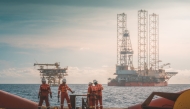
The $10.4bn Barzan Gas Project should boost Qatar’s natural gas production from the North Field in the near term. The project consists of both onshore and offshore developments, including offshore platforms, pipelines, and a natural gas processing unit. Announcements by government officials and ExxonMobil indicate that the project, which began in 2011, will begin operations in 2016 and be capable of processing 1.4 Bcf per day of natural gas.
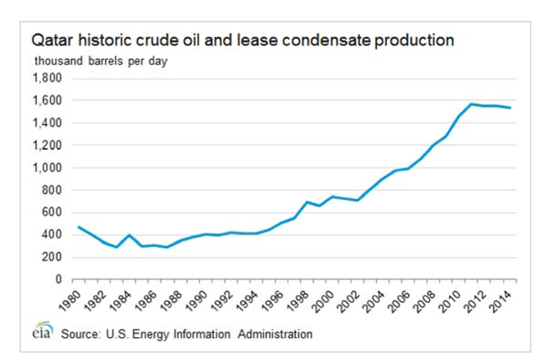
Qatar’s natural gas production has increased its output of condensates and natural gas plant liquids, which are valuable byproducts of natural gas production. Qatar’s condensate production is approximately 700,000 bpd with exports of about 500,000 bpd, making the largest condensate exporter in the world.
On Qatar’s growing electricity demand, the report said rising electricity demand stems mainly from LNG expansion and economic growth. With one of the fastest growing economies in the world over the past few years, energy demand in Qatar has risen significantly, particularly electricity demand. All of Qatar’s current generating capacity is natural gas-fired, although there have been some discussion on potential solar power projects over the past several years. Between 2000 and 2012, Qatar’s electricity consumption grew from approximately 8.0bn kilowathours to 32.7bn kilowatthhours.
The Peninsula