A Qatari Evening in Paris, Envisioned in Doha Twenty Years Ago
Published: 25 Oct 2026 - 09:00 am | Last Updated: 25 Oct 2026 - 09:11 am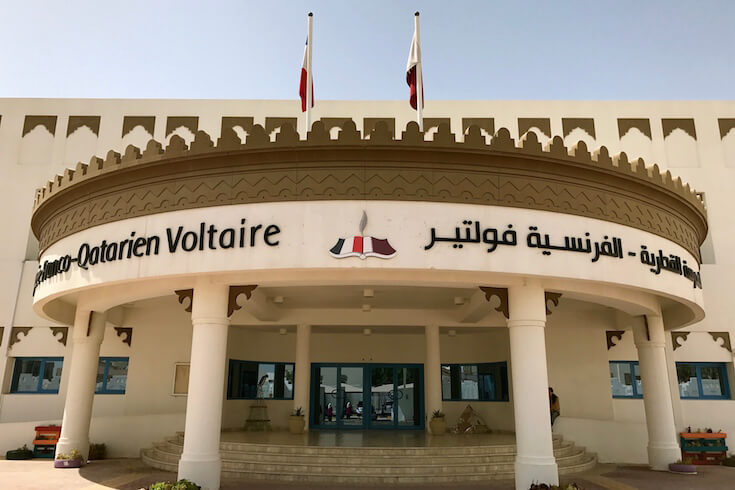
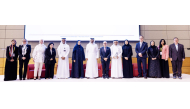
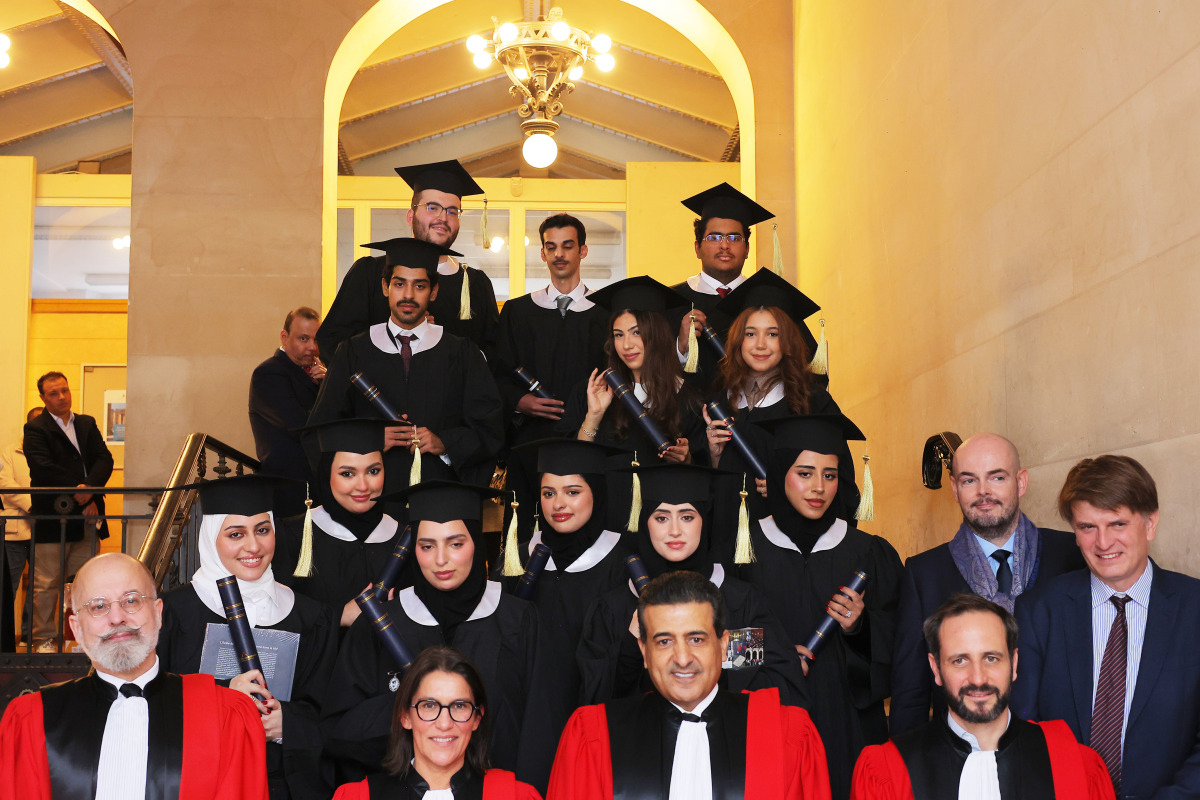
On a Parisian evening marked by a distinctive academic, intellectual and cultural atmosphere, the rich heritage of a French university met the aspirations of a new generation of Qatari students. In the heart of the French capital, Paris 1 Panthéon-Sorbonne University hosted the graduation ceremony of the first cohort of Qatari students enrolled in the Sorbonne programme in Qatar. The nine graduates marked a milestone whose significance extends beyond the awarding of degrees to celebrate a journey of educational and cultural cooperation between Qatar and France, whose foundations were laid two decades ago in Doha with the opening of Lycée Voltaire Qatar in 2006.
The occasion derives its significance from the fact that it embodies the fruits of an educational vision that has placed its faith in knowledge as a strategic investment in people, and in education as a bridge between cultures and a tool for building the future. This vision aligns with the State of Qatar’s direction, under the leadership of Amir His Highness Sheikh Tamim bin Hamad Al Thani, to make human development, education and the preparation of new generations key pillars in achieving the objectives of Qatar National Vision 2030. This approach seeks to keep pace with the world’s rapid transformations and strengthen the ability of young Qataris to contribute to development, innovation and the creation of knowledge.
In this context, the academic partnership between Lusail University, chaired by Dr. Ali bin Fetais Al Marri, Chairman of its Board of Trustees, and Paris 1 Panthéon-Sorbonne University stands out. The latter, with its distinguished academic heritage dating back to 1253, represents a model of cooperation that elevates relations between countries beyond traditional exchanges towards a broader realm of joint investment in minds and talent. This trajectory carries particular significance in light of Dr. Ali bin Fetais Al Marri’s own experience, as the first Qatari to earn a PhD from Sorbonne University in Paris in 1997.
The fruits of this partnership are now reflected in the graduation of nine Qatari students from the Sorbonne programme in Qatar, a step that opens new horizons for their academic and professional journeys. The cohort includes two master’s graduates, Al Reem Al Ibrahim and Dana Al Marri, alongside seven graduates with bachelor’s degrees in law: Ali Al Attiyah, Dhabya Al Kaabi, Abdullah Al Kubaisi, Fatima Al Mohannadi, Fahad Al Thani, Fatima Al Kubaisi and Hattan Al Mohannadi. This group of graduates represents an extension of a Qatari generation that places its trust in quality education and engagement with international academic experiences. Meanwhile, Al Reem and Dana are continuing their academic journeys by pursuing PhDs in law at Paris 1 Panthéon-Sorbonne University.
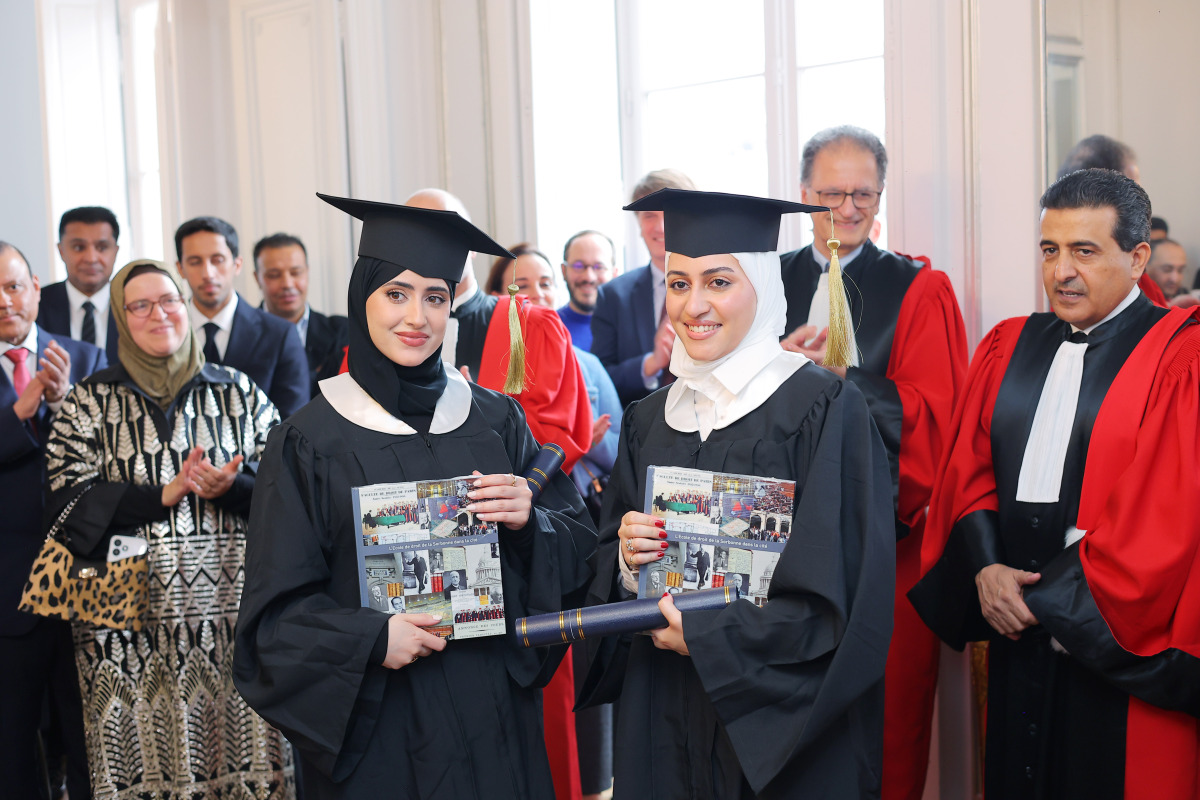
The significance of this cooperation is not limited to graduating university talent. It also extends to strengthening knowledge and cultural diplomacy, broadening the horizons of scientific research and developing joint academic programmes, thereby fostering mutual understanding and giving Qatari-French relations sustainable human and scientific dimensions. Successful educational partnerships do not merely transfer knowledge across borders; they also contribute to producing and advancing it, establishing equitable relationships whose strength derives from shared interests and a belief in the role of educated individuals in building and advancing societies.
In this context, Professor Thomas Perrin, Director of the Sorbonne programme in Qatar and Professor of Public Law, said that the graduation of the first cohort of Qatari students represents more than the culmination of a university journey. It embodies the convergence of two cultures and intellectual traditions united by the conviction that building bridges between civilisations is essential to addressing the major challenges facing the world.
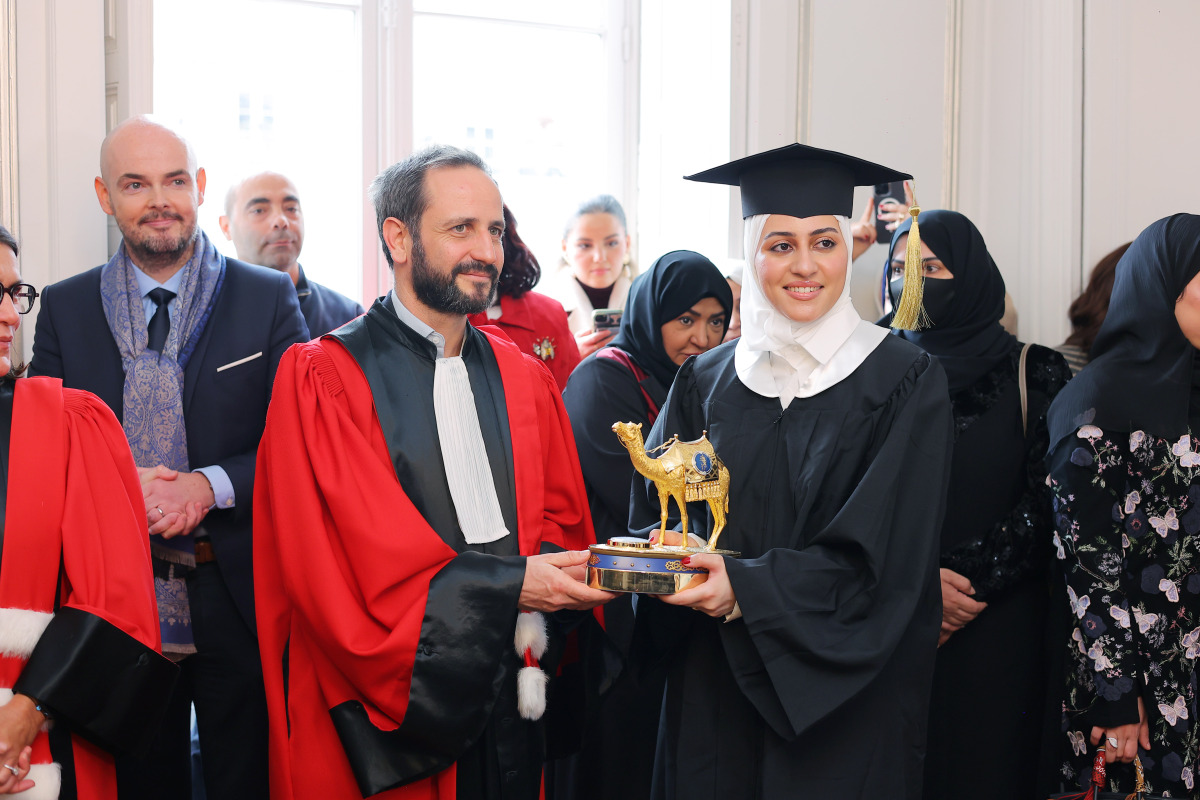
Perrin explained that seeing Qatari graduates receive their degrees from the Sorbonne, an institution founded in 1253, is a source of great pride and reflects the ability of academic excellence to transcend borders. He stressed that education remains one of the most powerful tools for bringing peoples closer together, adding that this cohort embodies a shared ambition to cultivate generations who are free-thinking, enlightened and open to the world.
Speaking to the Qatar News Agency (QNA), he noted that the Sorbonne programme in Qatar has more than 110 students enrolled in a law programme taught entirely in French, leading to bachelor’s and master’s degrees in law awarded by Paris 1 Panthéon-Sorbonne University. He pointed out that all nine Qatari graduates had obtained their French Baccalaureate from Lycée Voltaire Qatar in Doha, which opened in 2006. This, he said, reflects the continuity of an ambitious educational vision that has provided young Qataris with a distinguished academic pathway in French, from school education to university studies.
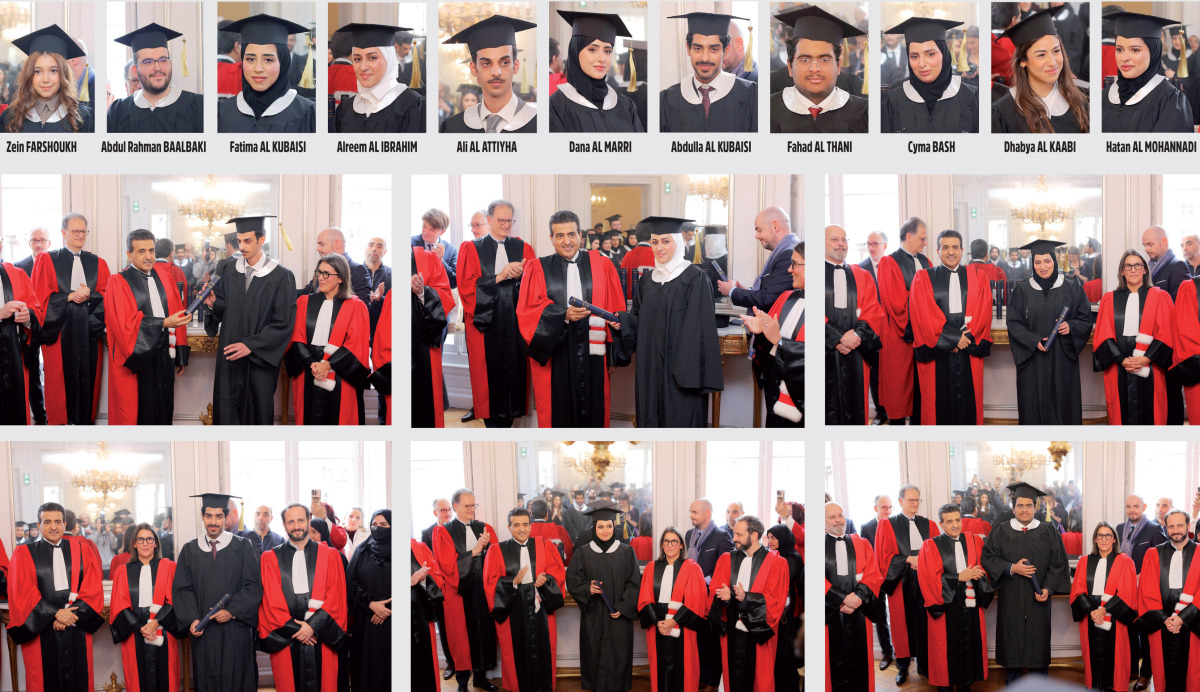
Perrin affirmed that cooperation between Qatar and France goes beyond the transfer of knowledge to contributing to its development and production. He explained that his visit to Paris this week had provided an opportunity for academics to hold working meetings in preparation for new higher education programmes and the expansion of joint scientific research activities, in support of preparing generations capable of understanding and shaping future societies.
Regarding investment in education and human capital development, Perrin highlighted the international attention given to Qatar’s ambitions in education, science and culture, noting that human development is one of the four pillars of Qatar National Vision 2030, which places education and training at the heart of the country’s future.
He explained that Qatar’s investments in educational infrastructure, university campuses and research capabilities provide a stimulating environment for the development of ambitious academic projects and help new generations prepare for technological, economic, environmental and social transformations. He emphasised that addressing the challenges of the future requires not only strong scientific skills, but also intellectual openness, adaptability and a deep sense of responsibility.