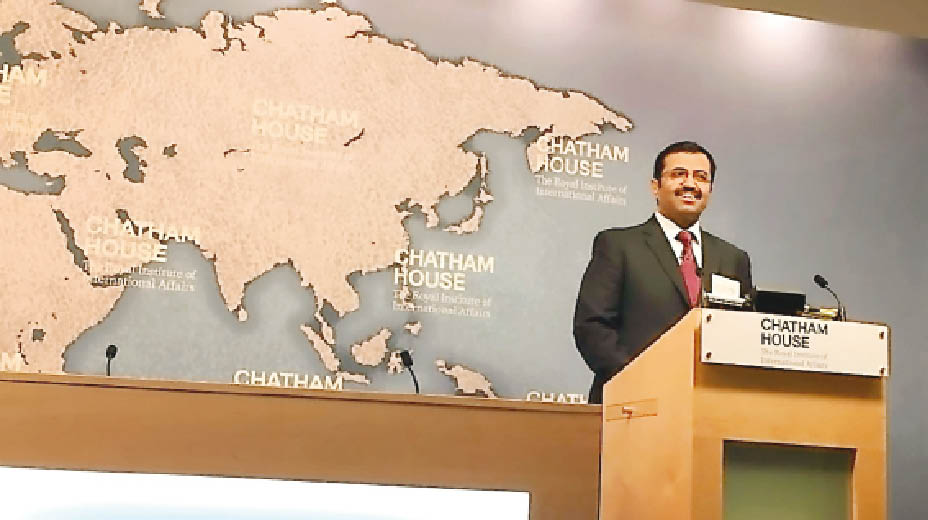
DOHA: Oil markets are poised to rebalance after going through a period of weakness as low oil prices cannot last long, Minister of Energy and Industry HE Dr Mohammed bin Saleh Al Sada said in London yesterday.
“We expect that we will go through one more downturn cycle of oil price. But we will recover. The market is definitely going to balance itself because today’s oil price is not sustainable whatsoever,” he told a conference. Quoting Dr Al Sada, Reuters reported Opec is still evaluating the need for an extraordinary meeting after receiving a request to hold such a gathering because of a steep fall in oil prices.
“We received a request and oil ministers are discussing that,” he said. Asked if it was a good idea, he responded: “It is being evaluated.” Dr Al Sada holds Opec’s rotating presidency this year.
Speaking at the London conference, Dr Al Sada said prices will recover as they’re currently “unsustainable,” not only for unconventional oil fields but for conventional crude production too, reported Bloomberg.
The head of the Organisation of Petroleum Exporting Countries called on oil producers outside the group to assist in reducing the global oversupply, signaling once again that Opec won’t make output cuts alone, reported Bloomberg.
“It is vital the market addresses the issue of the stock overhang,” Secretary-General Abdalla El-Badri said Monday at a conference in London. “It should be viewed as something Opec and non-Opec tackle together.”
Crude sank to the lowest in more than 12 years this month as supply swamped demand. With Opec effectively abandoning its output ceiling in December, Russia pumping near record levels and US shale fields proving more resilient than forecast, the global surplus has continued to swell. Yet an agreement between Opec and rival producers to rein in volumes has proven elusive as all parties seek to maintain their market share.
“It is crucial that all major producers sit down to come up with a solution to this,” El-Badri, 75, said at the Chatham House think-tank. Stockpiles in Organisation for Economic Cooperation and Development countries rose to more than 260 million barrels above the five-year average at the end of 2015, he said, adding that the market may start to rebalance this year as demand grows.
Russia, not a member of Opec, could work with the group on trimming supply if a political decision was taken to cooperate, Leonid Fedun, vice president of Moscow-based oil company Lukoil PJSC, said in an interview with state news agency Tass. Pumping record volumes “is not the best way to improve economics,” he said.
Brent crude, the global benchmark, is down about 16 percent this year as volatility in global markets adds to concern over brimming stockpiles as well as the prospect of additional Iranian exports following the removal of international sanctions.
The slump in prices is putting future investment in new oil supply at risk, according to El-Badri.
El-Badri, said there are signs supply and demand will start to come back into balance this year. Global demand is forecast to increase by about 1.3 million barrels a day while non-Opec supply is expected to contract by about 660,000 a day, he said. The Peninsula