Doha, Qatar: The National Human Rights Committee (NHRC) has called for a fair and human rights–based digital transition, underscoring the need to align artificial intelligence (AI) technologies with the principles of social justice and decent work for all.
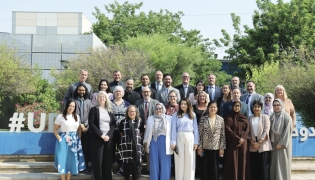
The call came during a regional virtual seminar titled “Artificial Intelligence, Social Justice, and Decent Work for All,” co-organised by the NHRC on the occasion of the World Day of Social Justice. The event was held in cooperation with the Office of the United Nations High Commissioner for Human Rights -Middle East and North Africa Regional Office, the Arab Network of National Human Rights Institutions, the United Nations Economic and Social Commission for Western Asia (ESCWA), and the Al Jazeera Media Institute.
The seminar shed light on the growing intersection between digital transformation and human rights, exploring ways to harness AI technologies to advance social justice and safeguard the right to decent work without discrimination, amid rapid economic and technological changes across the Arab region.
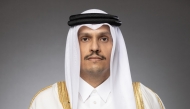
In his keynote address, H E Dr. Mohammed bin Saif Al Kuwari, Vice Chairperson of the NHRC, said that co-organising the regional seminar reflects a renewed commitment to confronting pressing challenges while seizing opportunities to promote social justice grounded in human dignity, equality, and non-discrimination.
He stressed that social justice goes beyond poverty eradication, social inclusion, and ensuring decent work. It also encompasses the full and effective realization of human rights and the achievement of the Sustainable Development Goals, describing it as a continuous obligation rooted in ethical values and international commitments.
Dr. Al Kuwari noted that the seminar’s theme reflects a legitimate ambition to benefit from AI’s vast potential, particularly in developing education and vocational training systems and aligning them with labour market needs. Such efforts, he said, could expand opportunities for empowerment, productivity, and innovation.
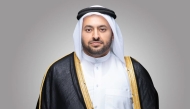
For his part, H E Sultan bin Hassan Al Jamali, Secretary-General of the Arab Network of National Human Rights Institutions, affirmed that social justice serves as the compass guiding sustainable development and ensuring that human beings remain at the centre of every economic and technological transformation.
He described artificial intelligence as a double-edged tool: capable of boosting productivity and innovation, yet equally capable of deepening inequalities and reproducing discrimination if not governed by robust human rights–based regulatory frameworks.
Al Jammali highlighted challenges related to algorithmic bias, digital surveillance, and precarious forms of work, which directly affect women, youth, informal sector workers, and migrants. He stressed the importance of steering digital transformation toward a just transition founded on transparency, accountability, and the guarantee of decent work for all without exception.