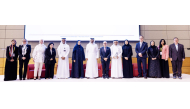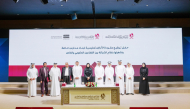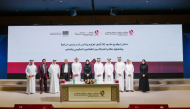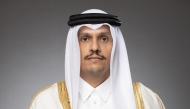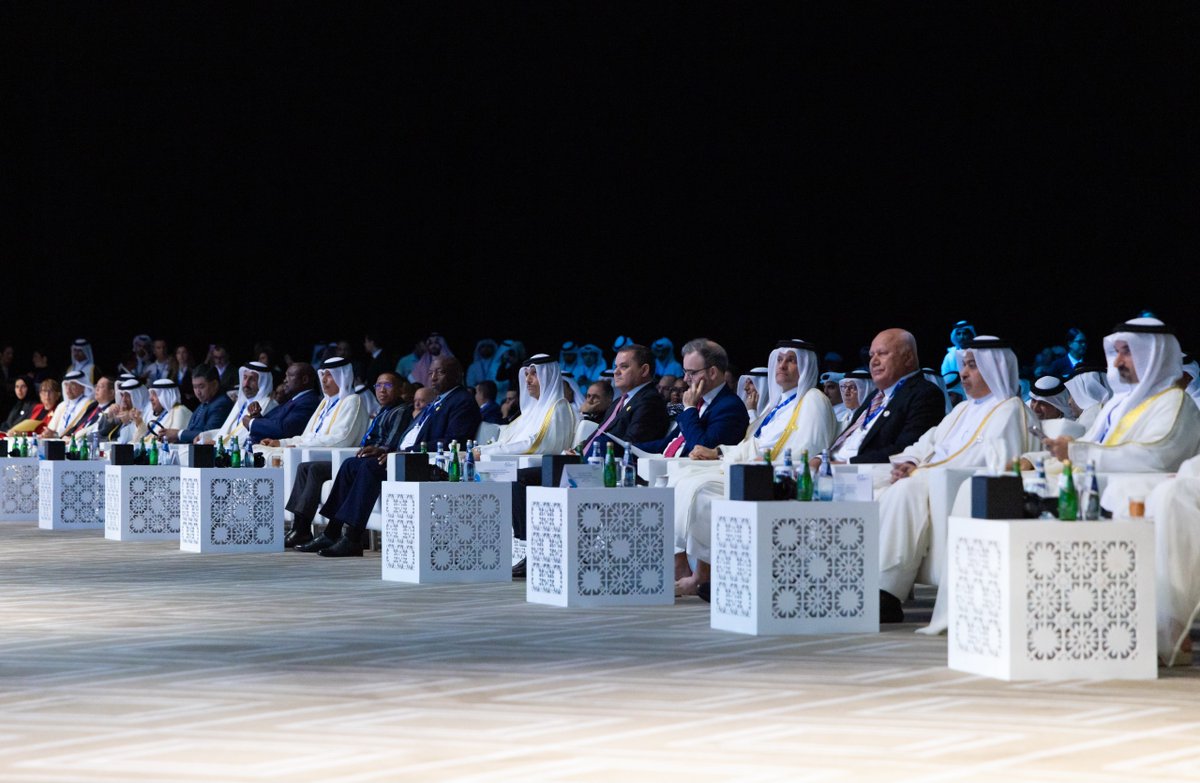
Prime Minister and Minister of Foreign Affairs H E Sheikh Mohammed bin Abdulrahman bin Jassim Al Thani, Minister of Commerce and Industry H E Sheikh Faisal bin Thani bin Faisal Al Thani, Secretary-General of UNCTAD Rebeca Grynspan along with Their Excellencies the Ministers, heads of government and senior officials during the opening of the forum.
Doha, Qatar: The 9th World Investment Forum 2026 opened in Doha yesterday with participation of global leaders, senior government officials, policymakers, business executives and investors from around the world to explore investment opportunities and promote international economic cooperation.
The forum was held in the presence of Prime Minister and Minister of Foreign Affairs H E Sheikh Mohammed bin Abdulrahman bin Jassim Al Thani. Hosted by the State of Qatar in partnership with the UN Trade and Development (UNCTAD) under the theme “Investing in the Future,” the forum will run until October 27.
The opening was attended by Minister of Commerce and Industry H E Sheikh Faisal bin Thani bin Faisal Al Thani, Secretary-General of UNCTAD Rebeca Grynspan, Minister of State for Foreign Trade Affairs H E Dr. Ahmed bin Mohammed Al Sayed along with participation of a number of heads of government and senior officials.
Hosting the forum reflects Qatar’s position as a regional and international hub for business and investment and its growing role in supporting international economic dialogue. It also aligns with the State’s efforts to diversify the national economy, strengthen its competitiveness, develop the business and investment environment, and expand the role of the private sector, in support of Qatar National Vision 2030 and the Third National Development Strategy.
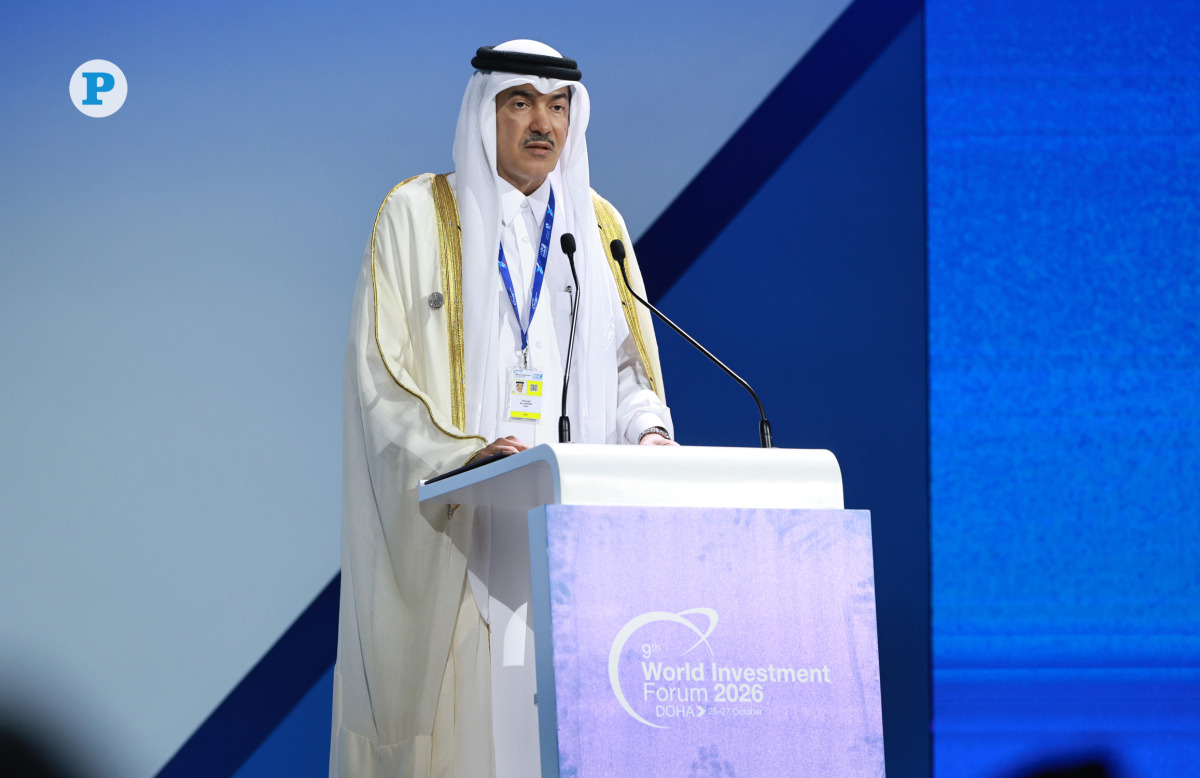 Minister of State for Foreign Trade Affairs H E Dr. Ahmad bin Mohammed Al Sayed addressing the forum. Pic: Rajan Vadakkemuriyil / The Peninsula
Delivering the opening speech, Minister Al Sayed said that investing in the future goes beyond traditional approaches to investment. He noted that, over several decades, Qatar has invested in its people, infrastructure, institutions, technology and innovation, as well as in partnerships built on trust and mutual interests.
Qatar’s experience shows its trade and investments are not separated, but they are complementary in the favour of growth and economic diversity, he noted.
Through the National Foreign Trade Strategy, he said, Qatar is working to strengthen the security and sustainability of supply chains, foster greater resilience in its imports, open new markets for its goods and services exports, diversify its economic partnerships and deepen its ties to global markets.
Qatar has built an attractive investment environment based on high-tech infrastructure, strong institutions, and open economies in order to reinforce business environment.
“We encourage investments and creativity in future sectors. Our efforts led to an increase in investors’ confidence. In 2025, Qatar attracted 373 direct investment projects, with an increase of 50% in comparison to last year. These projects helped create more than 15,000 new jobs,” Al Sayed said.
To further bolster this impetus, Qatar launched a $1bn investment incentives programme targeting several priority sectors, including advanced manufacturing, logistics, technology, digital services and financial services.
He added, “Recently we have unveiled new infrastructure projects of $38.5bn for the upcoming five years, together with the expected private sector investment of $22.5bn in the hospitality sector and real estate. These are real opportunities for investors for long-term investments.”
Qatar aims to establish Doha as a platform from which investment and partnerships can reach regional and global markets. Qatar is not only an investment destination, he said, but also a long-term international investor and partner. The success of investment, the Minister added, should be measured by the value it creates, the knowledge it transfers, the capabilities it builds and the jobs it provides.
The forum will examine the future of investment amid geopolitical and technological change and the reshaping of supply chains. Discussions will also address how to broaden access to capital flows and direct them towards productive activities.
The programme includes 108 sessions and high-level dialogues, with 406 speakers across eight thematic tracks. Topics include investment in artificial intelligence; entrepreneurship and small and medium-sized enterprises; investment policy; sustainable finance and business; tourism and culture; climate and the environment; investment promotion; and special economic zones.
The forum brings together approximately 7,000 participants from around the world, including senior officials, policymakers, business leaders, investors, experts and representatives of international organisations.