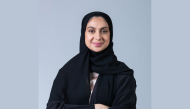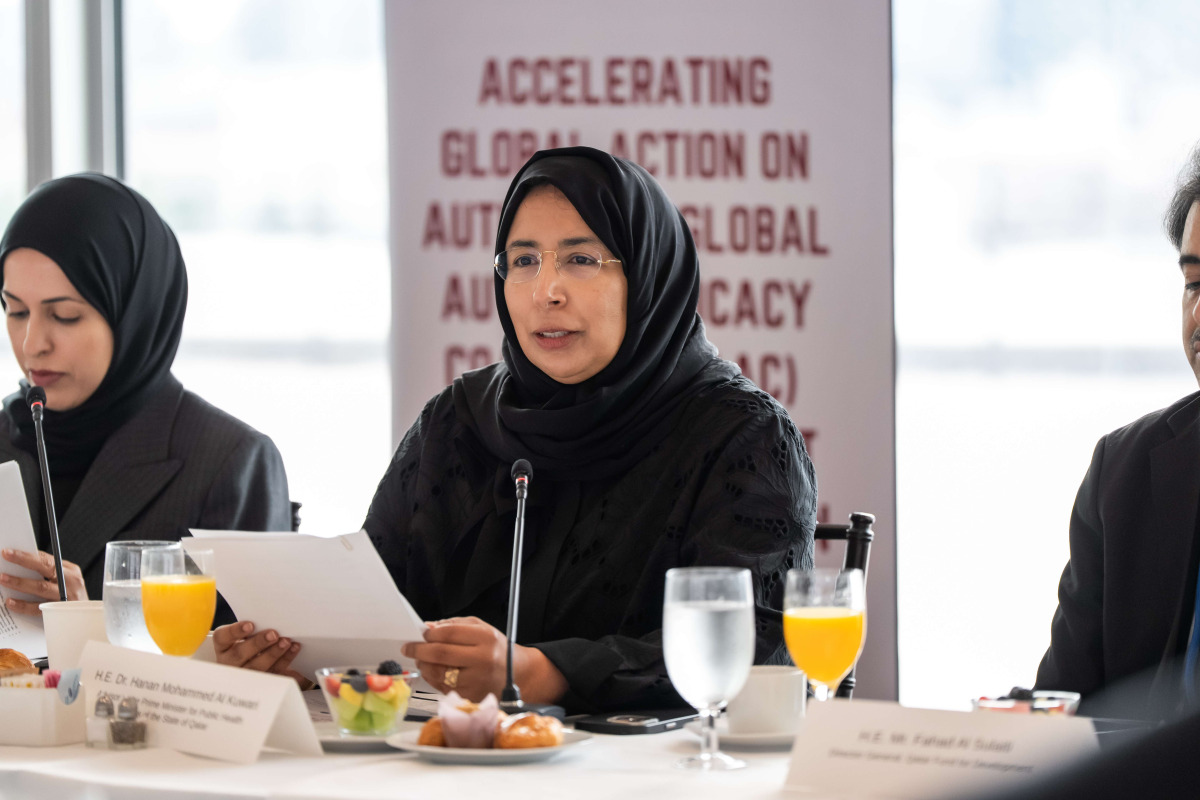
Advisor to the Prime Minister for Public Health Affairs and former Minister of Public Health, H E Dr. Hanan Mohamed Al Kuwari delivering remarks at the high-level event.
New York: One year on from its launch at the 80th session of the United Nations General Assembly, the Global Autism Advocacy Coalition — founded by Qatar Foundation, Autism Speaks, and UNICEF, with support from the World Health Organization — has returned to the international stage with a growing membership.
The founding members of the coalition now also include Education Above All Foundation, the Bulat Utemuratov Foundation, Autism Impact Fund, and the Ministry of Social Development and Family (MSDF) and the Ministry of Public Health (MoPH). These two ministries are leading the coalition’s agenda in Qatar, with MSDF ensuring its work translates into support structures and services for families, and MoPH strengthening its ability to connect global advocacy with Qatar’s healthcare systems.
And on the sidelines of the 81st session of the United Nations General Assembly (UNGA), a high-level event hosted by the State of Qatar and the Global Autism Advocacy Coalition (GAAC) – titled ‘Accelerating Global Action on Autism: GAAC from Commitment to Implementation’ – brought together governments, multilateral organisations, researchers, philanthropies, civil society organizations, investors, and private sector leaders to advance a shared vision for addressing systemic gaps and leveraging new advances and emerging technology to improve and transform the lives of individuals with autism worldwide.
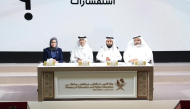
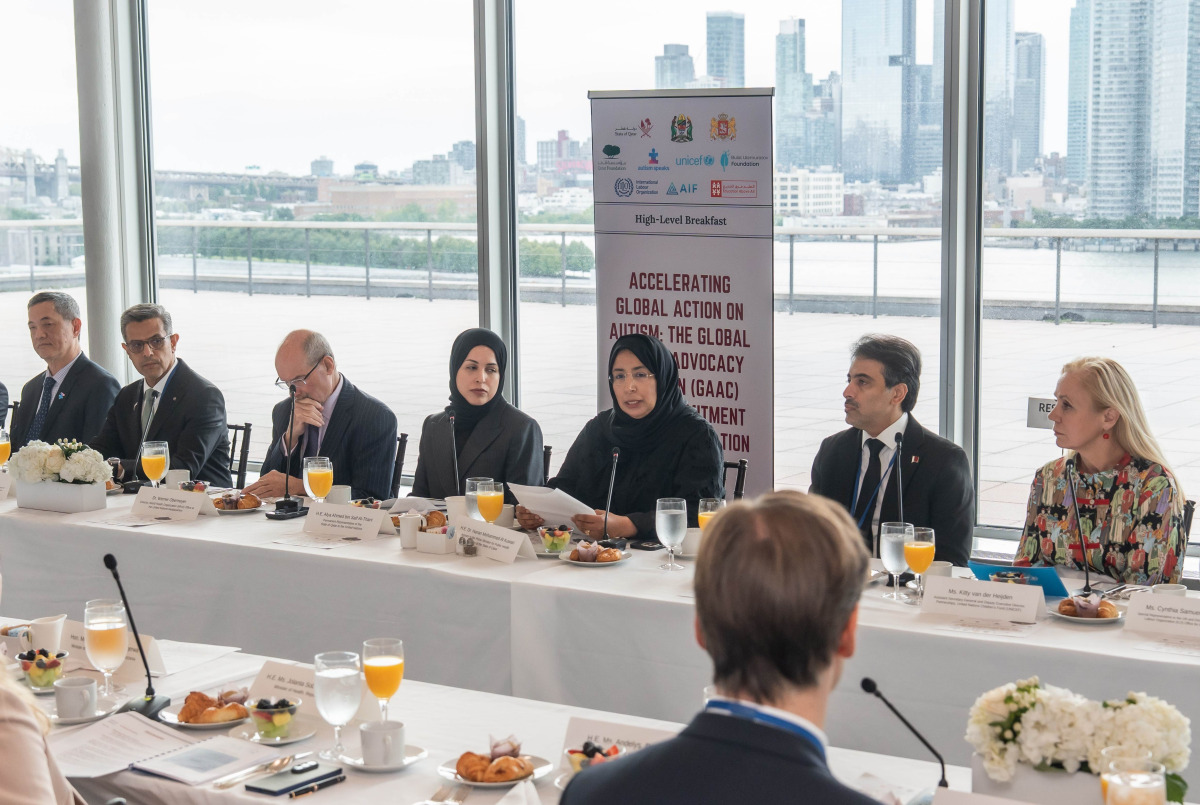 Participants during a high-level event hosted by Qatar and the Global Autism Advocacy Coalition on the sidelines of UN General Assembly.
Representatives from 18 countries attended the event, with those from Tanzania, Poland, Bangladesh, and Georgia providing global perspectives during its discussions.
Since its launch, GAAC has strengthened its global partnerships, established implementation and funding frameworks, launched a hub model for catalysing coordinated autism action on a regional basis, and advanced efforts to elevate autism on the global policy agenda, including advocacy toward stronger accountability mechanisms. Its scope, progress, and goals can be explored at www.qf.org.qa/gaac.
Each GAAC founding member is leading action in its area of expertise, driving initiatives that tackle critical gaps in autism policy, services, data, investment, innovation, and workforce development to accelerate global progress and impact.
The newly launched GAAC Regional Hub for Central Asia and the South Caucasus, led and coordinated by the Bulat Utemuratov Foundation (BUF), will serve as a regional platform to implement and test GAAC’s flagship initiatives, supporting workforce development, innovation, policy implementation, data generation, and cross-country collaboration.
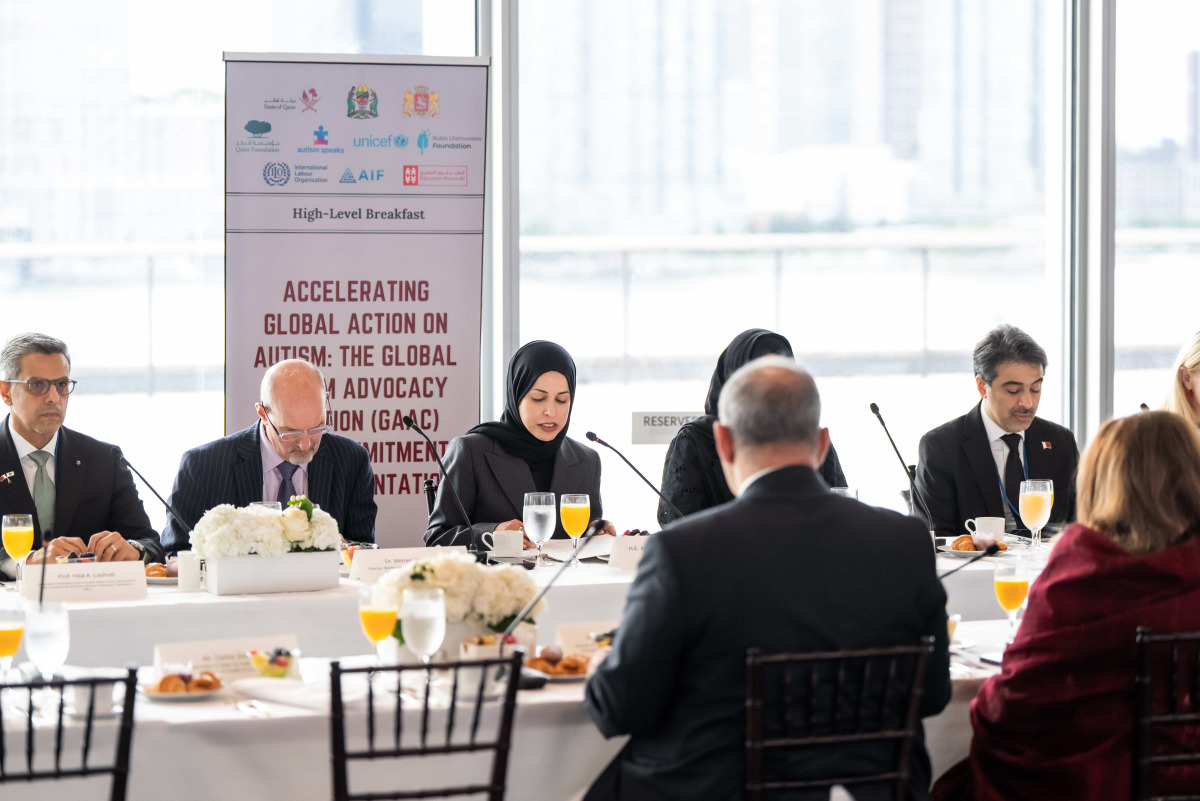 Qatar's Permanent Representative to UN, H E Sheikha Alya Ahmed bin Saif Al-Thani speaking at the event.
Drawing on Kazakhstan’s successful Asyl Miras model, this Hub will share proven expertise, training systems, quality standards, data frameworks, and family-support approaches with neighbouring countries. By turning Kazakhstan’s experience into a shared regional resource, the Hub aims to accelerate the development of sustainable, evidence-based autism services and create a scalable model that can be replicated in other regions.
The Hub will also work with the two other GAAC Hubs in Doha and the US. Together, the three form a global platform to support the rapid development, validation and deployment of new innovative solutions across diverse cultures and geographies.
Floreo, a virtual reality platform designed to help neurodivergent individuals of all ages and abilities build social, behavioural, communication, and daily living skills, is among the first companies backed by GAAC. Floreo Skills XP will be deployed in a multi-country pilot to expand access to evidence-based interventions, and improve service delivery across the Middle East and Central Aisa.
Complementing GAAC’s implementation efforts, Qatar Foundation’s Hamad Bin Khalifa University (HBKU) will help to advance the research, technology, and innovation agenda of the GAAC MENA Regional Hub. Through its multidisciplinary expertise and its A-sense Center of Excellence, HBKU will support the development, testing, and scale-up of innovative autism solutions while sharing research, emerging technologies, policy expertise, and best practices across the GAAC network.
Autism Speaks, a GAAC founding member and coalition Secretariat, is also leading the coalition’s Lived Experience Leadership Council, which will give people with autism and their families a direct role in setting priorities and shaping how GAAC initiatives are developed and implemented.
Building on its progress since its launch, GAAC is creating practical pathways for countries to strengthen autism support systems, expand opportunities, and improve outcomes for autistic individuals and their families worldwide. To help translate evidence, knowledge, and innovation into measurable impact, GAAC is now launching a portfolio of flagship initiatives designed to address critical gaps in policy, data, workforce development, technology, and lifelong support.
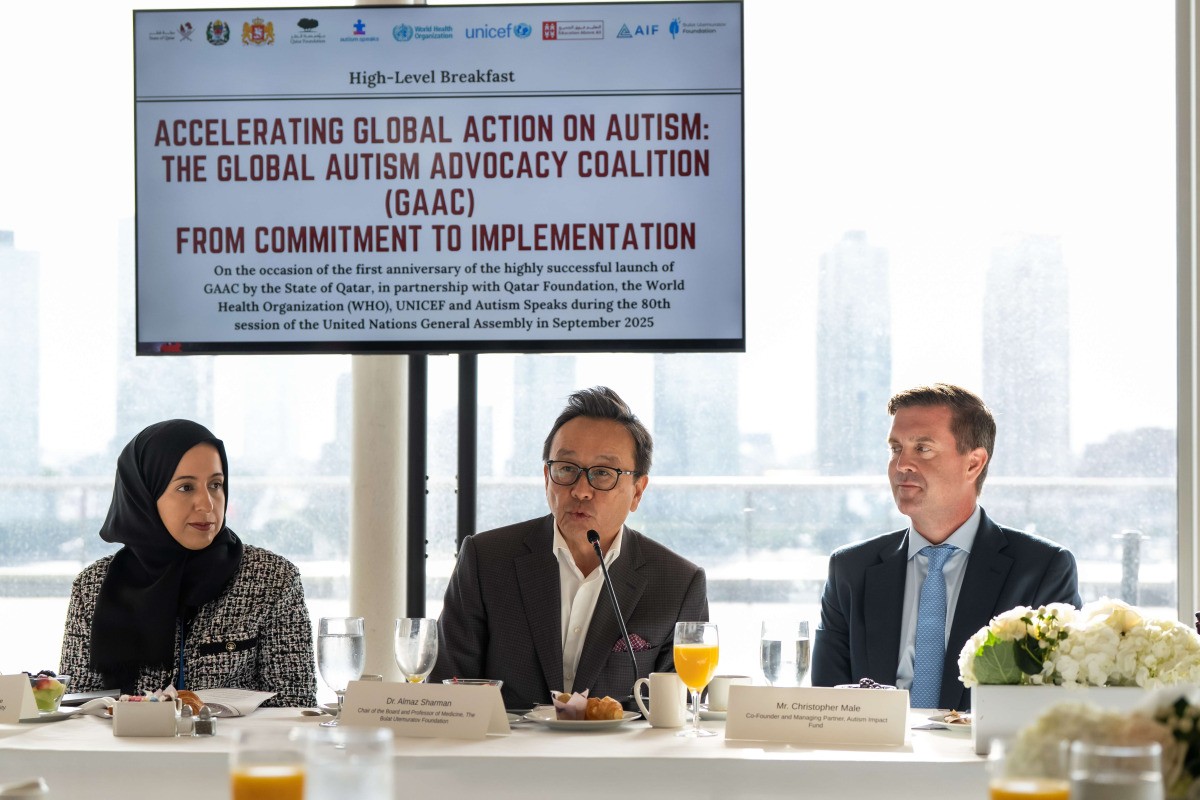 From Left: Dr. Dena Al-Thani, Dr. Almaz Sharman and Christopher Male at the GAAC high-level event.
These initiatives, unveiled to a worldwide audience at UNGA, include:
- The Global Autism Index, a global accountability tool for measuring countries’ progress in autism inclusion, services, and policy performance.
- A Global Autism Data Platform, which will provide a shared evidence base for policymaking and system improvement worldwide.
- A Global Workforce Accelerator, focused on building the autism workforce required to deliver services at scale around the world.
- A Technology & Innovation Lab, which will support the development and scaling of affordable technologies and AI-enabled solutions, particularly in low-resource settings.
- A Global Accelerator & Knowledge Hub, which will facilitate structured learning and collaboration between countries.
- A Lived Experience Leadership Council, designed to ensure people with autism, and their families and caregivers, have a voice and a role in shaping priorities and decision-making surrounding autism.
- The Global Autism Policy Compact, a voluntary framework through which countries will commit to national autism strategies and measurable progress.
The GAAC has also begun work on establishing an impact fund that will drive new, innovative solutions to advance autism diagnosis, and harness advances in Artificial Intelligence and technology to support the development of treatments and improve the lives of people with autism and their families.
The GAAC represents a new phase of an ongoing 18-year journey to turn autism awareness into a global movement, led by Chairperson of Qatar Foundation, H H Sheikha Moza bint Nasser whose proposal in 2007 resulted in UNGA adopting, without a vote, the establishment of World Autism Awareness Day, marked each year on April 2. Guided by her continued leadership and inspired by her vision, GAAC now seeks to transform decades of autism advocacy into a global system for action, providing countries with the partnerships, tools, access to investments and pathways needed to advance autism inclusion at scale.
Permanent Representative of the State of Qatar to the United Nations, H E Sheikha Alya Ahmed bin Saif Al-Thani said: “Under the chairmanship of H H Sheikha Moza bint Nasser, Qatar Foundation has played a central role in translating this vision into action.
“Through its groundbreaking programmes and service, Qatar Foundation supports persons with autism and their families from early diagnosis and healthcare to education, employment and community inclusion. Its Autism Strategy 2025-2035 reflects this integrated approach, bringing together expertise from across its institutions and strengthening cooperation with government entities, research institution, civil society, persons with autism and their families.”
Collectively, these efforts seek to address one of the most pressing challenges facing the global autism community – ensuring that effective interventions and innovations are accessible to everyone who needs them, regardless of geography or income level.
Advisor to the Prime Minister for Public Health Affairs and former Minister of Public Health, H E Dr. Hanan Mohamed Al Kuwari said: “As we begin this next chapter, the State of Qatar remains committed to strengthen partnerships, accelerate action and help ensure that autistic people, wherever they live, have access to the support and opportunities they need to thrive, participate and contribute fully to society.
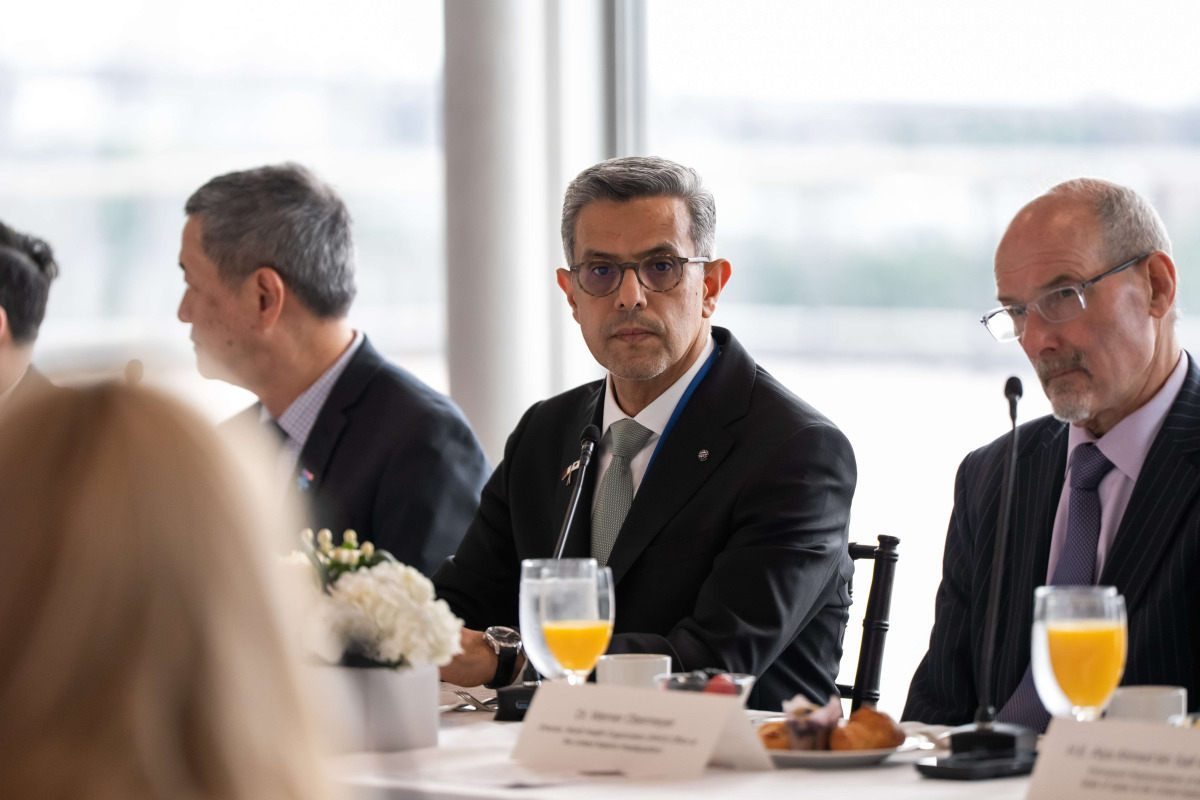 RDI Advisor to the Chairperson’s Office and Executive Director of RDI at Qatar Foundation, Dr. Hilal Lashuel (centre) at the session.
“The ambition before us today is clear – and it is urgent: to ensure that the progress we have made in placing autism firmly on the global agenda is matched by real progress in the daily lives of autistic people and their families.”
Director General of Qatar Fund For Development (QFFD), Fahad bin Hamad Al-Sulaiti participated in the high-level event, highlighting QFFD’s approaches to sustainable and inclusive development. “At QFFD, we believe sustainable development must reach everyone and create meaningful opportunities for all, including people with autism and persons with disabilities,” he said.
“Through development finance, we work with public and private sector partners, multilateral development banks, and international organisations to mobilise resources, scale evidence-based solutions and strengthen systems that advance inclusion. We value opportunities such as this to exchange knowledge, build diverse partnerships, and explore how our collective efforts can contribute to a more inclusive and equitable future.”
“The GAAC was created out of the realisation that the challenges facing autistic individuals and their families are shared across the world, and so are the solutions, and no single country can solve or scale them alone,” said Research, Development, and Innovation Advisor to the Chairperson’s Office and Executive Director of Research, Development and Innovation at QF, Dr. Hilal Lashuel.
“Beyond its global advocacy agenda, the GAAC’s primary goals are to mobilise the resources, and create the collaboration and innovation platforms and sustained investment this field has long lacked, to build the systems and policies necessary to accelerate the translation of innovations into lasting impact. Our goal is simple: progress in diagnosis, policy, intervention or treatment made anywhere should benefit people with autism and their families everywhere.
“That is why a global coalition matters. The momentum is growing, and we call on all who share this vision to join us.”