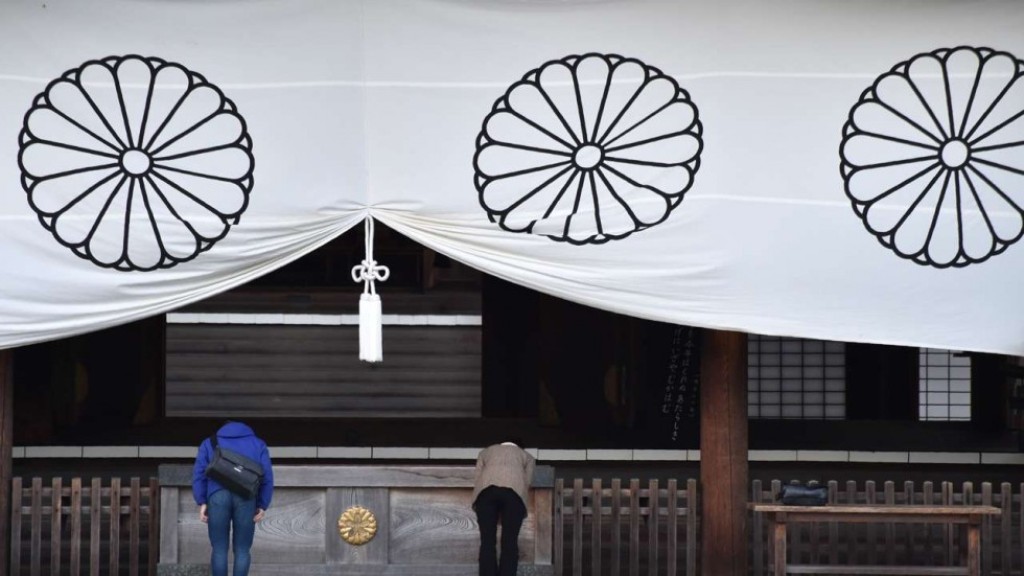
Visitors pray at the Yasukuni Shrine, which honours millions of Japanese war dead but also senior military and political figures convicted of war crimes after the second world war. Photo: AFP
Tokyo: A Japanese cabinet minister offered prayers at a controversial Tokyo war shrine on Wednesday, shortly after Prime Minister Shinzo Abe paid a highly symbolic visit of reconciliation to Pearl Harbor.
Masahiro Imamura, the minister in charge of the reconstruction of northern Japan after the massive 2011 tsunami, visited Yasukuni Shrine in the afternoon.
Public broadcaster NHK showed Imamura throwing coins into a wooden box as an offering and bowing low at the shrine.
"I reported about this past year's work, expressed gratitude and prayed for our country's peace and prosperity," he said.
Imamura said his visit "has nothing to do with" Abe's trip to Pearl Harbor and the timing is "a coincidence", according to NHK and other Japanese media.
But Haruko Satou, professor of international politics at Osaka University, suggested the timing was suspicious.
"His real intention behind the visit is unknown, but it's natural to think that he chose the same day when Prime Minister Abe visited Pearl Harbor," Satou told AFP.
Imamura's action is "likely to have a negative impact on Japan's diplomacy and offset the positive image of Abe's historic visit", Satou said.
The minister also visited the shrine on August 11, several days before the anniversary of Japan's defeat in World War II. Cabinet members often journey to the leafy religious site at that time and during its spring and autumn festivals.
It has for decades been a flashpoint for criticism by countries such as China and South Korea which suffered under Japan's colonialism and aggression in the first half of the 20th century.
The indigenous Shinto religious shrine honours millions of mostly Japanese war dead, as well as senior military and political figures convicted of war crimes after the war.
Imamura's visit came just hours after Abe and US President Barack Obama paid homage to the more than 2,400 Americans killed on December 7, 1941 in Japan's surprise attack that drew the United States into World War II.
They offered flowers and stood in silence before a memorial to those lost on the USS Arizona -- roughly half of all those killed in the assault.
The pair issued declarations about the power of reconciliation and warned against fomenting conflict.
Abe, a staunch conservative who has called for strengthening Japan's military, has himself avoided visiting Yasukuni in an apparent attempt to prevent controversy after going there three years ago on Monday to celebrate his first anniversary since being elected prime minister.
Japanese conservatives have called on him to visit the shrine again.