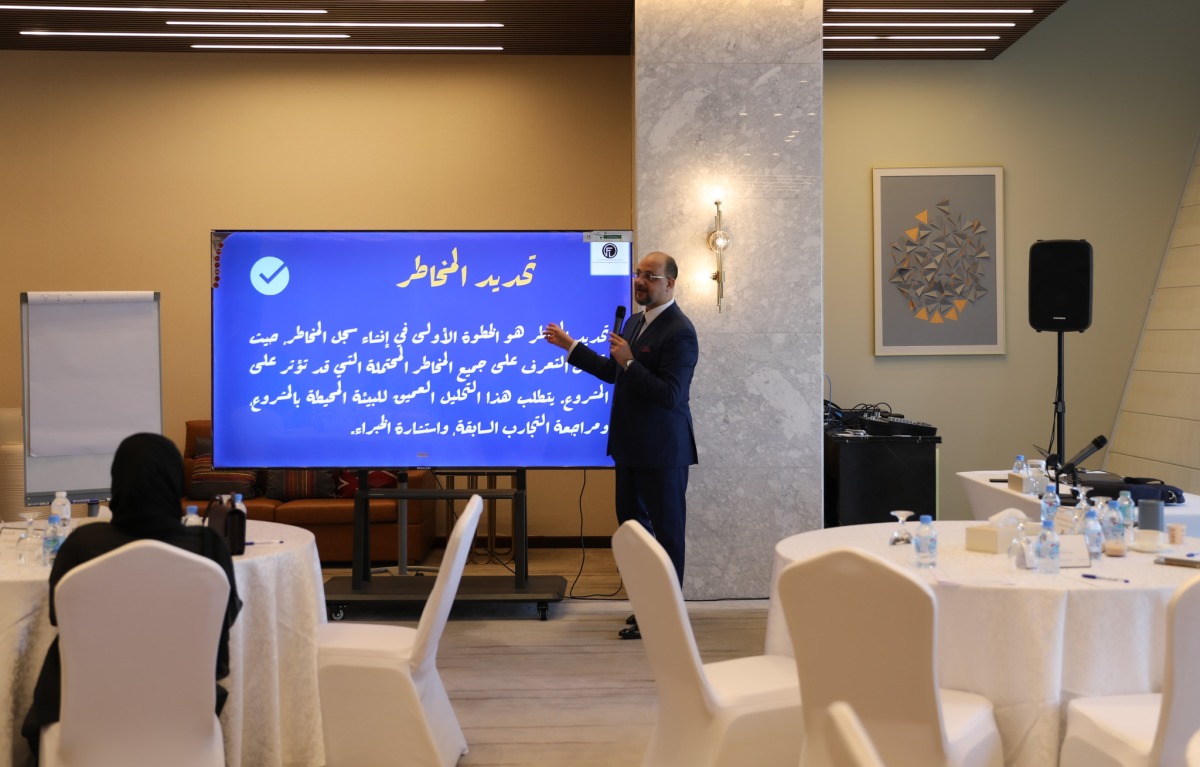
Participants during the training programme.
Doha, Qatar: The Ministry of Awqaf and Islamic Affairs has launched an innovative training programme titled “Leadership in Crises Using Virtual Reality (VR)”, marking a significant step toward adopting advanced training methodologies to enhance leadership capabilities.
Supervised by the Training and Administrative Development Section under the Human Resources Department, the programme aims to equip leaders with essential crisis management skills and strengthen their ability to make decisive decisions in complex and high-pressure environments.
By leveraging virtual reality technology, participants engage in immersive, interactive simulations that replicate real-life crisis scenarios, requiring quick thinking, accurate judgment, and effective response.
The programme, running from April 26 to 30, 2026, is currently tailored for female leaders, including department heads and heads of Quran memorisation centres.
A total of 15 trainees are benefiting from this phase, reflecting the Ministry’s commitment to empowering women leaders and enhancing their decision-making capabilities during emergencies. Through VR-based simulations, participants can directly interact with realistic institutional crisis scenarios within a safe and stimulating training environment. This approach helps boost operational readiness and builds confidence in handling time-sensitive and critical situations.
In parallel, the Ministry is preparing to roll out the same programme for male leaders in May, as part of a comprehensive plan to expand its reach and ensure unified leadership concepts and improved institutional preparedness across all sectors.
The Ministry emphasised that this initiative is the first of its kind within the organisation in terms of integrating virtual reality into leadership training. It aligns with broader efforts to modernise training systems by transitioning from traditional methods to smart, interactive solutions.
The programme focuses on developing key competencies, including crisis leadership, decision-making under pressure, risk analysis, emergency assessment, and effective communication and team management during crises. These skills are expected to support business continuity and mitigate the impact of crises on institutional performance.
The launch of this programme underscores the Ministry’s belief that human capital development is fundamental to building resilient institutions capable of navigating challenges and shaping the future.
Through such initiatives, the Ministry reaffirmed its commitment to strengthening institutional leadership and empowering both women and men with modern tools and practical expertise to manage crises efficiently.