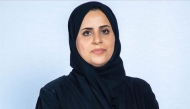
Paris: President of the Arab World Institute (IMA) in Paris Anne-Claire Legendre, said cooperation with the State of Qatar is a cornerstone of the Institute’s mission, highlighting the long-standing partnership in Arabic language education and efforts to expand and promote the language in France.
In an interview with QNA, Legendre, a former advisor to the French President on North Africa and the Middle East, stated that the partnership has strengthened the Institute’s Arabic Language Center, enabling it to welcome more than 1,000 learners each year, ranging from children to adults. It has also supported the development of specialised teaching tools and modern curricula designed to make learning Arabic more accessible.
She praised Qatar’s contribution to advancing Arabic language education at the Institute, noting that a major focus of the partnership is the development of educational, digital, and technological resources, as well as work on an Arabic language certification system.
Legendre said the Institute has developed an Arabic proficiency test inspired by internationally recognised assessments such as TOEFL, allowing universities and employers to recognise Arabic language skills through a standardised certification.
She stressed that Arabic is at the heart of the Institute’s mission, describing it as a unifying language across the Arab world and a bridge linking cultures and civilizations. She added that Arabic is now one of the most widely spoken languages in France.
The Institute, she said, aims to expand access to Arabic language learning across France while improving access to Arabic and French books nationwide, reinforcing Arabic as a language of knowledge, creativity, and cultural exchange rather than one associated solely with heritage.
Legendre also revealed plans to organise a major week dedicated to the Arabic language and its literature to showcase contemporary Arab literary and intellectual works and encourage publishers in France, Europe, and the United States to translate more Arabic titles. She noted that modern Arabic literature remains underrepresented in Western translation markets.