Doha: President of the Public Works Authority (Ashghal) HE Eng. Mohammed bin Abdulaziz Al Meer said that Ashghal is committed to delivering more projects using the Public-Private Partnership (PPP) model.
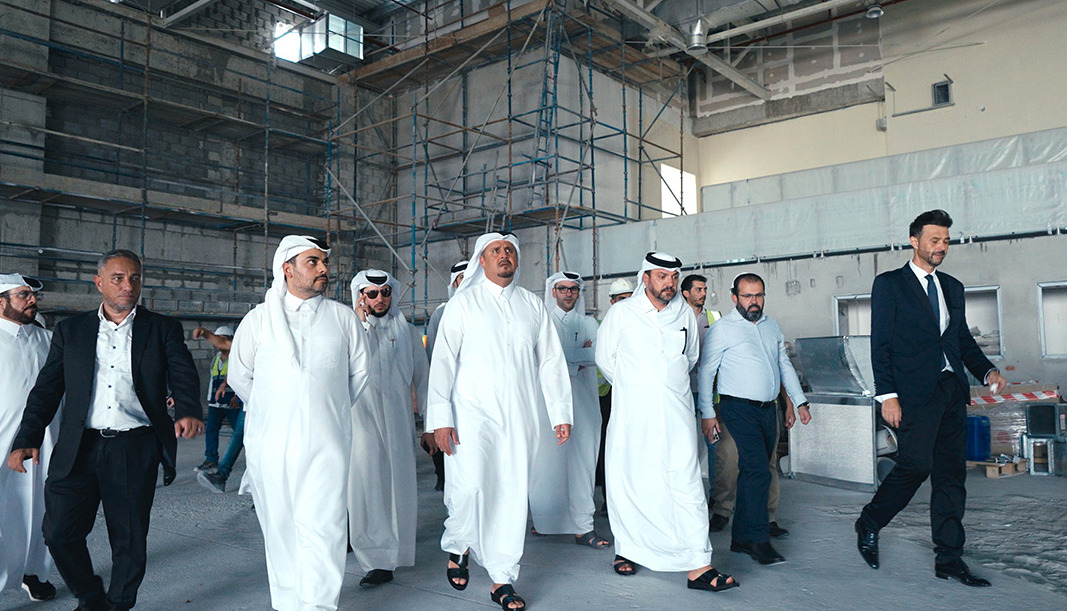
This came during His Excellency's visit to inspect the project of constructing 14 new schools, as part of the Qatar Schools Development Program's second package adopting the PPP model, according to Ashghal's press release Wednesday.
This model strengthens the private sector's role in implementing national development projects, in line with the objectives of the Third National Development Strategy (2024-2030), which aims to increase private sector participation in Qatar's development journey, HE Eng. Al Meer added.
His Excellency directed the project's team to complete the remaining works according to the approved schedule, emphasizing the importance of maintaining the same high standards of quality, efficiency, and commitment.
"The Authority also places great emphasis on adopting the latest innovations, advanced engineering solutions, and modern construction technologies across its projects," he said, "To keep pace with global developments in the construction sector, enhance delivery efficiency, promote sustainability, and ensure the delivery of high-quality infrastructure that meets the country's current and future development needs."
Under the PPP agreement, UCC Assets Consortium for Trading and Contracting (UCC Holding) is responsible for the design, construction, financing, operation, and maintenance of the schools for a period of 25 years, after which they will be handed over to the Ministry of Education and Higher Education in good operational condition, ensuring the long-term sustainability of the educational facilities, improving operational efficiency, and maximizing the value of these assets.
For his part, Chairman of UCC Holding Moataz Al Khayyat said, "Projects of this nature represent more than a construction achievement; they reflect the transformation taking place in the global construction sector toward more innovative, efficient, and sustainable models."
"At UCC, we are committed to leading this transformation by investing in advanced technologies, developing national capabilities, and building strategic partnerships that enable the delivery of landmark projects that support the vision for future-ready cities and facilities," he added.
In turn, President and Group CEO of UCC Holding Ramez Al Khayyat said, "This achievement reflects UCC's commitment to investing in the latest global technologies and deploying them in projects that fulfill our partners' vision while supporting their aspirations for more efficient and sustainable infrastructure."
He added, "It also demonstrates the capabilities of our teams to deliver complex projects by combining advanced engineering planning with precise site operations management and the application of modern technological solutions in accordance with the highest quality and safety standards."
Still according to the press release, the project, which is approximately 80% completed, is being implemented under the supervision of Ashghal, in cooperation with the Ministry of Commerce and Industry and the Ministry of Education and Higher Education.
This is being done in accordance with Law No. (12) of 2020 regulating Public-Private Partnerships, and in line with the objectives of the Third National Development Strategy (2024-2030) aimed at enhancing private sector participation in the implementation of national development projects.
The project, valued at approximately QAR 4.5 billion, includes the construction of 14 schools across 10 strategic areas throughout Qatar: Muaither, Al Gharrafa, Al Wajbah, Al Thumama, Ain Khaled, Al Aziziyah, Al Meshaf, Rawdat Rashid, Al Sakhama, and Rawdat Al Hamama. The schools will have a combined capacity of more than 10,000 students.
As part of adopting the latest engineering innovations, the project incorporates 3D printing technology in the construction of selected structural components in two schools, reflecting Ashghal's commitment to embracing cutting-edge construction technologies and supporting the transformation toward a more efficient, sustainable, and innovative construction sector in Qatar.
3D printing is among the most promising technologies in the construction industry, accelerating project delivery, reducing construction costs, minimizing reliance on on-site labor, reducing construction waste, and lowering carbon emissions, thereby supporting sustainability goals and improving resource efficiency.
The project also incorporates modular construction techniques using prefabricated structural systems and building modules for several school components.
This approach helps accelerate project delivery, improve construction efficiency, enhance manufacturing precision and construction quality, reduce material waste, and minimize on-site works.
The press release highlighted that approximately 70% of the electrical and mechanical materials used in the project, in addition to steel, glass, and various other construction materials, are sourced locally, contributing to strengthening private sector and supporting the national economy.
The schools have been designed in accordance with the highest local and international standards, incorporating the latest global trends in educational facility design, including enhanced external facades and interior spaces.