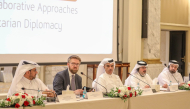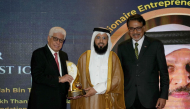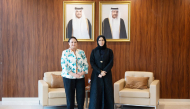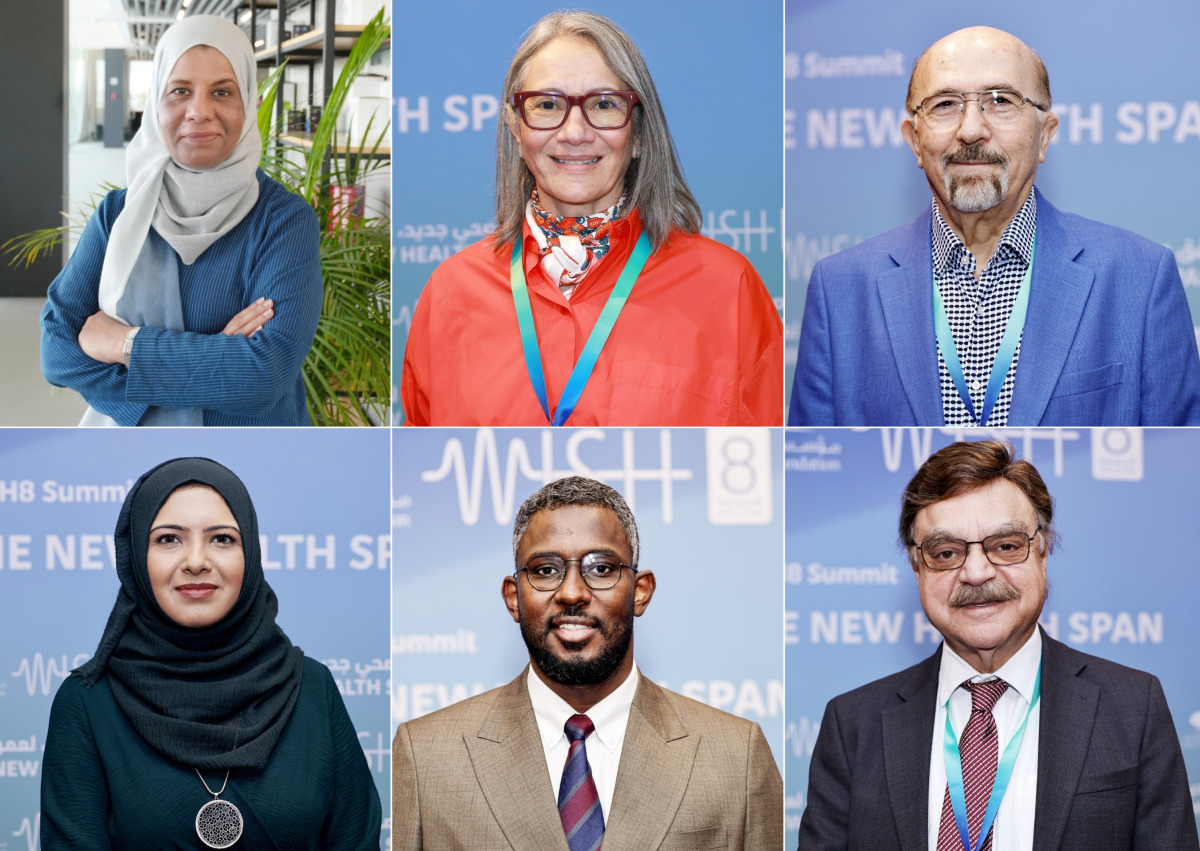
From Top left: Dr Asyia Kazmi, Rama Chakaki, Dr Fouad Abdul Wahab Al-Shaban, Sabika Shaban, Saad Elasad, and Dr Javaid I. Sheikh
Doha, Qatar: Qatar Foundation (QF) is bringing together 21 of its entities at the World Innovation Summit for Health (WISH 2026), reinforcing Qatar’s contribution to global discussions on the future of healthcare, longevity and healthier ageing.
WISH 2026 under theme New Health Span will examine how longer lives can be matched with healthier, more dignified, and more equitable health systems.
With 10 entities co-hosting sessions, QF’s participation will span artificial intelligence, healthcare innovation, autism research, longevity and the ethical implications of emerging health technologies, bringing research, policy, education and practical expertise into a shared conversation.
QF’s extensive participation reflects the interconnected nature of this challenge, highlighting how progress in health depends not only on medical research and healthcare delivery but also on education, innovation, public awareness and community engagement. Contributions from its institutions will bring together researchers, academics, healthcare professionals and young people to explore how emerging knowledge and technologies can be translated into meaningful improvements in people’s lives.
Highlighting the importance of education in the broader health-span conversation, CEO of the World Innovation Summit for Education (WISE), Dr Asyia Kazmi, said lifelong learning, cognitive development and intergenerational knowledge-sharing all have a role in supporting healthier ageing.
She said societies must consider not only how to help people live longer, but also how to ensure they remain healthy, engaged and able to contribute throughout their lives.
“It becomes our responsibility to think about their life cycle and lifespan, and to help them lead not just a longer life, but actually a better life in better health,” she said.
Dr Kazmi highlighted two important dimensions of education in this regard: providing older people with opportunities for continued learning and helping younger generations benefit from the knowledge, experience and wisdom of their elders.
She said lifelong learning helps maintain cognitive abilities while equipping older people with new skills, while intergenerational learning allows them to mentor younger people and share valuable moral, ethical and practical perspectives.
“They have a huge range of expertise, experience, knowledge and wisdom, which younger generations can benefit from,” she said.
Dr Kazmi also stressed that good health, a sense of safety and the ability to set goals and work towards them are essential for successful educational outcomes. She welcomed WISH’s efforts to advance discussions on health and wellbeing, adding that these conversations would continue at the next WISE Summit on November 22 and 23 next year.
For President of Qatar Science & Technology Park (QSTP), Rama Chakaki, artificial intelligence has considerable potential to advance longevity research and help people maintain their health for longer.
Speaking ahead of her participation in the November 30 session on Artificial Intelligence Across Health Systems, Chakaki said AI is accelerating research into ageing by helping identify drugs that target ageing processes, measure biological age and detect age-related diseases at an earlier stage.
“AI speeds up longevity research by finding drugs that target ageing, measuring biological age and catching age-related disease early,” she said, noting that much of this work remains at the research or early-trial stage.
She also highlighted the growing role of AI-powered assistive technologies in supporting healthier lifestyles and extending health expectancy through wearable devices, ambient technologies and applications.
Her session will introduce the EDGE-AI framework, focusing on trust, deployment, governance and evaluation, and maturity-based actions to translate technical success into safe and sustainable impact across healthcare systems.
The importance of looking beyond childhood when addressing autism spectrum disorder will also feature prominently at WISH 2026, with Qatari researchers and experts highlighting the need for continuous support throughout an individual’s life.
Principal Investigator at Qatar Biomedical Research Institute (QBRI) and Joint Associate Professor at the College of Health and Life Sciences, Hamad Bin Khalifa University (HBKU), Dr Fouad Abdul Wahab Al-Shaban, said one of the important issues being addressed at the summit is the health span of individuals with autism.
“We are trying to find a way to follow individuals with autism from childhood until adulthood and identify the necessary measures that should be provided for them, whether in terms of medical care, social support or other requirements, including preparing suitable jobs for them,” he said.
A roundtable discussion during the summit will bring together invited speakers to examine different aspects of autism research, support systems and the challenges individuals face as they grow older.
Dr Al-Shaban highlighted Qatar’s growing contribution to autism research and one of the significant developments has been the use of eye-tracking technology to improve early diagnosis. Following more than a decade of research in collaboration with Cleveland Clinic, the team developed an eye-tracking test that takes approximately four minutes and has an accuracy rate of more than 93%, he said.
“Qatar is a very small country with a big contribution to autism research,” he said, pointing to the country’s leading position in autism research within the GCC region.
Complementing the research perspective, Academic Journals and Publications Specialist at the College of Islamic Studies, HBKU, Sabika Shaban highlighted the importance of understanding how services for individuals with autism and other developmental disabilities evolve as they move through different stages of life.
Shaban said she was attending WISH to present work undertaken in collaboration with the Ministry of Public Health, the National Autism Action Plan team and the Minister’s Office, focusing on mapping diagnostic and therapeutic services available in Qatar.
She said the work was driven partly by the need to understand what happens to individuals with autism as they grow older, particularly when they transition from childhood into adolescence and adulthood.
“While services are available for young children (with autism), they keep shifting as individuals move into adolescence, making it difficult to know exactly what support is available,” she said.
This highlights a critical dimension of the longevity discussion: ensuring that individuals with autism and other developmental disabilities continue to receive appropriate, high-quality services throughout their lives.
Shaban said WISH provided an important international platform for advancing this conversation, noting that the summit had built a strong legacy in the autism space over the past decade.
Beyond research and policy, WISH 2026 is also placing particular emphasis on involving young people in discussions that will shape the future of healthcare.
Senior Debate Instructor at the QatarDebate Center, Saad Elasad, said the centre’s participation was aimed at encouraging dialogue and ensuring that health innovation is examined from different perspectives, including its social, economic and ethical implications.
The centre is organising four debates, including the closing debate, which will examine whether health span should become the primary measure of healthcare progress.
“We are debating health span itself. Should it be the primary measure? We question what the cost of that would be for people, the economy and many other areas,” he said.
Other discussions will address whether health influencers should be regulated, how patents and commercial interests affect access to innovation, particularly in the Global South, and whether the growing use of wearables and health tests is genuinely improving health or leading to the medicalisation of ordinary life.
A key element of the QatarDebate Center’s participation is its youth cohort, comprising nearly 100 participants selected through an application process.
Elasad said involving young people was particularly important because they would experience the long-term consequences of decisions made today.
“Young people must take an active part in shaping these policies because they will be affected by them for longer and more profoundly,” he said.
He encouraged young people to remain informed, participate in discussions and contribute to shaping the future of healthcare, particularly as demographic changes, increasing longevity and artificial intelligence continue to transform society.
The need to narrow the gap between lifespan and health span was also underscored by Dean of Weill Cornell Medicine-Qatar (WCM-Q), Dr Javaid I. Sheikh.
He said that although people are living longer, the period during which they remain healthy is not increasing at the same pace, creating a widening gap between lifespan and healthy lifespan. “We need to decrease that gap. We need to help people stay healthy until their last breath,” he said.
Dr Sheikh emphasised that achieving this requires a shift from a healthcare model focused primarily on treating illness towards one that prioritises prevention and encourages people to take responsibility for their health from an early age.
He highlighted the role of government policies, universities and medical schools in promoting this transition, noting that Qatar’s Ministry of Public Health was already taking forward policies aimed at improving population health.
He also pointed to the potential of emerging fields such as genomics, proteomics and other multi-omics technologies in developing individual risk profiles that could help prevent diseases before they occur.
However, he stressed that scientific advances and policy interventions must be accompanied by greater public awareness and participation.
“Scientific wellness can only be achieved if people are aware, right from the beginning, of what needs to be done to improve their own health,” he said.
As WISH 2026 brings together international experts, policymakers, researchers and young people, the contributions from Qatar’s institutions underline a common message: extending life expectancy alone is not enough. The real challenge is to ensure that people can live longer with better health, dignity, support and opportunities at every stage of life.
For Dr Sheikh, that responsibility begins with individuals and their families. “Get involved in taking care of your own health and your family’s health. That’s the message,” he said.