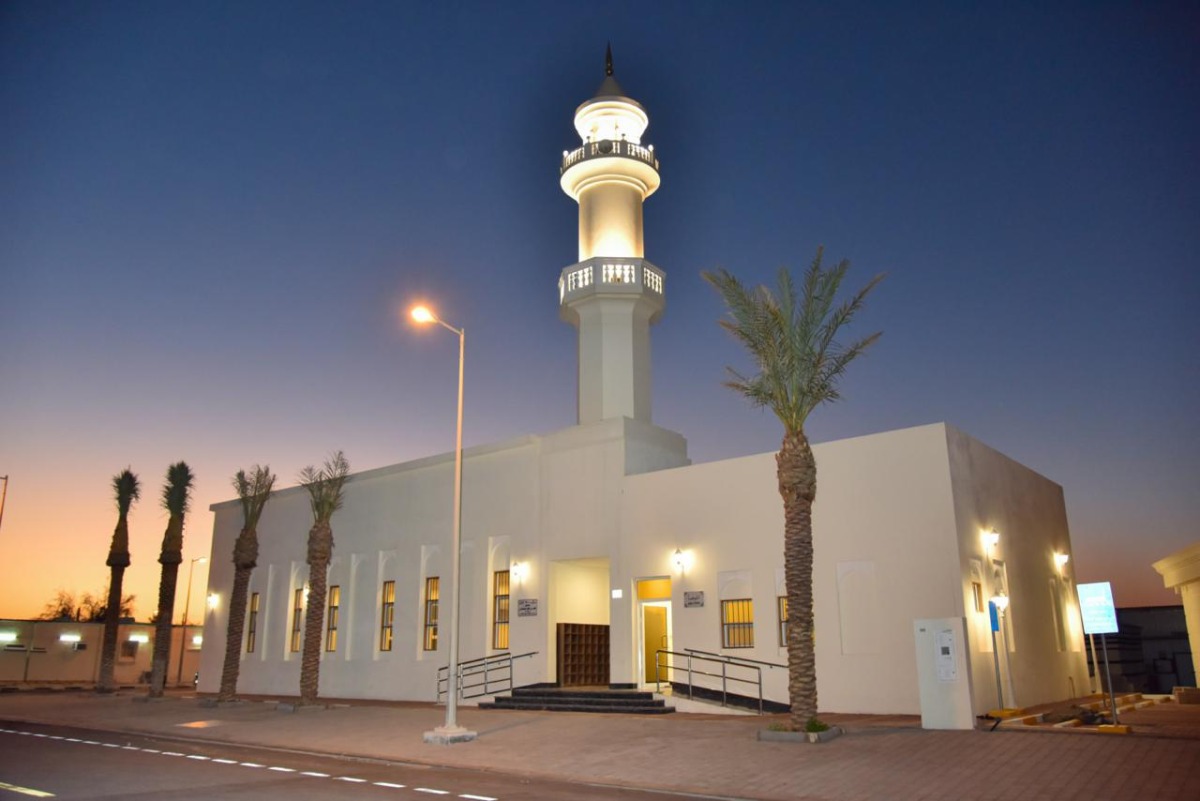
A view of Fahad bin Faleh Al Shahwani Mosque.
Doha, Qatar: The Ministry of Awqaf and Islamic Affairs has inaugurated the rebuilt Fahad bin Faleh Al Shahwani Mosque in the Al Jemailiya area as part of its ongoing expansion plan to provide mosques and religious services for growing residential communities across Qatar.
The mosque, opened through the Ministry’s Mosque Management Department, was demolished and reconstructed to meet modern engineering standards, reflecting the Ministry’s commitment to keeping pace with urban development and population growth in different parts of the country.
Built on a 750-square-metre plot, the mosque has been designed to provide a comprehensive and comfortable worship environment for worshippers.
The project includes integrated service facilities and follows contemporary architectural and engineering specifications while preserving the traditional Islamic character of mosques in Qatar.
The Ministry said the mosque was established through the generous endowment (waqf) of a benefactor, describing the initiative as a reflection of the important role that charitable endowments play in supporting the construction and maintenance of houses of worship. It noted that such contributions represent a lasting charity that continues to benefit the community for generations.
According to the Ministry, the project also highlights the significance of waqf as a key partner in community development and demonstrates the values of generosity and social solidarity that characterize Qatari society.
Endowments continue to support the construction, development, and maintenance of mosques and other charitable projects that benefit individuals and the wider community.
The newly opened mosque, designated as Mosque No. MS 388, is a Friday mosque with a capacity of 156 worshippers. It includes complete service facilities, dedicated ablution areas, and a minaret featuring an architectural design that complements the Islamic style adopted in mosques throughout the country.
The Ministry said the opening aligns with its 2025-2030 Strategic Plan, which prioritises the development of mosque infrastructure, the enhancement of religious services, and the provision of integrated worship facilities that meet the demands of Qatar’s expanding urban landscape and growing population. The strategy also seeks to strengthen the role of mosques as centres for worship, religious guidance, Quranic recitation, and community service.