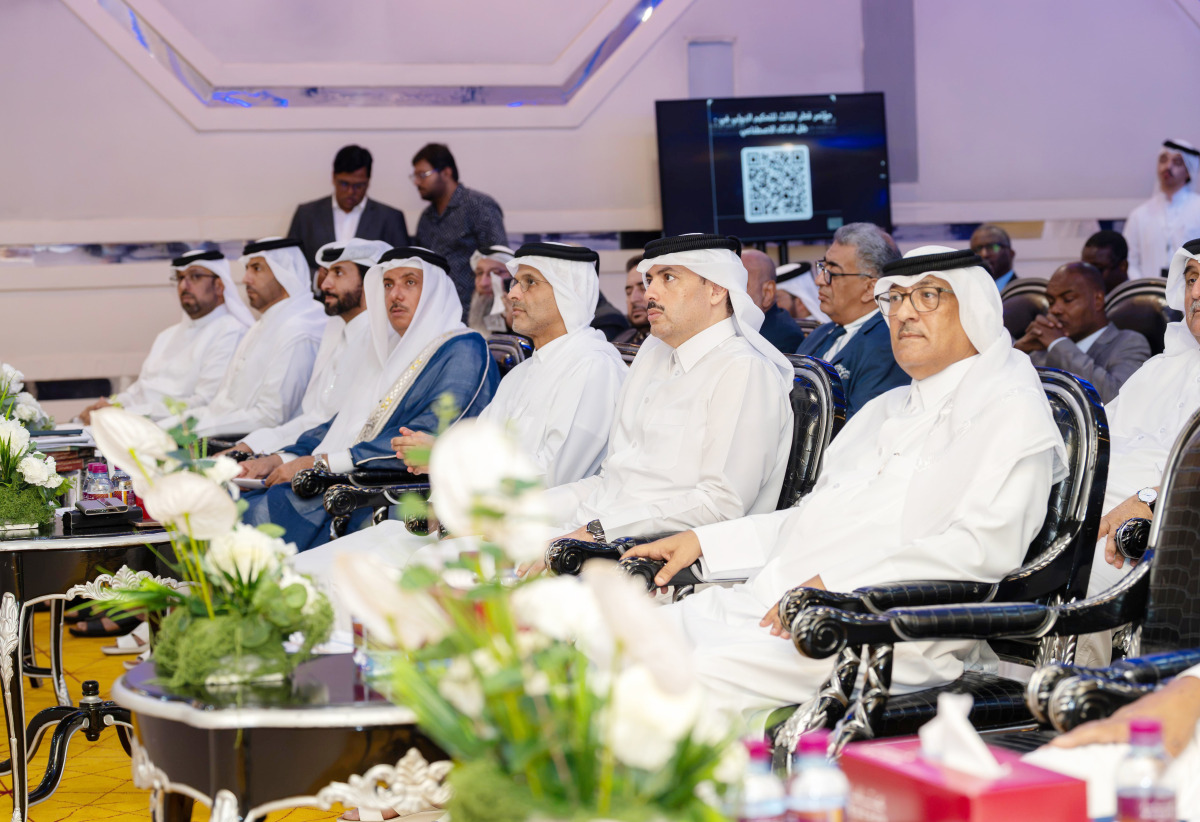
Director of Katara’s Information Systems Department, Dr. Thamer Al-Qadi with other officials during the event.
DOHA: The 31st edition of the Katara Tech Forum opened yesterday at the Cultural Village Foundation (Katara), bringing together international experts to explore the growing influence of artificial intelligence (AI) on arbitration, governance, institutional management and digital justice.
Organised in collaboration with the Carthage International Academy for Arbitration and Mediation and the Business Council, the forum hosted the third Qatar International Arbitration Conference under the theme “Arbitration in the Age of Artificial Intelligence: From Traditional Management to Smart Management, and from Dispute Resolution to Digital Justice.”
Held at Katara’s Hall 15, the conference attracted legal professionals, academics and technology specialists from Qatar and several Arab and international countries.
Addressing the opening ceremony, Head of the Katara Tech Forum and Director of Katara’s Information Systems Department, Dr. Thamer Al-Qadi, highlighted the transformative role of artificial intelligence in modern institutions.
He stressed that AI has evolved beyond being a supporting technological tool to becoming an active partner in decision-making and the development of modern administrative and justice systems.
Al-Qadi emphasised that successful digital transformation requires more than adopting advanced technologies, underscoring the importance of sound governance, secure infrastructure, data confidentiality and transparency.
He noted that rapid developments in generative AI necessitate corresponding improvements in legal and regulatory frameworks to ensure responsible technological deployment while maintaining international data protection standards.
Vice-Chairman of the Qatar International Center for Conciliation and Arbitration (QICCA), H E Sheikh Dr. Thani bin Ali Al Thani, highlighted arbitration’s importance in strengthening Qatar’s legal and investment environment.
He said alternative dispute resolution mechanisms provide flexible and effective solutions to commercial disagreements while supporting institutional development and investor confidence.
Sheikh Dr. Thani also highlighted the launch of Qatar’s first master’s degree programme in governance, developed in collaboration with Lusail University, describing specialised education as essential to preparing professionals for emerging management challenges.
President of the Carthage International Academy for Arbitration and Mediation, Dr. Ines Ben Nasr, stressed that technological advancement must be accompanied by effective governance, institutional transparency and robust oversight mechanisms.
She highlighted arbitration and mediation as strategic instruments for resolving disputes and improving organisational performance.
The conference featured three specialised sessions examining the intersection of technology, governance and legal practice.