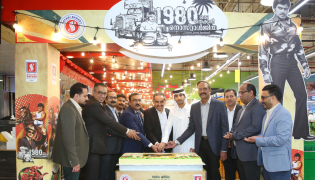
DOHA: The man behind the QR200m meat processing factory opening next month says a law is needed to encourage the private sector to invest in projects to ensure food security. It must also protect the investors’ interests, said Ahmed Al Khalaf (pictured).
“What we lack is basic infrastructure like land, water and electricity to get involved in agricultural production in a big way.” Al Khalaf is the chairman of the company commissioning the factory, which will start production in April.
He told this daily yesterday that his family got involved in horticulture more than two years ago and has in the past two summer seasons supplied fresh vegetables to the local market.
“We have about 20,000sqm of land under cultivation. Gradually, we are expanding business and the area under cultivation will soon be 100,000sqm,” he added.
Al Khalaf said his farms produce seasonal vegetables but soon facilities for vegetables round-the-year will be set up.
He said food security is one of the main areas in which the government should support the private sector.
The Emir H H Sheikh Tamim bin Hamad Al Thani has in his address to the Advisory Council talked of empowering the private sector, said Al Khalaf.
The Prime Minister and Interior Minister H E Sheikh Abdullah bin Nasser bin Khalifa Al Thani has also stressed the need to back the private sector and help widen its role in the national economy.
“There is no law that encourages businessmen to invest in food security projects and protect their interests,” Al Khalaf said.
He said the factory’s daily production capacity will be 50 tonnes which could be doubled.
“We will produce 80 types of meat products, including chicken, mutton (goat included) and beef.” The output will be more than sufficient to meet local demand so the factory will export its products to the neighbouring GCC states.
He said the plant will use latest technology and the validity of some packed meat products could be extended to longer durations.
“Some packed products imported here have validity for only 72 hours. Our factory would be able to process products that would have longer shelf life.”
Quality will be a hallmark of the plant because regional and international competition is fierce, said Al Khalaf.
He said the factory was supposed to be ready six months ago but was delayed due to technical problems such as meeting safety requirements and upgraded standards and specifications. Power supply is another problem. “The plant will be commissioned next month but will be fully operational by April,” he said. The Peninsula