Doha, Qatar: The strategic partnership between Boeing and Qatar has reached new heights as both entities align on a comprehensive roadmap for sustainable growth and technological advancement, said an official.
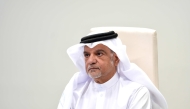
Boeing’s Managing Director of Commercial Marketing for the Middle East and Africa, Shahab Matin, emphasised that the aerospace manufacturer remains deeply committed to supporting Qatar’s National Vision 2030 by delivering high-quality airplanes and services that prioritise operational efficiency.
Speaking to The Peninsula, he said, “This collaboration is rooted in a multi-faceted strategy designed to enable responsible industry growth while magnifying Boeing’s contributions to Qatar’s economic diversification and global competitiveness.”
Matin noted that central to this mission is an aggressive approach to environmental sustainability through fleet renewal and the adoption of modern technology.
He said that replacing older aircraft with more efficient variants is the most immediate way for Qatar Airways to improve its environmental footprint.
The 787 Dreamliner currently offers approximately 25 percent lower fuel use and emissions than the models it replaces, and the upcoming 777-9 is designed to provide a further 20 percent reduction in consumption.
Beyond hardware, the national airline is leveraging Boeing’s digital tools to optimise flight routes, a move that can reduce fuel use and emissions by an estimated 10 percent.
The pursuit of cleaner skies also involves a shared commitment to the scaling of Sustainable Aviation Fuel (SAF).
As members of the World Economic Forum’s Clean Skies for Tomorrow coalition, Boeing and Qatar Airways are working to establish a viable pathway for SAF adoption, which can reduce lifecycle CO2 emissions by up to 80 percent compared to traditional petroleum jet fuel.
“This effort is complemented by a decade-long research partnership with the Qatar Computing Research Institute (QCRI) at Hamad Bin Khalifa University,” Matin said. “Together, they have pioneered machine learning and computer vision technologies that support safer landings by enhancing the early detection of small objects on the airfield.”
He stressed that, “Innovation and talent development remain at the heart of Boeing’s long-term presence in Doha.”
The recent Machine Learning and Data Analytics Symposium (MLDAS), held on February 8–9, 2026, showcased this commitment by convening a global community of AI researchers from the UK, US, Canada, and across the Middle East.
“By focusing on safe and sustainable artificial intelligence, Boeing and its Qatari partners are not only improving maintenance procedures through tools like the Airplane Health Management system but also fostering a local ecosystem of technical expertise,” Matin added.
As Qatar continues to thrive as a leading international aviation hub, Boeing intends to remain a primary partner in ensuring that growth is both safe and sustainable.