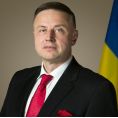
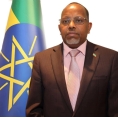
H E Andrii Kuzmenko
When missiles and drones strike the territory of a peaceful sovereign state, diplomacy must begin with clarity. What Iran has done against the State of Qatar, as well as other countries of the Gulf, is not merely another episode of regional tension. It is an attack on security, on sovereignty, and above all on human life. Ukraine has therefore expressed its clear solidarity with Qatar — not as a routine diplomatic gesture, but as a matter of principle and of lived experience.
For Ukrainians, this is not an abstract issue. It is something we have been living with every day.
For more than four years, Ukraine has been under the constant threat of Russian missile and drone attacks. What has recently shaken the Gulf is, for us, a daily reality. Our cities, our infrastructure, and our civilian population have been systematically targeted by weapons designed not only to destroy, but to intimidate and destabilise.
This is precisely why recent events in Qatar resonate so strongly in Ukraine. At the same time, it is important to recognize the high level of preparedness and effectiveness demonstrated by Qatar’s air defence systems in responding to these attacks. The successful interception of incoming threats and the protection of civilian life reflect strong capabilities, coordination, and resilience — qualities that are essential in today’s security environment.
Yet these events are not isolated. They are part of a broader pattern that Ukraine has been warning about for years.
In their recent statements following the attacks in the Gulf, President Volodymyr Zelenskyy and the Minister of Foreign Affairs of Ukraine Andrii Sybiha emphasized that the use of Iranian missiles and drones represents a growing global threat. These systems are no longer confined to a single conflict. They are being deployed across regions, with the same logic — to test defences, to spread fear, and to undermine stability.
Ukraine has faced this challenge at scale — and has had to adapt accordingly.
Over the years, we have developed one of the most adaptive air defence responses in modern warfare. Under constant pressure, Ukrainian specialists have learned how to respond to evolving aerial threats — combining military capabilities, technological adaptation, and civil protection measures.
This experience has been gained at a very high cost. Yet it is precisely this experience that now has value beyond Ukraine.
Ukraine stands ready to share this expertise with Qatar, as well as with its partners across the Gulf region, contributing to collective efforts aimed at strengthening resilience against evolving drone and missile threats. Elements of such cooperation are already taking shape through professional exchanges and dialogue focused on the protection of civilian life and critical infrastructure.
What matters is that this knowledge is not theoretical. It is practical, operationally tested experience — developed under real conditions — that can help societies adapt more quickly to new forms of threat.
This leads to a broader conclusion.
Ukraine today is not only defending itself. It is contributing to a wider system of international security. The events of recent weeks have demonstrated that modern threats do not remain contained. What begins in one war theater can quickly affect another. The technologies, tactics, and supply chains behind these attacks are interconnected — and so must be the response.
In this context, Qatar’s role is particularly important. As a country that combines strong national resilience with an active diplomatic and humanitarian profile, Qatar contributes not only to regional stability, but also to broader international efforts aimed at de-escalation and dialogue.
Ukraine highly values this role and sees strong potential for deepened cooperation.
Because today, security is no longer something that can be ensured alone.
It is built through shared experience, through partnership, and through a clear understanding that protecting civilian life must remain at the centre of any response.
Ukraine stands ready to be part of this effort — not only as a country in need, but as a country that has something real to contribute.