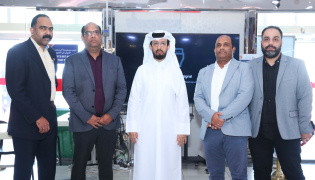
DOHA: Qatar’s criminal justice system allows community services as an alternative sentence for offences, says a senior official from Public Prosecution.
Cleaning of roads is, arguably, the most undesirable of the 16 types of community services the criminal justice system permits.
Other services include taking part in literacy promotion programmes, taking care of juveniles, working as nurse and looking after people with special needs.
This was disclosed on Saturday by Ahmed Matar Al Dosri, from Public Prosecution (Niyaba), at an event aimed to raise awareness about Qatari laws among expatriates.
Al Dosri told them that community service as a non-custodial, or alternative sentence, for offences has been part of Qatar’s criminal justice system since 2009.
A judge, however, cannot sentence an offender to community service without consulting the Public Prosecution, according to him.
Lieutenant-Colonel Ahmed Al Mohannadi, Director, Community Policing, told the conference that, set up in 2010, community police has created much awareness about laws among expatriate communities. This has led to reduction in the crime rate.
Qatar, he said, is keen to protect the rights of expatriates.
The roundtable was titled ‘Legal Culture in the State of Qatar’ and held by Doha International Centre for Interfaith Dialogue and Qatar University.
Some speakers talked about the labour court and said foreign workers were free to take their disputes with employers for settlement without paying any fee.
Khalid Al Ghanim, Head, Inspection Department, Ministry of Labour and Social Affairs, said the ministry’s hotline is in seven languages for the benefit of foreign workers so they can easily report their woes for redress.
Dr Mohamed Abdulaziz Al Khulaifi, Dean, Law College, at Qatar University, said the event was relevant considering that a lot of foreign workers were coming to the country due to the ongoing construction boom.
“We demand that more awareness about laws and the legal system here be raised among people,” he added.
The Peninsula