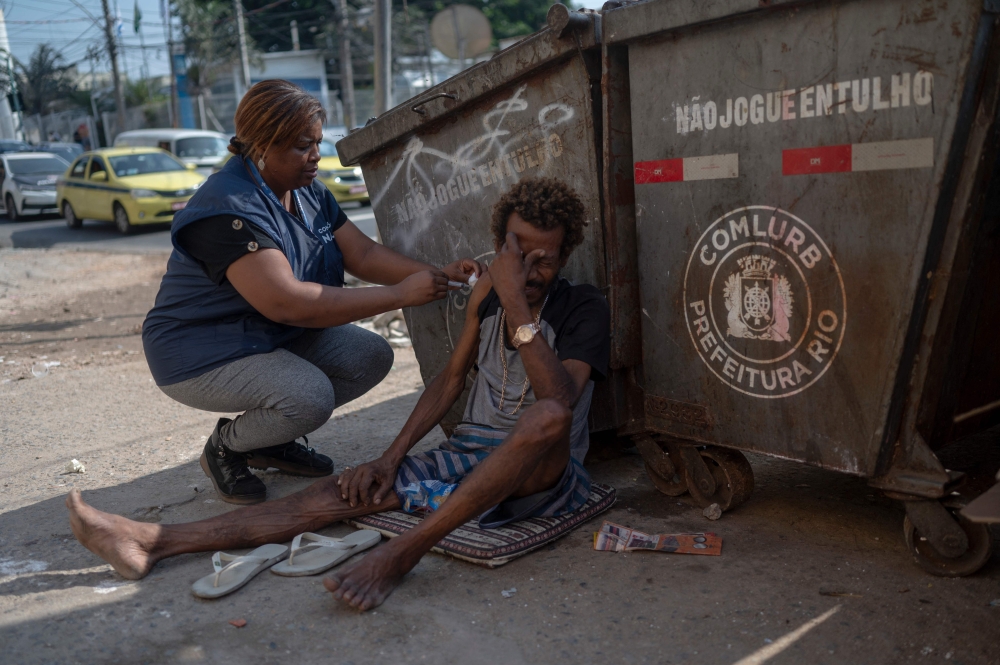
Nurse Assistant Sandra Maria (L) gives a COVID-19 vaccine to a homeless man in the suburbs of Rio de Janeiro, Brazil on July 12, 2023. (Photo by Mauro Pimentel / AFP)
Rio de Janeiro: The patients don't have addresses, phone numbers or in many cases even last names. But the addicts and homeless people of this Rio de Janeiro wasteland can count one blessing amid the misery: health care.
Doctor Yasmine Nascimento, 33, could have chosen to work at a private clinic or hospital in an upscale neighborhood of Brazil's second city.
Instead, she spends her days on Rio's poor north side treating patients on the street, under bridges or in a spot her team calls "The Cave": a squalid squatter camp accessed through a literal hole in the wall. Strewn with trash and raw sewage, it is located beneath an elevated metro track.
Nascimento works on a municipal program called Consultorio na Rua, or "Street Clinic," which brings health care to some of the poorest, most marginalized areas of this city of six million people, known for its staggering inequalities.
"Medicine, for me, is an exchange. My work at the Street Clinic makes sense to me, because I can create a bond with the patients," she says.
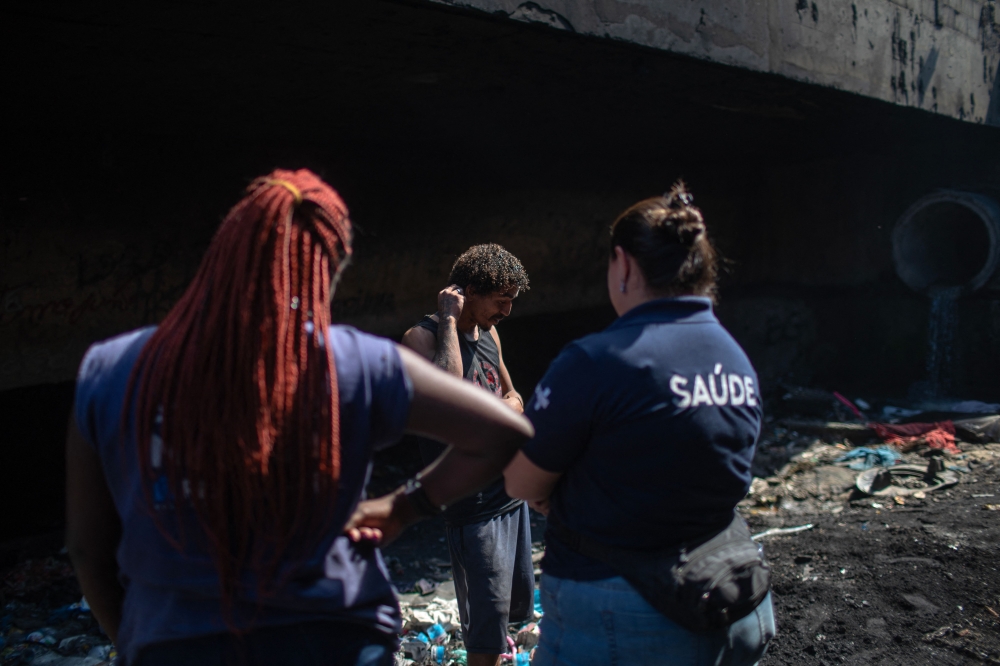
Social worker Silvana Amaral (L) and physician Yasmine Nascimento (R) speak with a homeless man (Photo by Mauro Pimentel / AFP)
The program has 13 teams across the city, each with a doctor, psychologist, nurses, social workers and a driver working together to try to make Brazil's promise of universal health care a reality for the city's nearly 8,000 homeless people.
Instantly recognizable in their blue jackets, they are in constant contact with people experiencing homelessness and living with addiction. That creates a sense of trust, enabling them to access parts of the city where no other public authorities go, not even the police.
'Bringing health to the streets'
The program "is reaching where no one wants to go," says nurse Quesia Ferreira, 28, as her team prepares to vaccinate homeless people against Covid-19 and the flu.
Despite the problems of Brazil's overstretched clinics, she says, "going out and bringing health to the streets is an example of a public health system actually working for people."
One of her patients in "The Cave" left home because her husband abused her. On the street, she got addicted.
Despite it all, the woman smiles widely as she welcomes each member of the health team by name.
"Those ladies are everything to us," she says
"They are second only to God in my life. They take care of us. I love them more than their own husbands do."