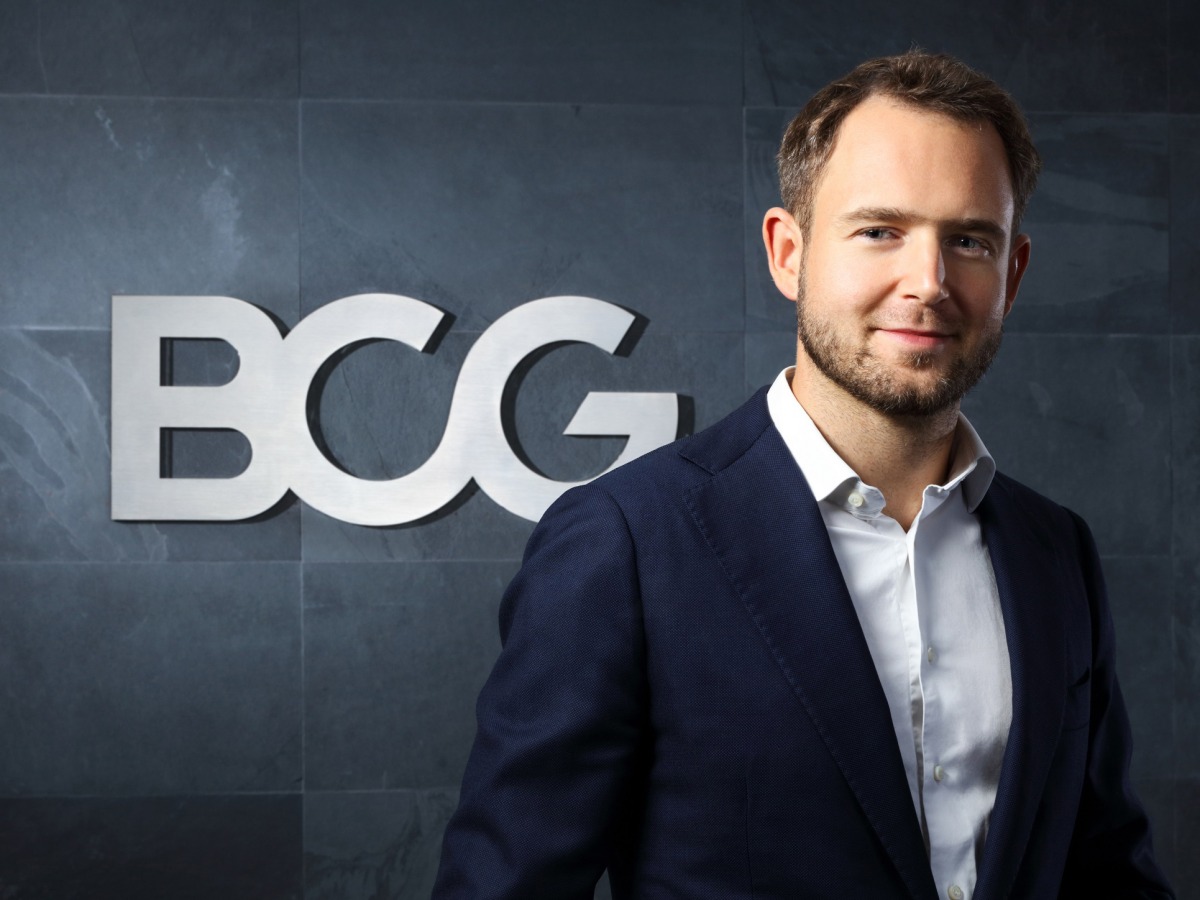
Lukasz Rey, Managing Director & Partner and Middle East Head of Financial Institutions at BCG
Doha, Qatar: Assets under management (AuM) in the GCC grew by 10% in 2025, reaching $2.7 trillion and marking one of the strongest annual performances in over a decade, according to a new report from Boston Consulting Group (BCG).
The findings, released as part of BCG’s Global Asset Management Report 2026: An Imperative for Growth, reveal that the GCC retail segment demonstrated particularly strong performance, recording growth of 14% while institutional assets increased by 9%. While institutional assets continue to dominate the regional market, retail assets are growing at a faster pace, with retail representing 7% and institutional assets accounting for 93% of total regional AuM.
Saudi Arabia continues to anchor regional growth, commanding the highest share of retail mutual funds and ETFs across both the broader Middle East and the GCC, followed by the UAE and Kuwait. The Kingdom’s General Organization for Social Insurance Public Pension Agency (GOSI-PPA) remains the largest pension fund in the region, with Kuwait’s WAFRA maintaining its position as the second largest. Among sovereign wealth funds, the Kuwait Investment Authority recorded the largest externally managed AuM, followed by the Abu Dhabi Investment Authority.
“The GCC asset management industry is at an inflection point that demands a fundamentally different approach to competition,” said Lukasz Rey, Managing Director & Partner and Middle East Head of Financial Institutions at BCG. “While near-term dynamics will depend on the broader market environment, the region’s structural fundamentals remain compelling, and many asset managers continue to view the GCC as a strategic priority. Firms that invest in distribution capabilities and technological transformation will be best positioned to navigate uncertainty and capture the opportunities ahead.”
In addition to regional dynamics, BCG’s Global Asset Management Report 2026 identifies key structural forces transforming the industry on a global scale, from the growing centrality of distribution to the adoption of AI-driven operating models and the emergence of tokenization.
Globally, BCG’s report finds that growth is becoming more concentrated among leading firms with scale and distribution access. Revenue growth is decoupling from asset growth as fees decline, while traditional economies of scale are being offset by rising technology investment and fee pressure. Together, these trends point to a more competitive environment in which only a subset of firms is positioned to capture disproportionate growth.
“Middle East asset managers have an opportunity to leapfrog traditional operating models by embedding AI and digital capabilities into their core operations,” said Mohammad Khan, Managing Director & Partner at BCG. “While the path forward will require navigating evolving market conditions, firms that move strategically to build scalable distribution networks and technology-enabled platforms will be well positioned to shape the next era of regional asset management.”
Alongside AI, BCG’s global report identifies tokenization and digital assets as emerging forces that could reshape market structure. The value of tokenized real-world assets is projected to reach $14 trillion by 2030 and $55 trillion by 2035, creating new channels for distribution, ownership, and product design.