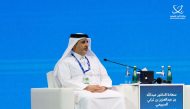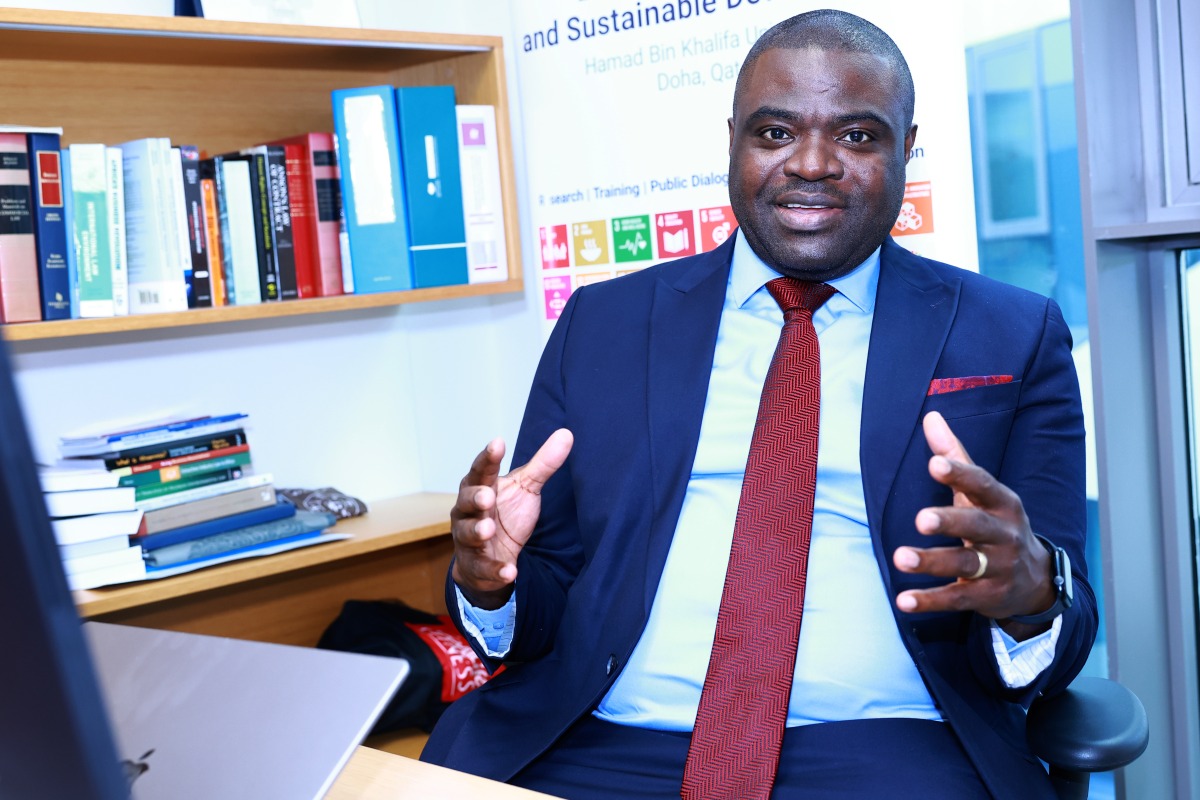
Unesco Chair on Environmental Law and Sustainable Development at Hamad Bin Khalifa University (HBKU), Professor Damilola Olawuyi, SAN,
Doha, Qatar: Qatar’s strategic position as a global energy hub places it at the heart of international efforts to achieve sustainable development, according to Professor Damilola Olawuyi, SAN, Unesco Chair on Environmental Law and Sustainable Development at Hamad Bin Khalifa University (HBKU).
Speaking in an exclusive interview with The Peninsula, Prof. Olawuyi said Qatar’s environmental and climate policy framework is closely aligned with the United Nations Sustainable Development Goals (SDGs) and the Paris Agreement, noting that the country views global sustainability commitments as an opportunity to accelerate economic diversification and build a knowledge-based economy.
“The idea of sustainable development is that economic growth must go hand in hand with social progress and environmental protection,” he said, adding that Qatar’s National Vision 2030 clearly reflects these global priorities Prof. Olawuyi highlighted Qatar’s growing role as a convening hub for global dialogue on sustainability, referencing the hosting of major climate and environmental forums in Doha, including international climate negotiations and sustainability summits. He said such platforms allow Qatar to shape discussions that will influence progress toward the 2030 agenda.
Addressing the challenges facing countries transitioning to low-carbon and climate-resilient economies, Prof. Olawuyi identified limited access to green technologies, capacity gaps and financing constraints as major obstacles, particularly in developing regions. He stressed that international cooperation remains essential, as no country can achieve climate targets in isolation.
“The transition to sustainability is not just about ambition; it is about access to technology, training the workforce and building the legal and policy frameworks that make cooperation possible,” he said In this context, he explained that the Unesco Chair at HBKU was established to provide practical legal and policy solutions through research, training and dialogue.
The Chair regularly organises conferences, workshops and capacity-building programmes focused on renewable energy, environmental protection and sustainable development law.
Prof. Olawuyi also underscored the critical role universities and research institutions play in shaping international environmental governance and climate diplomacy. He said academic institutions are uniquely positioned to translate global standards into locally relevant solutions.
“International law may set the goals, but universities help localise those solutions and ensure they work within specific social and economic contexts,” he noted.
On the role of hydrocarbon-producing countries, Prof. Olawuyi said Qatar is well placed to balance economic growth with environmental responsibility, particularly through its leadership in natural gas. He described natural gas as a key transition fuel that can support cleaner energy systems, including hydrogen development, while meeting global energy demand.
“Our focus is on ensuring that production and use of natural gas are carried out sustainably, using advanced technologies that minimise emissions and improve efficiency,” he said, adding that Qatar’s experience could offer valuable lessons for other energy-producing nations Looking ahead, Prof. Olawuyi identified water security, food security and just energy transition as priority areas for future research and policy advocacy by the Unesco Chair.
He revealed that work is underway on a major publication on water security law and policy, as well as new knowledge materials addressing food insecurity in the region.
He also emphasised the importance of a “just and orderly” energy transition, particularly for the Middle East and Africa, warning against approaches that address climate change while deepening poverty or energy insecurity.
“A just transition recognises that climate change is not the only emergency. Energy poverty, food insecurity and access to basic services must also be addressed,” he said, stressing that there is no one-size-fits-all solution to energy transition Prof. Olawuyi reaffirmed the Unesco Chair’s openness to collaboration with governments, businesses and civil society, noting that HBKU remains committed to empowering the next generation of leaders in environmental law and sustainable development.