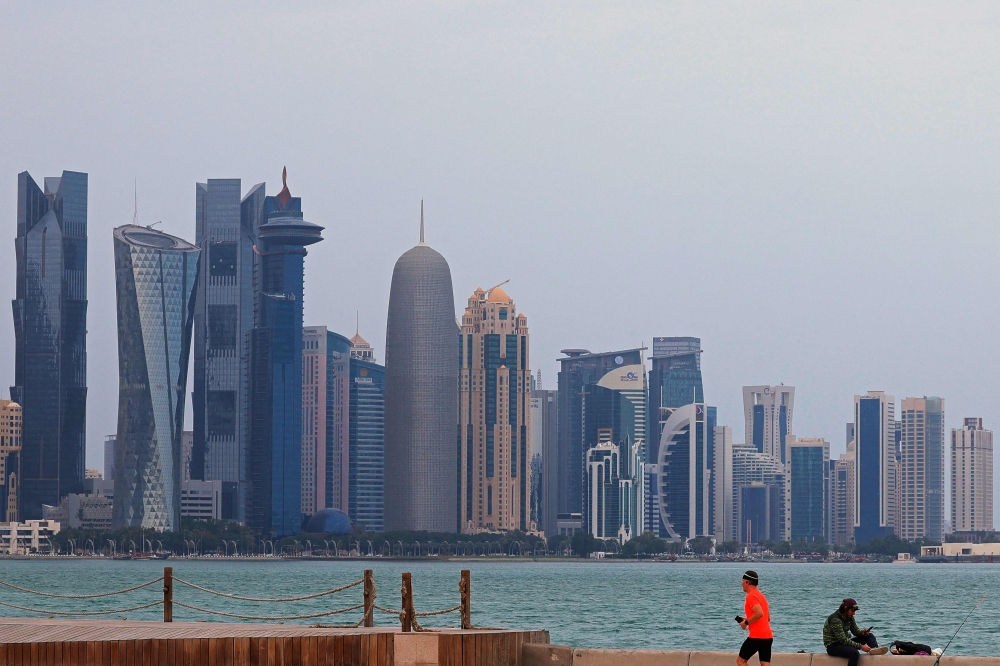
People visit the Corniche area of Doha on March 4, 2026. (Photo by Karim Jaafar / AFP)
Doha, Qatar: Amid escalating tensions in the Middle East following recent military exchanges involving Iran, the United States, and Israel, expats in Qatar remain remarkably positive about the prospects for a quick diplomatic resolution to the unfolding regional crisis.
The crisis intensified over the weekend when retaliatory strikes targeted several Gulf states, including Qatar, disrupting energy infrastructure and prompting temporary halts in production at key sites. Iranian drones and missiles struck facilities linked to QatarEnergy, forcing a brief suspension of operations and raising concerns over global LNG supplies. Qatar’s air defences intercepted most incoming threats, downing two Iranian aircraft in a decisive show of capability, while civilian areas experienced limited impact thanks to advanced interception systems.
Despite the disruptions, many expatriates voiced confidence in Doha’s mediation legacy and the broader push for de-escalation.
Speaking to The Peninsula, Saheed Abdulrahman, a businessman, said, “We have seen crises before, and Qatar has always emerged stronger through dialogue. The leadership’s commitment to peace gives us hope that this will end soon without further escalation.” Qatar’s role as a regional mediator has been a source of national pride. Even after attacks on its territory, including an earlier incident involving a strike on a Hamas delegation, the country continued facilitating talks. Residents highlighted how Qatar’s balanced foreign policy, maintaining ties with diverse parties, positions it uniquely to help broker calm.
Amos Adetilewa, a teacher, expressed similar sentiments: “The attacks were shocking, but our resilience is real. We trust the Amir and the government to pursue diplomacy aggressively. Talks involving Egypt, Turkey, and others are already underway, and that gives everyone reassurance.”
Rajesh Kumar, an Indian engineer working in the energy sector, noted, “Life here is stable compared to many places. The quick response from defenses minimized harm, and the focus on resolution rather than retaliation is encouraging. Businesses are adapting, and we believe normalcy will return fast.”
Official statements have reinforced public sentiment. The Ministry of Foreign Affairs has condemned violations of sovereignty while stressing the need for political solutions based on mutual respect. In recent communications, including with regional partners, Doha reiterated its dedication to preventing wider conflict.
Analysts point to Qatar’s experience in recent past as a foundation for current confidence. That period saw the country diversify its economy, boost self-sufficiency in food and industry, and strengthen international alliances. Residents recall how unity and adaptability turned adversity into opportunity, fostering a belief that similar dynamics can prevail now.
Market reactions reflect this outlook. While global energy prices fluctuated due to the temporary production pause, Qatar’s robust reserves and rapid recovery measures have calmed nerves. Traders and residents alike anticipate a swift restart of operations once threats subside.
Community leaders emphasized social cohesion. In neighborhoods across Doha, residents shared stories of mutual support during alerts, with many praising civil defense efforts and community solidarity.
As diplomatic channels remain open, with reports of intensified efforts involving Gulf Cooperation Council members and international partners, Qataris express hope that reason will prevail. The Amir’s emphasis on dialogue, combined with Qatar’s strategic position, underpins widespread belief in a prompt end to hostilities. With ongoing talks and a collective regional desire to avoid prolonged disruption, Qatar’s residents stand united in their optimism for a speedy and peaceful resolution.