By Rod Nickel and Liz Hampton
LAC LA BICHE, Alberta: A raging Canadian wildfire that forced the evacuation of the Alberta oil town of Fort McMurray intensified on Saturday, helped by hot, dry weather, with officials working to get another convoy of evacuees out of the region.
The blaze, the largest of some 40 wildfires burning across the province of Alberta, has forced some 88,000 residents, the entire population of Fort McMurray, to flee for safety.
The weather, with temperature Saturday is expected to rise as high as 28 degrees Celsius (82.4 Fahrenheit), was hindering efforts to fight the wildfire, said Matthew Anderson, a wildfire information office with the Alberta government.
“It’s going to be a very extreme fire hazard kind of day,” he told CBC News. “Today will certainly be a very, very challenging day and the (fire’s) growth potential is quite large.”
Earlier in the week most evacuees headed south by car on Alberta Highway 63, the only land route out of the area, in a slow-moving exodus that left many temporarily stranded on the roadside as they ran out of gasoline.
But other residents who initially sought shelter in oil camps and settlements north of the city found themselves cut off in overcrowded conditions. They were forced on Friday to retrace their route back through Fort McMurray on Highway 63 as flames continued to spread.
More than 2,000 vehicles of evacuees managed to travel south in the past 24 hours, Royal Canadian Mounted Police (RCMP) Sgt John Spaans told CBC, but authorities were not certain how many were still left to travel south.
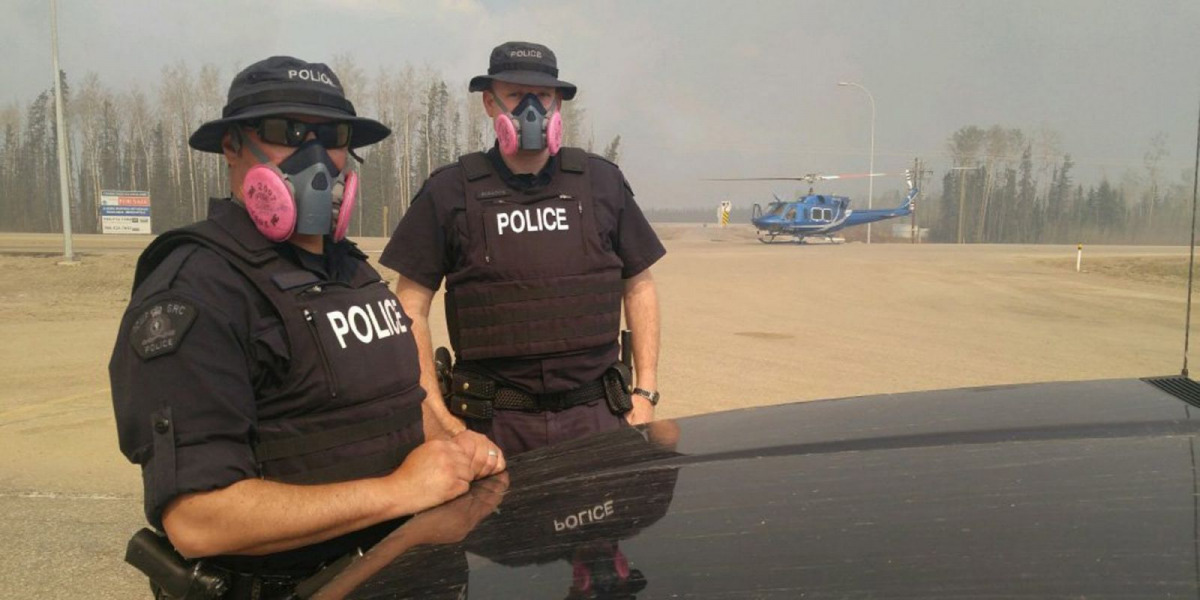
Police were preparing to escort another convoy of vehicles through the fire-ravaged city.
(Additional reporting by Ethan Lou in Toronto,; Writing by Jeffrey Hodgson)
Reuters