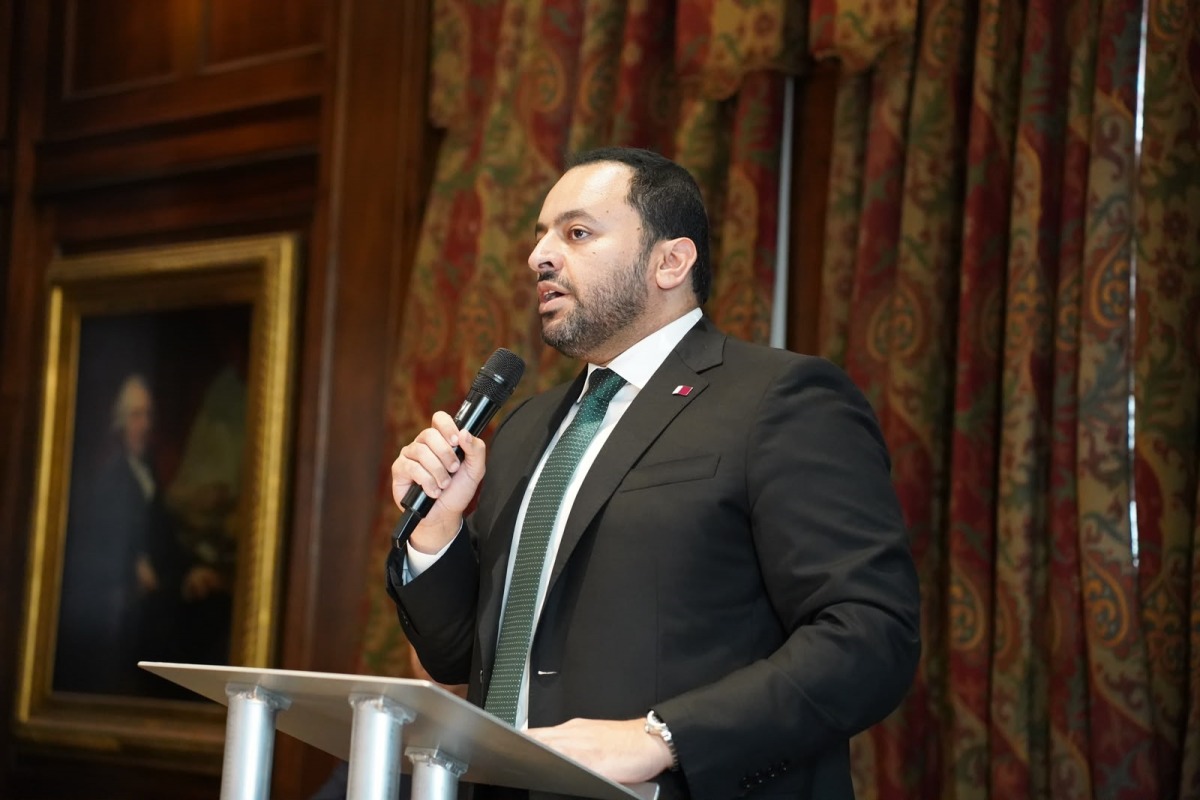
London, United Kingdom: Minister of State at the Ministry of Foreign Affairs, HE Dr. Mohammed bin Abdulaziz bin Saleh Al Khulaifi affirmed that the State of Qatar views mediation not merely as a foreign policy tool, but as a reflection of a deeply rooted constitutional principle.
Speaking at the Royal Institute of International Affairs (Chatham House) in London, during a lecture titled "Qatar: The Future of Diplomacy and Mediation – Opportunities and Challenges," Al Khulaifi said Article 7 of Qatar's Constitution stipulates that the country's foreign policy is founded on promoting international peace and security through the peaceful settlement of disputes.
The Minister emphasized that Qatar's diplomatic approach has never been based on choosing between relationships but on maintaining dialogue with all parties, particularly during times of deep disagreement. He stressed that engaging with all sides should not be interpreted as endorsing their positions, noting that keeping communication channels open during crises is one of the most valuable contributions a middle power can make.
Al Khulaifi said that while international influence has historically been associated with military, economic, or geopolitical power, today's increasingly fragmented and complex global environment has elevated the importance of maintaining dialogue when others believe it is no longer possible.
He described mediation as no longer simply a diplomatic tool but a strategic necessity, given that modern conflicts involve military, political, economic, technological and humanitarian dimensions, as well as non-state actors, international organizations, businesses and global public opinion.
The Minister noted that today's rapidly evolving international landscape requires a new model of diplomacy—one built on patience to establish trust, flexibility to adapt to fast-changing crises, and credibility to engage with all parties even when traditional communication channels have collapsed.
He also highlighted the growing impact of artificial intelligence, cyberattacks and digital misinformation on conflict dynamics, warning that these developments require diplomacy that is faster, more resilient and adaptable while preserving the patience needed to build trust.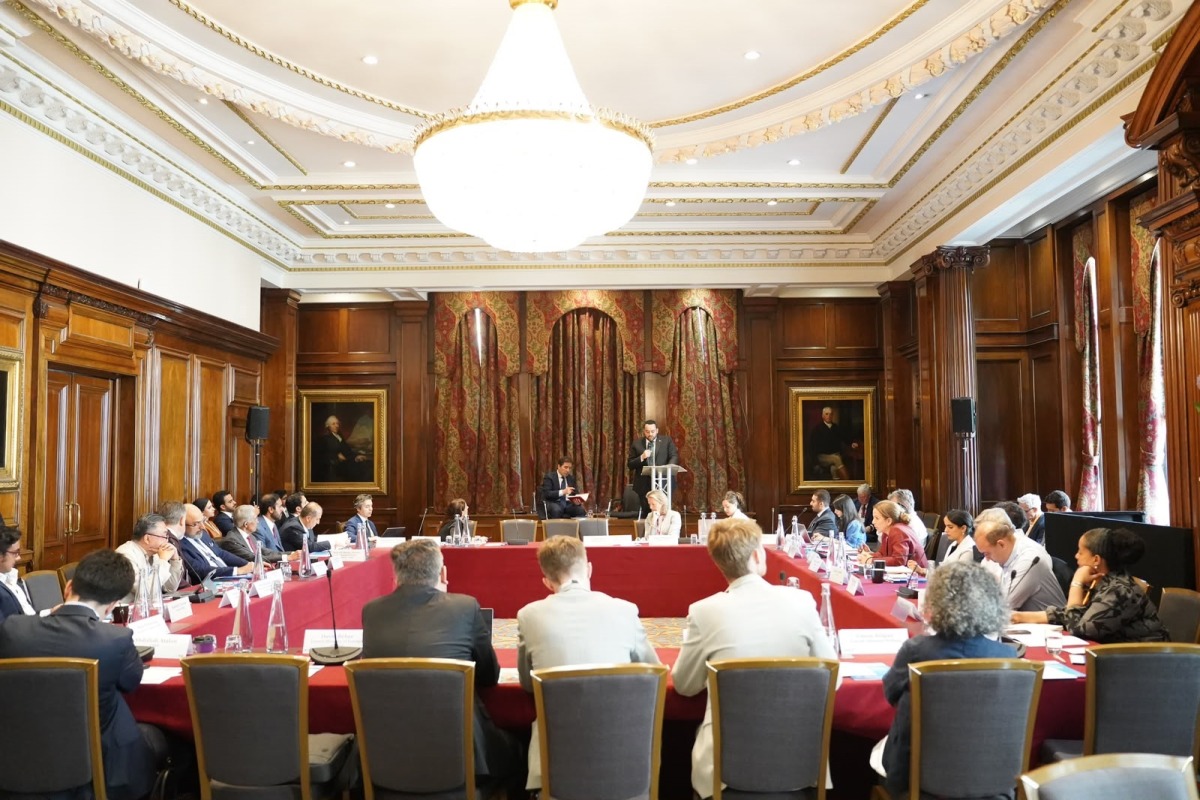 Al Khulaifi underscored the increasingly important role of middle powers in the current international order, explaining that while major powers remain essential to maintaining global peace and security, middle powers contribute by facilitating dialogue, preserving communication channels and creating diplomatic space for negotiated solutions.
He stressed that for middle powers, credibility outweighs power, as successful mediation depends on trust, fairness, confidentiality and impartiality rather than coercion.
Drawing on Qatar's experience in facilitating negotiations in Afghanistan, supporting humanitarian efforts and hostage releases in Gaza, advancing dialogue in Chad and mediating talks in eastern Democratic Republic of the Congo, Al Khulaifi said sustainable progress is achieved through patient engagement, quiet perseverance and continued dialogue rather than dramatic breakthroughs.
He identified three pillars underpinning Qatar's mediation efforts: access, trust and perseverance. Access ensures communication with all parties, trust is built through consistency and confidentiality, while perseverance remains essential because peace processes are rarely linear and often require sustained diplomatic engagement.
The Minister added that mediators cannot create political will where it does not exist, but they can help preserve opportunities for peace by ensuring dialogue remains possible.
He further noted that mediation should not be judged solely by agreements reached, but also by its ability to prevent escalation, facilitate humanitarian assistance, reduce misunderstandings and keep communication channels open.
Looking ahead, Al Khulaifi said trusted mediation will become even more important as the world faces challenges driven by artificial intelligence, climate pressures, competition over critical resources, migration, pandemics and the growing influence of non-state actors. He called for greater investment in diplomatic capabilities alongside military and economic capacities, describing mediation as a fundamental pillar of international peace and security.
Concluding his address, Al Khulaifi quoted the late South African leader Nelson Mandela: "If you want to make peace with your enemy, you have to work with your enemy." He said the quote captures the essence of mediation, emphasizing that dialogue becomes most necessary precisely when it is politically most difficult.
He concluded by stating that the influence of middle powers should be measured not by the size of their armies or economies, but by the trust they are able to build and maintain, adding that the future will be shaped not only by power, but by those with the patience to build trust, the determination to sustain dialogue and the wisdom to prevent deep disagreements from becoming permanent conflicts.