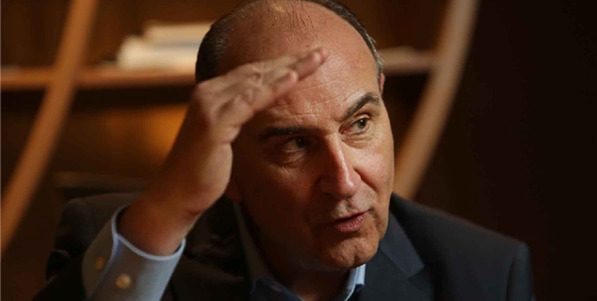
Photo Courtesy of: John Mattone Global
Artificial intelligence is moving deeper into boardrooms and back offices, and the pressure on senior leaders is no longer just about mastering new tools. It is about how they behave when algorithms expose every decision and misstep. The World Economic Forum estimates that nearly 39 percent of workers’ core skills will change by 2030, with employers rating analytical thinking, resilience and empathy among the most critical. For executives, that shift is reframing leadership as a character test conducted under constant digital scrutiny.
This is the context in which John Mattone, repeatedly ranked the world’s No. 1 executive coach by GlobalGurus.org between 2019 and 2025, has built his case that character, not charisma or technical mastery, will decide which leaders keep the confidence of their boards, regulators and employees. “Success has nothing to do with money, titles and possessions,” he tells clients. “Success is only about committing every day to becoming the absolute best you can be.”
From CEO Whisperer to Builder of a System
Mattone’s own path into this debate runs through both corporate HR and academic training. He holds a bachelor’s degree in management and organizational behavior from Babson College and a master’s in industrial and organizational psychology from the University of Central Florida, and later served in senior roles in assessment and executive development before founding John Mattone Global. Over several decades he has coached senior figures, including the late Apple co‑founder Steve Jobs and former PepsiCo chief executive Roger Enrico, while writing ten books on leadership, five of them best sellers.
Those credentials underpin what he calls Intelligent Leadership, a structured model that divides leadership into an “inner core” of character, values and emotional maturity and an “outer core” of observable skills and behaviors. Mattone argues that organizations have invested heavily in the outer layer—strategy, communication, financial literacy—while treating the inner layer as personal or private, even as scandals and culture crises often trace back to deficits in judgment and integrity rather than a lack of technical knowledge. His seven‑point Intelligent Leadership code urges leaders to think big, choose vulnerability, confront personal gaps, execute with precision, stay vigilant, adjust course and act from a sense of duty.
The codification matters because it turns a largely qualitative conversation into something leaders can discuss, measure and train. Mattone and his firm have registered a portfolio of trademarks around the Intelligent Leadership concept, including assessment tools such as the Mattone Leadership Enneagram Inventory and frameworks designed to link individual growth to organizational outcomes. His certification programs, accredited with 192 credits by the International Coaching Federation, have trained more than 800 coaches worldwide, effectively multiplying his philosophy through a network that reaches far beyond his own client list.
Data, Coaching and the AI Leadership Market
The argument for character lands differently when set against the economics of coaching and training. One recent forecast puts the global executive coaching and leadership development market at about 17.6 billion dollars in 2024, rising to 32.5 billion dollars by 2035, with compound annual growth of roughly 5.7 percent. Corporate leadership training more broadly is expected to grow from around 43.6 billion dollars in 2025 to 64.8 billion dollars by 2030, driven in part by digital transformation and hybrid work.
Within that spending, AI is becoming central. A white paper on coaching in the Gulf region estimates that the United Arab Emirates’ digital coaching market alone could expand from 44.6 million dollars in 2023 to 189.3 million dollars by 2034, a 14.1 percent annual growth rate, and predicts that three‑quarters of Fortune 500 subsidiaries in Dubai will use AI‑enabled leadership tools by 2030. Analysts tracking coaching certification expect that niche to grow from roughly 10.4 billion dollars in 2024 to more than 18 billion dollars by 2029 as more practitioners seek formal training. Those numbers describe a sector increasingly shaped by platforms and algorithms, where dashboards track behavior change and machine‑learning tools surface patterns in feedback data.
For Mattone, that data‑rich environment does not diminish the human element; it amplifies it. “AI will expose who we really are as leaders,” he has said in recent discussions about Intelligent Leadership. In his view, AI can accelerate feedback cycles and reveal blind spots, but it cannot substitute for a leader’s willingness to confront uncomfortable truths about ego, fear or bias. That is where he places the inner core: in how leaders respond when confronted with information that challenges their self‑image.
Character as Strategy in the Middle East and Beyond
The tension between AI and character is especially visible in regions racing to retool their economies.
In that setting, Mattone’s emphasis on duty, service and vulnerability is pitched not as soft language but as a hedge against the reputational risks that come with rapid modernization. His firm reports that it has worked with leaders and institutions in more than 55 countries and is seeing growing demand from Middle Eastern clients who want to connect culture change and national goals to personal behavior at the top. Those projects often focus on aligning leaders’ stated values with daily decisions, using assessments and 360‑degree feedback tools to track whether executives are actually becoming more self‑aware, inclusive and consistent under pressure.
For boards and investors, those questions have become financial. Research on leadership development points to a correlation between strong leadership pipelines and superior long‑term performance, while failures of culture and governance can quickly draw regulatory scrutiny, activist campaigns or consumer backlash. In such cases, technical skill rarely features as the primary concern; instead, investigations tend to zero in on judgment, disclosure, tone and respect for internal challenge—all dimensions of character.
The Next Decade’s Leadership Filter
Generative AI tools are moving from pilots to everyday use, and many organizations are asking what, exactly, will differentiate human leaders when machines handle more analysis and routine decisions. Reports on future leadership suggest that influence without formal authority, ethical decision‑making and the ability to create psychological safety will rank alongside strategic thinking as core expectations by 2030. That combination is pushing coaching toward deeper work on values, identity and purpose, even as budgets demand clear metrics and measurable change.
Mattone’s answer is to push leaders to focus on the parts of their work AI cannot do: owning decisions, building trust and setting a moral tone. “Great leaders are not born—they are made through intentional growth,” he often tells participants in his programs. In his view, the coming decade will reward those who treat character as a daily discipline rather than a slogan, measured not only in engagement scores and promotion rates but in how leaders respond when technology makes their choices harder to hide.