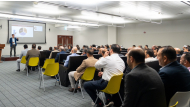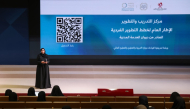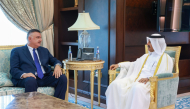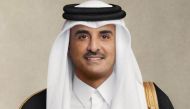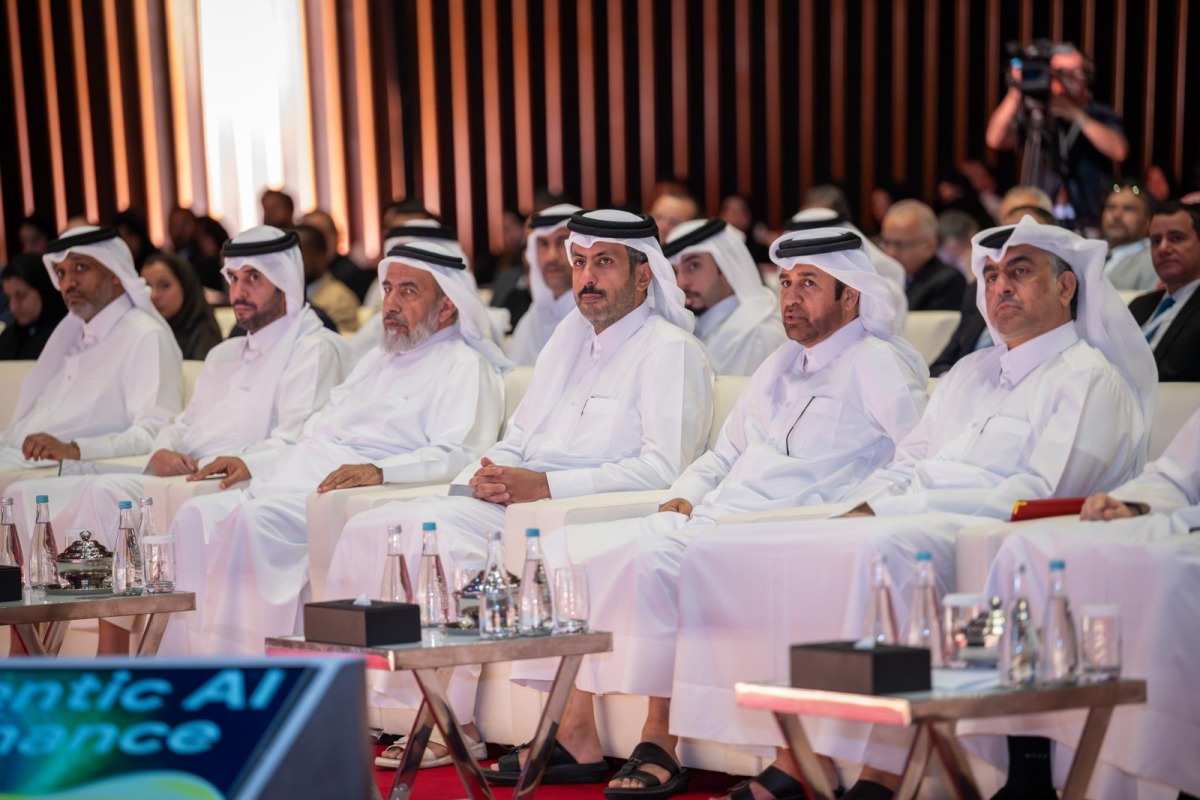
Minister of Endowments (Awqaf) and Islamic Affairs H E Ghanem bin Shaheen bin Ghanem Al Ghanim, Minister of Commerce and Industry H E Sheikh Faisal bin Thani bin Faisal Al Thani and Chairman of the Organizing Committee and Vice Chairman of Bait Al-Mashura Finance Consultations Prof. Dr. Khalid bin Ibrahim Al-Sulaiti with other dignitaries during the conference yesterday.
Doha, Qatar: The 12th Doha Islamic Finance Conference opened yesterday with the theme ‘Islamic Finance in the Age of Agentic Systems’ under the patronage of Prime Minister and Minister of Foreign Affairs H E Sheikh Mohammed bin Abdulrahman bin Jassim Al Thani.
The conference was inaugurated in the presence of Minister of Endowments (Awqaf) and Islamic Affairs H E Ghanem bin Shaheen bin Ghanem Al Ghanim, Minister of Commerce and Industry H E Sheikh Faisal bin Thani bin Faisal Al Thani, Secretary General of the International Islamic Fiqh Academy Prof. Dr. Koutoub Sano, and Chairman of the Board of Directors of Dukhan Bank Sheikh Abdullah bin Fahad bin Jassim Al Thani.
Organised by Bait Al-Mashura Finance Consultations it brought together government entities, international organisations, and financial and academic institutions operating across the fields of economy, finance, and technology.
Addressing the conference, Chairman of the Organizing Committee and Vice Chairman of Bait Al-Mashura Finance Consultations Prof. Dr. Khalid bin Ibrahim Al-Sulaiti noted, the agentic systems are emerging as one of the most important tools for managing complexity and accelerating responses to change, given their ability to analyse vast datasets, interact with dynamic inputs, and make decisions in record time, signalling profound shifts in the nature of economic activity and decision-making in the years ahead.
“The growing expansion of agentic AI systems in finance and business, as they increasingly assume roles long reserved for humans, makes it a scientific and strategic imperative to examine the position of Islamic finance within this emerging paradigm.
“This extends beyond technological adoption to a broader effort to anticipate the future trajectory of the financial industry and its development pathways. The responsibility of Islamic finance is not limited to benefiting from or adapting to these transformations, but also includes contributing to the development of a financial model that combines technological efficiency with value-based governance.
Such a model ensures that technology remains a tool for serving humanity, promoting justice and development, and advancing prosperity,” Al-Sulaiti said.
He added this conference aims to provide an integrated scientific platform that brings together researchers, experts, and practitioners in Islamic finance and smart technologies to discuss the latest developments in agentic systems and foresee the future of these technologies in Islamic banking, waqf institutions, and zakat management, while examining the Shariah and regulatory frameworks that govern the operation of such intelligent systems.
“Through this platform, the conference aspires to outline an advanced roadmap for adopting agentic systems in Islamic finance, ensuring integration and harmony between technological innovation and Shariah values, and reinforcing the pioneering position of the Islamic financial sector at both regional and international levels.”
Meanwhile Chairman of the Board of Directors of Dukhan Bank Sheikh Abdullah bin Fahad bin Jassim Al Thani noted that agentic systems are emerging as one of the key forces shaping the next phase. This transformation presents significant opportunities to reimagine financial services and operations in ways that enhance efficiency, agility, and responsiveness, while paving the way for the next generation of financial innovation driven by data and knowledge.
“At Dukhan Bank, we view these developments as an opportunity to further strengthen the leadership of Islamic banking through the adoption of modern technologies in a way that remains fully aligned with its principles and values. With this in mind, digital innovation has become a cornerstone of our strategy, reflecting our conviction that technology will play a defining role in shaping the future of the Islamic finance industry,” he said.
“Waqf has long been a cornerstone and a defining hallmark of Islamic civilization and the development of modern societies. Today, amid rapid technological advances and the emergence of AI agentic systems capable of making decisions autonomously, we are entering a new phase of transformation that is reshaping Islamic finance as well as developmental and institutional work, Eng. Hassan Al Marzouqi, Director-General of the General Directorate of Endowments at the Ministry of Endowments and Islamic Affairs said.
“These developments open up broad opportunities to enhance asset management and strengthen operational efficiency, governance, and transparency. At the same time, they place upon us the responsibility of understanding their Shariah, legal, and regulatory implications and ensuring that these technologies are governed and deployed in ways that serve the public interest, promote sustainable development, preserve and grow Awqaf assets, and fulfill the intentions of donors, all within a robust Shariah framework that carefully balances innovation with our deeply rooted values, Al Marzouqi added.
The conference discussed four main themes. The first addresses ‘Islamic Financial Institutions and Agentic Systems Applications,’ while the second examined ‘The Evolution of Waqf in Light of Intelligent Agentic Systems.’ The third theme is titled ‘Virtual Influencers and Islamic Finance,’ while the fourth focuses on ‘Zakat and Development in an Agentic Systems Environment.’
It also witnessed the launch of the Doha Islamic Finance Conference Award, a pioneering global initiative aimed at recognising outstanding achievements in Islamic economics and finance. The award serves as a dedicated platform to honour pioneers and encourage scientific research across various fields of Islamic banking and finance.